Physical Address
23,24,25 & 26, 2nd Floor, Software Technology Park India, Opp: Garware Stadium,MIDC, Chikalthana, Aurangabad, Maharashtra – 431001 India
Physical Address
23,24,25 & 26, 2nd Floor, Software Technology Park India, Opp: Garware Stadium,MIDC, Chikalthana, Aurangabad, Maharashtra – 431001 India

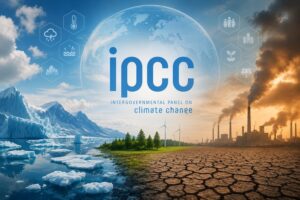
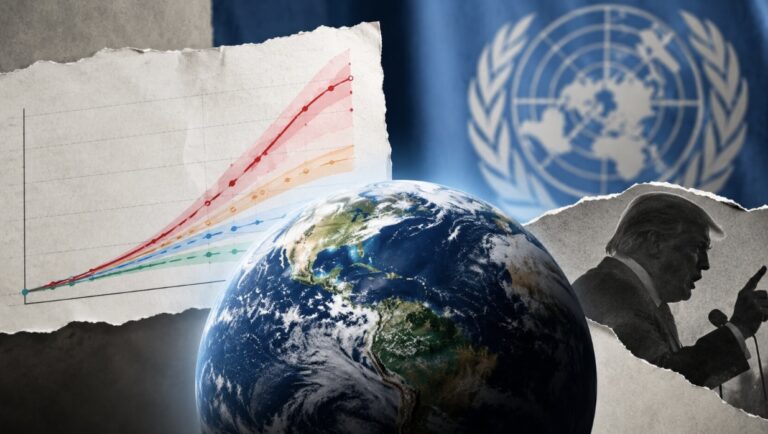
A recent X post has sparked debate by claiming that because the Intergovernmental Panel on Climate Change (IPCC) does not use the phrase “climate emergency,” it effectively denies the existence of one. The post further argues that climate science itself never mentions a climate emergency and that the IPCC explicitly states there is no climate emergency. A closer look at the evidence, however, reveals that these claims are misleading and do not accurately reflect the findings of climate science.
Understanding the Role of the IPCC
The IPCC is the United Nations body responsible for assessing scientific knowledge related to climate change. Rather than conducting original research, it reviews and synthesizes thousands of peer-reviewed studies from scientists around the world. Its reports are designed to provide policymakers with an objective assessment of climate science, impacts, risks, and possible response options.
One important characteristic of IPCC reports is their cautious and evidence-based language. The organization generally avoids emotionally charged or politically loaded terms and instead focuses on measurable observations, scientific confidence levels, and projected outcomes.
Claim 1: “The IPCC Never Uses the Term ‘Climate Emergency’, Therefore There Is No Climate Emergency”
Fact: Misleading.
The absence of a particular phrase in a scientific report does not determine whether the underlying problem exists. Scientific assessments often use technical language rather than advocacy-oriented terminology. The term “climate emergency” is largely a policy and communication phrase used by governments, institutions, activists, and some scientific organizations to emphasize the urgency of climate change.
What matters is not whether the exact phrase appears in an IPCC report, but what the report actually says. The IPCC has repeatedly documented that global temperatures have risen significantly due to human activities, especially the burning of fossil fuels. It has also reported rising sea levels, shrinking glaciers, increasing ocean heat content, and more frequent and intense extreme weather events in many regions.
These findings point to serious and growing climate risks, regardless of whether the report labels them a “climate emergency.”
Claim 2: “The Science Never Mentions Climate Emergency”
Fact: Inaccurate.
Climate science primarily focuses on evidence, observations, and projections. Scientific papers typically describe phenomena such as temperature increases, changes in precipitation patterns, biodiversity loss, and the impacts of greenhouse gas emissions. Researchers often avoid normative language and instead present findings based on data and established methodologies.
However, many scientific studies and scientific organizations have highlighted the urgency of addressing climate change. Numerous researchers have warned that delaying action could result in increasingly severe environmental, economic, and social consequences. Scientific literature frequently discusses the need for rapid emissions reductions and accelerated adaptation measures to reduce future risks.
Therefore, while many scientific reports may not use the specific phrase “climate emergency,” they clearly describe conditions and risks that have led many policymakers and institutions to adopt that terminology.
Claim 3: “The IPCC Says There Is No Climate Emergency”
Fact: False.
The IPCC has not issued any statement declaring that there is no climate emergency. No official IPCC assessment report contains such a conclusion.
Instead, the organization has consistently reported that climate change is already affecting natural and human systems across the globe. Its assessments describe increasing risks associated with heatwaves, droughts, floods, sea-level rise, ecosystem degradation, food security challenges, and impacts on human health.
The IPCC has also emphasized that the scale of future impacts will depend on the choices societies make today regarding emissions reductions and adaptation measures. In recent reports, the organization has stressed that actions taken during this decade are critical for limiting future warming and reducing climate-related risks.
Claiming that the IPCC says there is no climate emergency misrepresents the organization’s findings and creates a false impression of scientific consensus.
Why Terminology Matters
The debate highlights an important distinction between scientific assessment and public communication. Scientific bodies such as the IPCC are tasked with presenting evidence as accurately and objectively as possible. Policymakers, advocacy groups, and governments may then interpret that evidence and choose language that reflects their assessment of the situation’s urgency.
As a result, the absence of a specific phrase should not be confused with the absence of concern. Scientific reports often communicate urgency through documented trends, projected impacts, and risk assessments rather than through emotionally charged labels.
Conclusion
The claims circulating online are largely misleading. The IPCC’s decision not to frequently use the phrase “climate emergency” does not mean it denies the seriousness of climate change. Climate science has extensively documented unprecedented warming, rising climate risks, and the need for urgent action. Furthermore, the IPCC has never stated that there is “no climate emergency.”
The evidence shows that the debate is primarily about terminology, not about whether climate change poses significant and growing risks. The scientific findings remain clear: climate change is occurring, human activities are the primary driver, and the consequences become more severe as warming increases.
References:
https://x.com/Electroversenet/status/2061583570502643880?s=20
https://www.sciencedirect.com/science/article/pii/S2405844025006954
https://www.ipcc.ch/report/ar6/syr/downloads/report/IPCC_AR6_SYR_SPM.pdf
https://www.ipcc.ch/report/ar6/wg1/resources/climate-change-in-data
https://pmc.ncbi.nlm.nih.gov/articles/PMC11494274
Banner Image: AI-Generated
Sections of this article may have been developed with the assistance of artificial intelligence tools to support research, drafting, and language refinement. All information has been reviewed, edited, and verified by the author/editor to ensure accuracy, context, and editorial integrity. The responsibility for the final content, interpretations, and conclusions rests solely with the publisher.