Physical Address
23,24,25 & 26, 2nd Floor, Software Technology Park India, Opp: Garware Stadium,MIDC, Chikalthana, Aurangabad, Maharashtra – 431001 India
Physical Address
23,24,25 & 26, 2nd Floor, Software Technology Park India, Opp: Garware Stadium,MIDC, Chikalthana, Aurangabad, Maharashtra – 431001 India

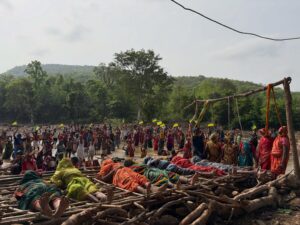
Heavy machinery, chainsaws and survey teams have become the latest flashpoints in India’s environmental governance debate, as two major infrastructure projects, the Ken-Betwa River Linking Project in central India and the Bhaniyawala-Rishikesh four-lane road widening project in Uttarakhand, have triggered protests over forests, biodiversity and local livelihoods. Environmental groups and local communities argue that both projects reflect a fragmented approach to development that prioritises individual infrastructure goals while overlooking wider ecological and social consequences. Recent public protests have also prompted government intervention, with the Uttarakhand government pausing tree felling and initiating stakeholder consultations.
Ken-Betwa project enters decisive phase amid fresh protests
One of India’s largest river-linking initiatives, the Rs 44,605 crore Ken-Betwa Link Project, has entered a decisive phase, bringing renewed attention to its environmental and social impacts. As construction activities gather pace, authorities have begun the process of relocating nearly 2,000 families across 10 villages that fall within the project’s submergence zone. The accelerated evacuation drive has sparked fresh protests, with affected residents alleging irregularities in compensation surveys, exclusion from beneficiary lists and inadequate rehabilitation measures.
The Ken-Betwa River Linking Project, India’s first inter-basin river transfer project under the National Perspective Plan, aims to transfer surplus water from the Ken River in Madhya Pradesh to the Betwa basin, supplying irrigation, drinking water and hydropower across parts of Madhya Pradesh and Uttar Pradesh. However, opposition has intensified as construction activities expand. Environmental organisations, researchers and residents argue that the project will submerge more than 9,000 hectares of land, including around 5,800 hectares of the Panna Tiger Reserve, one of central India’s most important tiger habitats. Conservationists have also warned of impacts on vultures, gharials, riverine ecosystems and forest-dependent communities that rely on the landscape for livelihoods.
Tree felling protests halt Rishikesh road widening work
In Uttarakhand, the proposed widening of the Bhaniyawala-Rishikesh highway into a four-lane road has sparked widespread public protests over plans to cut 4,369 trees. Residents, environmental activists, students and civil society groups organised demonstrations, human chains and tree-hugging campaigns, arguing that the mature roadside forest serves as an important ecological corridor, reduces heat and supports biodiversity.
Protesters questioned whether such extensive tree felling was necessary and urged authorities to redesign the project to minimise ecological damage. They also called for greater public consultation before irreversible decisions affecting the region’s environment are implemented.
The protests prompted a significant government response. Uttarakhand Chief Minister Pushkar Singh Dhami ordered an immediate halt to tree felling after nearly a week of demonstrations and directed officials to hold consultations with all stakeholders before proceeding further. By the time work was suspended, officials said around 400 trees had already been cut. The Chief Minister said development and environmental conservation must progress together and indicated that alternative options would be examined before any further action is taken.
Environmental groups have welcomed the suspension but continue to demand a comprehensive review of the alignment, independent ecological assessments and exploration of alternatives that could reduce tree loss while improving road safety.
Protests renew scrutiny of environmental decision-making
The protests over the Ken-Betwa river-linking project and the proposed tree felling for the Rishikesh four-lane road have renewed scrutiny of how large infrastructure projects are planned and assessed in India. Researchers argue that environmental decision-making often examines projects in isolation, even though forests, rivers, biodiversity and local livelihoods function as interconnected systems. They say planning processes should place greater emphasis on cumulative ecological impacts, climate risks and meaningful public consultation before projects move to the implementation stage.
The debate also comes as recent academic research highlights the need to strengthen India’s Environmental Impact Assessment process. A review published in Integrated Environmental Assessment and Management found that while EIAs remain a key legal tool for evaluating development projects, their implementation can be improved through more comprehensive assessments, stronger public participation and better integration of ecological considerations into project planning. Researchers argue that such reforms could help identify environmental risks earlier and reduce conflicts surrounding major infrastructure projects.
References:
https://www.pib.gov.in/PressReleasePage.aspx?PRID=2223845®=3&lang=1
https://www.nwda.gov.in/content/innerpage/project-at-glance.php
https://academic.oup.com/ieam/advance-article-abstract/doi/10.1093/inteam/vjag041/8513507
Banner image: Shiva Thakur Post on X
Sections of this article may have been developed with the assistance of artificial intelligence tools to support research, drafting and language refinement. All information has been reviewed, edited and verified by the author/editor to ensure accuracy, context and editorial integrity. The responsibility for the final content, interpretations and conclusions rests solely with the publisher.