Physical Address
23,24,25 & 26, 2nd Floor, Software Technology Park India, Opp: Garware Stadium,MIDC, Chikalthana, Aurangabad, Maharashtra – 431001 India
Physical Address
23,24,25 & 26, 2nd Floor, Software Technology Park India, Opp: Garware Stadium,MIDC, Chikalthana, Aurangabad, Maharashtra – 431001 India
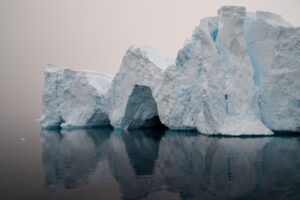
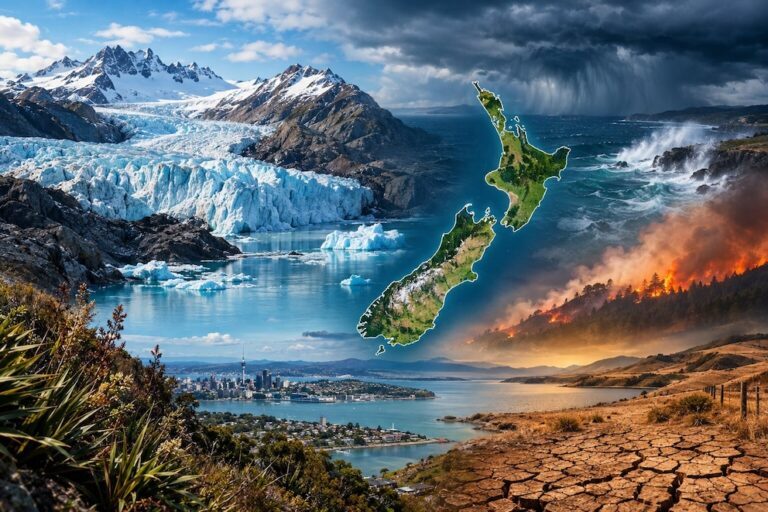
Glaciers have long stood as silent, icy sentinels — sculpting mountains, regulating rivers, and storing Earth’s frozen memory of climate across millennia. Today, they are screaming. The alarm is no longer hypothetical. The retreat of glaciers is already reshaping landscapes, endangering livelihoods, and threatening the future of water, food, and life for billions. As revealed by the United Nations Environment Programme (UNEP), the world finds itself on a crossroads: each fraction of a degree of warming may determine how much ice remains for future generations.
The melting warning: more than shrinking ice
Between May and September 2025, avalanches, landslides and flash floods devastated mountain communities in Switzerland, Nepal and Pakistan — tragedies not borne of random storms, but triggered by thawing permafrost and glacial lake outburst floods as glacial lakes overflow and burst their banks.
These are not isolated incidents. Across every glacier region worldwide, 2024 marked the third consecutive year of net ice loss.
Glaciers are more than static monuments of snow and ice; they are vital ecosystems — storing about 70 percent of the world’s fresh water held in ice. Meltwater released during warmer months feeds rivers, irrigates crops, powers hydropower plants, nurtures wildlife, and sustains cultures and livelihoods from the Alps to the Himalayas, the Andes to East Africa.
Yet as glaciers shrink, so too does this life-giving water. UNEP warns that more than 2 billion people depend on seasonal meltwater for their livelihoods. The cycle is tipping — melting accelerates, glacial lakes become unstable, and permafrost thaws, releasing additional greenhouse gases. Black carbon, dust, and pollution darken glacier surfaces, reducing reflectivity, accelerating melting — a vicious climate feedback loop.
At current trajectories, the cost is incalculable. According to UNEP’s modeling, at an average of 1.5°C of global warming, roughly 54 percent of the world’s glacier mass would remain (compared to 2020); under 2.7°C, only 24 percent would survive.
You can read prior coverage by Climate Fact Checks on melting glaciers and related research here.
What’s at stake: water, food, disaster — everything
Glaciers are the Earth’s natural water towers. Snow- and glacier-melt feed major rivers — lifelines for agriculture, human consumption, energy production. According to the International Network for Glacier Preservation, “runoff from glaciers, snow and ice are essential for drinking water, agriculture, industry and clean energy production.”
As glacial reserves dwindle, the risks multiply across interconnected systems. Water scarcity is among the earliest and most widespread impacts, as seasonal meltwater becomes increasingly unpredictable and some rivers risk running dry during warmer months, leaving entire communities without reliable supplies. This disruption feeds directly into food insecurity and economic fallout, with reduced water availability for farms and hydropower leading to declining crop yields, destabilised livelihoods and even forced migration- a growing concern. The ecological consequences are equally severe: glacial melt sustains rivers and lakes, supports aquatic life and delivers nutrients downstream, and its loss threatens to trigger widespread ecosystem collapse. Meanwhile, heightened hazards loom large as rapid melting increases the likelihood of glacial lake outburst floods, landslides and avalanches—catastrophes that fall hardest on vulnerable mountain and downstream communities. Beyond the mountains, the impacts ripple globally through sea-level rise, as melting mountain glaciers add to rising oceans, threatening coastal cities and low-lying islands and amplifying climate feedback loops worldwide.
What’s driving the decline and why it matters now
The root cause is global warming, driven by rising concentrations of greenhouse gases since the industrial age. As the planet warms, glaciers — especially mountain glaciers — are among the most sensitive indicators.
Temperature alone isn’t the only threat. Pollution, soot and dust from human activity settle on ice, darkening surfaces and reducing reflectivity. This means glaciers absorb more solar heat instead of reflecting it, hastening melt. Scientists and climate organizations agree: the choices we make this decade — about emissions, energy use, land use, pollution — will largely determine how much ice survives for future generations.
Growing global urgency and emerging efforts
Recognizing the existential threat, 2025 has been declared by the United Nations as the International Year of Glaciers’ Preservation. The aim: to highlight glaciers’ vital roles and rally global action.
For its part, UNEP is pushing forward a new global resolution on glaciers — to be discussed at the upcoming 7th United Nations Environment Assembly (UNEA-7) in Nairobi, scheduled for 8–12 December 2025.
On the ground, initiatives such as the adaptation programs under the umbrella of the Mountains ADAPT Project are already supporting vulnerable mountain communities — from restoring forests to improving water management and food security. For example, near Mt. Kenya the local Indigenous Yiaku Laikipiak Trust used small grants to implement climate-smart agriculture and better water systems, bolstering its resilience.
But beyond adaptation, the clarion call is clear: we must stop warming before it’s too late.
Why the countdown matters for all of us
Glaciers are often dismissed as obscure or remote features of faraway mountains — but their fate is inseparable from ours.
They are the water towers of humankind; the buffers that sustain biodiversity, ecosystems, and human societies. They are natural archives of Earth’s climate history, and early-warning systems for global change. As the National Snow and Ice Data Center explains, “glaciers are useful indicators of climate change” — and their retreat is one of the most visible and unequivocal signs that we’re warming the planet.
Loss of glaciers means loss of water security, food stability, ecological balance, and cultural heritage — affecting billions across continents.
As UNEP starkly warns through its 2025 report: “When we lose glaciers, we don’t just lose ice – we lose water, food security, heritage, cultures and the chance of a stable future.”
The urgency is real. The clock is ticking.
The white of glaciers is fading — but the urgency they carry should blaze through. The fight to preserve them is, ultimately, a fight to preserve our own future.
References:
https://www.unep.org/news-and-stories/story/why-glaciers-matter-and-new-push-protect-them
https://www.un-glaciers.org/en
https://nsidc.org/learn/parts-cryosphere/glaciers/why-glaciers-matter
https://www.nature.com/articles/s41586-019-1071-0
Banner Image: Photo by Torsten Dederichs on Unsplash

Comments are closed.

Volwassen entertainment is toegankelijk via veilige en betrouwbare websites.
Ontdek veilige adult sites voor kwaliteitsinhoud.
Take a look at my website: BUY VIAGRA