Physical Address
23,24,25 & 26, 2nd Floor, Software Technology Park India, Opp: Garware Stadium,MIDC, Chikalthana, Aurangabad, Maharashtra – 431001 India
Physical Address
23,24,25 & 26, 2nd Floor, Software Technology Park India, Opp: Garware Stadium,MIDC, Chikalthana, Aurangabad, Maharashtra – 431001 India


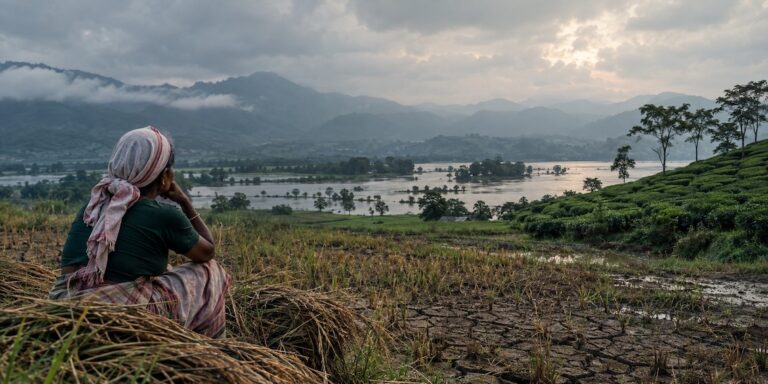
India’s southwest monsoon, a lifeline for over a billion people and the backbone of the country’s agriculture and water supply, is behaving unpredictably in 2025. Despite an early onset over Kerala on May 24, the monsoon’s northward progress has slowed considerably, sparking concerns among farmers, policymakers, and meteorologists alike. This article explores the reasons behind the delay, its regional impact, and the broader implications for the months ahead.
Early Monsoon Onset in India 2025: Key Highlights
In 2025, the southwest monsoon arrived over Kerala on May 24, the earliest since 2009, beating the usual June 1 onset. The India Meteorological Department (IMD) confirmed the onset based on specific rainfall, wind, and satellite criteria. Favorable atmospheric and oceanic conditions—such as strong easterly and westerly winds, high-pressure zones over the western Pacific, and sustained thunderstorms over southern India—facilitated the early arrival. The monsoon simultaneously advanced over Lakshadweep, Mahe, parts of the Arabian Sea and Bay of Bengal, reaching southern Karnataka and Mizoram, indicating strong early-season dynamics.
Why Is the Monsoon Delayed?
Meteorologists attribute the delay to a combination of atmospheric imbalances:
Weaker Bay of Bengal Branch: This branch, which typically supports the eastward and northward advance of the monsoon, is underperforming.
Dominant Arabian Sea Branch: Stronger winds over the Arabian Sea are driving more moisture westward but not supporting inland progression effectively.
Neutral ENSO and IOD Conditions: While both the El Niño–Southern Oscillation (ENSO) and Indian Ocean Dipole (IOD) are in neutral phases—generally favorable for the monsoon—they aren’t strong enough to accelerate its advance.
These factors together have resulted in an uneven distribution of rainfall across the country, raising concerns about agricultural planning and water availability.
Regional Disparities and Rainfall Forecasts
While the IMD projects above-normal rainfall for India as a whole in 2025 (106% of the Long Period Average or LPA), this national average masks regional disparities:
Above-normal rains have been recorded in parts of Maharashtra and the western coast, with intense pre-monsoon activity.
Below-normal rainfall is expected in northeast India, with predictions indicating about 94% of the LPA. This region, typically among the wettest in the country, may face water shortages and lower crop yields.
Central India, especially Madhya Pradesh and Chhattisgarh, is likely to receive delayed rains, with full monsoon conditions not expected until mid-June.
Impact on Agriculture and Economy
The Indian economy remains heavily dependent on agriculture, much of which is rain-fed. A delayed monsoon disrupts the sowing calendar, particularly for key kharif crops like rice, pulses, and oilseeds. Farmers in regions like Uttar Pradesh and Bihar are already facing anxiety over sowing delays, which could shorten the growing season and impact yields.
Additionally, water reservoirs in central and northern India are depleting due to prolonged dry spells. This affects not only irrigation but also drinking water supplies in rural and urban areas. If rains don’t pick up pace soon, states may need to resort to contingency plans, including drought-resistant crops and alternate water conservation methods.
Urban Heat Stress and Health Risks
The delayed rains are exacerbating heatwave conditions in many parts of India. Cities like Kanpur are witnessing temperatures soaring above 42°C, increasing health risks, especially among vulnerable populations such as the elderly and children. The combination of heat and high humidity in some regions is also straining electricity supply due to elevated demand for cooling.
What Lies Ahead?
Despite the current delay, the IMD remains optimistic. Neutral ENSO and IOD conditions are expected to sustain normal monsoon patterns in the months ahead. However, the monsoon’s timing and regional distribution will be critical. Even with normal total rainfall, poor spatial or temporal distribution can have damaging effects on crops, water availability, and livelihoods.
References
Banner Image:
Photo on Pexels by Dibakar Roy
https://www.pexels.com/photo/street-scene-of-kolkata-s-monsoon-chaos-30309541

Comments are closed.







achat kamagra: Kamagra oral jelly pas cher – kamagra gel
estudio farmacia online: puedo comprar corticoides sin receta – se puede comprar buscapina sin receta
farmacia online canarias: propecia farmacia online – comprar cialis sin receta madrid
etoricoxib 90 mg prezzo: tobradex gocce auricolari prezzo – rectogesic prezzo
sanogyl rose: calmants sans ordonnance – slim ventre plat
lyrica 25 mg prezzo: dicloreum 50 mg – cosopt senza conservanti
que prendre en cas d’infection urinaire sans ordonnance: pharmacie ouverte le dimanche sans ordonnance – levitra prix en pharmacie sans ordonnance
https://pharmacieexpress.shop/# peut on avoir des ovules en pharmacie sans ordonnance
viagra pour homme prix pharmacie [url=https://pharmacieexpress.com/#]boite viagra[/url] anxiolytique sans ordonnance en pharmacie
se puede comprar prozac sin receta en espaГ±a: online farmacia espaГ±a – productos cuidado intimo de farmacia online
farmacia bonsignore: tredimin 25.000 flaconcini prezzo – travocort pomata prezzo
la morfina se puede comprar sin receta [url=https://confiapharma.com/#]se puede comprar minoxidil sin receta[/url] los ovulos de progesterona se pueden comprar sin receta
gliatilin 600 prezzo: aftir gel come si usa – voltaren compresse 100 mg
algix 60 prezzo: gocce per otite tobradex – targin morte
arnica montana 7ch posologie adulte: lactase pharmacie sans ordonnance – amoxicilline pharmacie sans ordonnance
farmacia online hospitalet [url=https://confiapharma.com/#]Confia Pharma[/url] farmacia online recife
https://farmaciasubito.shop/# vardenafil teva 20 mg prezzo
mycose buccal traitement sans ordonnance pharmacie: Pharmacie Express – Г©quivalent kГ©toderm sans ordonnance
seresta ordonnance: cialis 20mg price – pharmacie en ligne sans ordonnance luxembourg
pharmacie canada sans ordonnance [url=https://pharmacieexpress.com/#]cortisone en pharmacie sans ordonnance[/url] cialis 20mg price
obtenir une ordonnance en ligne: medicament mal de dent sans ordonnance – creme eczema pharmacie sans ordonnance
simulazione test farmacia online: Farmacia Subito – vardenafil 10 mg prezzo
auxiliar de farmacia online [url=https://confiapharma.com/#]eutirox farmacia online[/url] farmacia andorra venta online
sildenafilo comprar sin receta: Confia Pharma – farmacia madrid online
https://pharmacieexpress.com/# traitement infection urinaire sans ordonnance homme
nadixa crema prezzo: devicius prezzo – ramipril 5 mg 28 compresse prezzo
peut on aller au laboratoire sans ordonnance [url=https://pharmacieexpress.shop/#]stromectol sans ordonnance en pharmacie[/url] kardegic sans ordonnance en pharmacie
puedo comprar fluoxetina sin receta: ozempic comprar sin receta espaГ±a – farmacosmo farmacia online