Physical Address
23,24,25 & 26, 2nd Floor, Software Technology Park India, Opp: Garware Stadium,MIDC, Chikalthana, Aurangabad, Maharashtra – 431001 India
Physical Address
23,24,25 & 26, 2nd Floor, Software Technology Park India, Opp: Garware Stadium,MIDC, Chikalthana, Aurangabad, Maharashtra – 431001 India

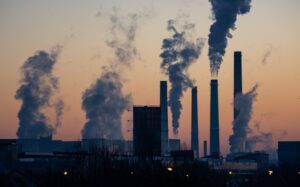
A recent research conducted by an international team reveals that surface solar radiation (SSR) has been increasing in many countries since 2000. This improvement is attributed to global efforts in reducing air pollution, particularly the emission of aerosols—tiny particles that absorb and scatter sunlight, preventing it from reaching the Earth’s surface.
The findings highlight a significant positive shift for solar energy production, as higher SSR levels enhance the efficiency of solar panels. Additionally, changes in solar radiation have broader implications for agriculture and climate patterns. The full review can be accessed here
Surface Solar Radiation (SSR)
Surface solar radiation refers to the energy rays from the sun to the Earth`s surface after being attenuated by the Earth`s atmosphere. Solar radiation has two parts: direct solar radiation and diffuse solar radiation. More details about it can be read here
The amount of sunlight we receive is crucial for the prevalence of life on Earth. Although many people are not concerned about solar radiation, it plays a vital role in the planet’s health.
The recent research review noted that the phase receiving high solar radiation is the brightening period, and the phase receiving less solar radiation is the dimming period.
Aerosols absorb and reflect solar radiation, allowing less radiation to reach the Earth’s surface and ultimately impacting fields like agriculture, renewable energy, etc.
As we said earlier in recent research or studies, the researchers found that the decadal variations in solar energy reaching Earth’s surface were particularly pronounced in China and some other countries. Solar energy substantially declined from the 1960s to the 1990s, and the trend began to reverse in the 2000s, with a slight recovery in these years.
As per Martin Wild, a professor with the Institute for Atmospheric and Climate Science, Swiss Federal Institute of Technology (ETH Zurich) and one author of the research review, the causes for these dramatic changes are thought to be primarily due to increasing air pollution in the ‘dimming’ phase, and due to the successful implementation of air pollution mitigation measures in the ‘brightening’ phase. More details can be read here

In the above image, we can see that SSR values have been increasing in the USA, Europe, China, and Japan since 2000; however, in India, those values have continuously dropped since 1950 and are still dropping. In India, pollution has been continuously happening throughout the decades, and mitigation efforts for air pollution and aerosol emissions have not been that successful. However, efforts to limit air pollution and mitigate aerosol emissions seem successful in countries like the USA, China, Japan, and the European region. Therefore, SSR values have been increasing in the European continent, China, Japan, and the USA, which is evident in the research details.
When we analyse how increasing SSR values and industries are connected, the solar power generation in the renewable energy field is very important and valuable.
The maximum power from solar panels varies depending on solar radiation intensity, angle, and suitable temperature. Therefore, the efficiency obtained from the solar panel may differ according to these conditions. As the amount of solar radiation falling on the panel’s surface increases and the duration of its perpendicularity increases, the energy efficiency values of solar panels also increase in usual situations and most probably. The amount of solar radiation falling on the panel’s surface depends on the panel’s tilt angle. The tilt angle is the angle at which maximum benefit from solar radiation is obtained during sunshine. However, in some circumstances, increasing solar radiation leads to inefficient situations due to the overheating of the solar panel and related consequences. However, what usually happens is that when solar panels absorb more electrons and holes, more electrons and holes are created, and then subsequently, more electricity is generated. More details about these various procedures of solar panels can be found here.
Let`s consider how increasing SSR can alter agriculture and plants.
As we are all well aware, the photosynthesis process is increasing due to intensifying solar radiation. However, the temperature can increase when there is more radiation, and the photosynthesis process can slow down. Excessive heat can stress plants.
The increasing solar radiation has positive impacts on plants, such as an increased level of food production and optimal growth.
When we consider the negative impacts of solar radiation on food production of plants , we consider excessive radiation, heat stress, water stress, photo degradation, and others. Photodegradation means that excessive radiation can cause soil degradation. However, with the usage of proper planting techniques, agricultural damages caused by excessive radiation can be mitigated, and we can reap the positive benefits of increased surface solar radiation.
More details can be read here.
Climate change and SSR.
When considering climate change, the main driver is global warming. Global warming occurs due to the excessive occurrence of the greenhouse effect. In the greenhouse effect, greenhouse gases like carbon dioxide trap the outgoing infrared radiation of the Earth and create a warming effect. So, when the SSR increases, the greenhouse effect is also improved, and more global warming issues will occur. The increment of SSR has a negative impact. However, indirect effects can occur on the greenhouse effect from increasing the SSR. For example, when renewable energy increases from solar panels, fossil fuel usage for energy consumption can become low and mitigate carbon dioxide emissions to the atmosphere, paving the way for less greenhouse effect and less global warming.
When considering anthropogenic aerosols, it`s clear that those particles absorb the energy of solar waves and mitigate the SSR. That process masks the impact of global warming. Based on fresh research, a related news piece on this issue can be read here .
As per the details mentioned above, it`s clear that some territories of the world, like Europe, have reduced air pollution, and now there are fewer aerosols in those countries. This is paving the way for SSR increment. This has both positive and negative impacts. The human community should aim to benefit from the positive aspects and mitigate the adverse effects.
Reference
Human-Made Aerosols Cool Clouds at Unprecedented Rate, Scientists Warn
https://www.energy.gov/eere/solar/solar-radiation-basics
https://phys.org/news/2025-04-amount-sunlight-earth-surface-varies.html
Understanding the effects of sunlight, temperature and precipitation
https://scitechdaily.com/scientists-say-pollution-may-be-masking-true-extent-of-climate-warming
Banner Image Photo by Ella Ivanescu on Unsplash