Physical Address
23,24,25 & 26, 2nd Floor, Software Technology Park India, Opp: Garware Stadium,MIDC, Chikalthana, Aurangabad, Maharashtra – 431001 India
Physical Address
23,24,25 & 26, 2nd Floor, Software Technology Park India, Opp: Garware Stadium,MIDC, Chikalthana, Aurangabad, Maharashtra – 431001 India
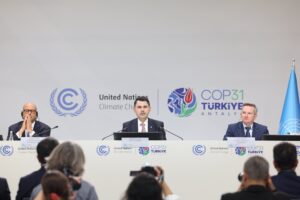
COP31 ended without adopting the Antalya Pact after a fossil fuel standoff. Here is what was agreed, who rejected the draft and what happens next.
The UN climate summit in Antalya, Türkiye, closed on Sunday, November 22, without agreement on its headline political outcome. It is the first time since the Copenhagen summit in 2009 that a COP has ended without an overarching deal. The Antalya Pact, the cover decision put forward by the Turkish presidency and Australia, which chaired the negotiations, was abandoned after the European Union and dozens of other countries rejected a final draft that made no direct mention of fossil fuels. The final gavel fell nearly 50 hours after the scheduled close, making COP31 the longest climate summit on record. Developing countries also left without the adaptation finance figure they had fought for.
The abandoned text did acknowledge that the 1.5°C warming threshold had been crossed and committed countries to accelerating action, but it stopped short of naming fossil fuels, the main driver of that warming.
Fossil fuels dropped from the final text
At COP28 in Dubai in 2023, countries agreed for the first time to “transition away” from fossil fuels in energy systems. The question in Antalya was whether COP31 would build on that commitment or step back from it. By the third and fourth drafts of the cover decision, the explicit reference had gone. A 126-nation coalition asked instead for a link to the first global stocktake, the Dubai outcome that carries the transition language, rather than the words themselves.
The resistance came mainly from oil producers. Saudi Arabia and other major oil-producing countries lobbied against including fossil fuels in the document, and Russia opposed any fossil fuel wording at all. The Irish Times noted that Türkiye, which held the presidency, is a close Saudi ally, and that some commentators blamed the hosts for the impasse.
On the other side, Ireland’s Minister for Climate, Energy and the Environment, Darragh O’Brien, who led the EU delegation, said the bloc would not accept a COP that “greenwashes fossil fuels”. Panama, the Marshall Islands, Belize, Norway and Vanuatu explicitly rejected the pact, and at least 32 countries opposed the cover decision in the closing plenary. Panama had warned during the final week that it would block any outcome without a clear path away from fossil fuels, including a cap on oil production. COP31 negotiations chair Chris Bowen said the red lines between parties could not be bridged.
Climate finance left without a number
Money for adaptation was the second fault line. An earlier draft had floated a target of US$120 billion a year in adaptation finance by 2035, effectively a tripling. That figure did not appear in any final text, and none of the relevant decisions set a baseline year against which progress could be measured. The baseline matters: France reportedly proposed 2019, which, according to Climate Action Network, would have cut the target to roughly US$60 billion a year.
The finance gap cut both ways. Aid agencies and climate justice groups accused the EU of hypocrisy for pressing hard on fossil fuel language while refusing to increase climate finance. Mohamed Adow, director of Power Shift Africa, described COP31 as “the worst COP ever” and said developing nations were facing “abandonment”.
UN Secretary-General António Guterres said he was “deeply disappointed” that no consensus was reached. In his last climate summit address as Secretary-General, at the leaders’ segment earlier in the talks, he had accused fossil fuel interests of “making a killing while killing our planet”.
What survived the collapse
A few decisions were adopted despite the failure of the pact. The Adaptation Fund will be able to receive a share of revenues from the Article 6.4 carbon market, with developing countries keeping a majority of board seats. The just transition mechanism, meant to support workers and communities as economies move off fossil fuels, was deferred rather than created: parties will work out its functions in Bonn in 2027, with formal agreement targeted for COP32. Adow said rich countries blocked its creation.
Outside the negotiated texts, around 80 countries signed the presidency’s voluntary “35 by 35” pledge to raise electricity’s share of global final energy use to 35% by 2035, up from about 23% today. Türkiye’s environment minister and COP31 president, Murat Kurum, had made the pledge the centrepiece of the summit.
Questions over the process
UN climate chief Simon Stiell expressed “deep disappointment” and said there was “scope to improve, modernise and reform” the UN climate process. Critics blamed the consensus rule, which they said allowed a handful of countries to block those willing to move faster. Analysts at the Atlantic Council pointed out that the absence of a decision does not cancel countries’ existing obligations under the Paris Agreement.
The next summit, COP32, will be held in Addis Ababa, Ethiopia, in November 2027. It now inherits the unfinished just transition mechanism, the unresolved adaptation finance target and the same fossil fuel divide that broke Antalya.
References:
https://www.climateaction.org/news/cop31-ends-without-a-political-deal-but-some-decisions-survive
COP31: Key outcomes agreed at the UN climate talks in Antalya
https://news.un.org/en/story/2023/12/1144742
Tensions Flare Over Fossil Fuels at UN Climate Talks
Guterres Targets Fossil Fuel Lobby as Leaders at COP31 Divide Over Debt, Finance and War
https://theprint.in/environment/cop31-turkey-raise-electricity-global-energy-35/3095456
Why COP31 climate talks collapsed and what to expect next
https://www.unep.org/en/news-and-stories/speech/africa-united-climate-negotiations
Banner image: COP31 post on X
Sections of this article may have been developed with the assistance of artificial intelligence tools to support research, drafting, and language refinement. All information has been reviewed, edited, and verified by the author/editor to ensure accuracy, context, and editorial integrity. The responsibility for the final content, interpretations, and conclusions rests solely with the publisher.