Physical Address
23,24,25 & 26, 2nd Floor, Software Technology Park India, Opp: Garware Stadium,MIDC, Chikalthana, Aurangabad, Maharashtra – 431001 India
Physical Address
23,24,25 & 26, 2nd Floor, Software Technology Park India, Opp: Garware Stadium,MIDC, Chikalthana, Aurangabad, Maharashtra – 431001 India

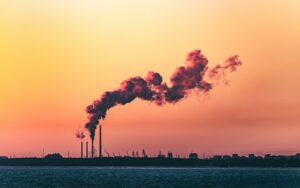
Only 6% of global economic output is produced by countries that would be most negatively impacted economically by fossil fuel phaseouts, according to a new study, which also shows that many climate-vulnerable countries could benefit from stronger climate action. The study, published in Nature Sustainability, looks at how the transition away from coal, oil and gas could change the economic interests of 169 countries. It balances the cost of potential lost revenues from fossil fuels against the benefits of avoiding climate-related damage, expanding renewable energy and protecting land that absorbs CO2. The findings suggest that countries’ economic interests in climate policy differ considerably, creating both obstacles to international cooperation and opportunities to build alliances for a faster transition to a low-carbon economy.
Fossil fuel-dependent countries face economic risks
The study identifies 19 countries that could suffer huge economic losses as the world moves away from fossil fuels. These countries earn large revenues from coal, oil and gas production, and are therefore more vulnerable to falling demand as climate policies promote cleaner energy sources. Researchers said this group accounts for just 6% of global gross domestic product (GDP), implying that their collective economic weight is relatively small compared with the broader global economy. But its reliance on fossil fuel revenues could present strong political resistance to ambitious climate policies.
The research assesses national interests through four categories of economic and environmental assets: fossil fuel production, avoided climate damage, renewable energy potential and the capacity of land to absorb and store carbon dioxide. Under more ambitious climate action, fossil fuel-producing countries could lose revenue, while countries exposed to severe climate impacts could benefit from reduced economic damage. The researchers examined different emissions-reduction scenarios to understand how these assets might change by the end of the century. They also caution that the analysis focuses on selected assets and does not capture every factor shaping a country’s economic or political position.
Climate-vulnerable countries could benefit from faster action
The researchers found 51 Global South countries with a strong economic interest in a faster climate transition, as they could otherwise suffer particularly severe climate-related damage. Thirteen more countries have significant potential for renewable energy, especially solar and wind, while 17 have a high ability to absorb and store carbon dioxide through their land and ecosystems. Stronger climate action could benefit these groups by reducing climate damage and creating new opportunities related to renewable energy and carbon storage.
However, the three groups that stand to benefit particularly from climate protection account for just 13% of global economic output combined. This creates a challenge for international climate negotiations. Countries with strong reasons to support ambitious climate policies may have limited economic leverage to influence global decisions, even when they stand to gain considerably from reducing global warming. The findings also point to opportunities for cooperation between countries that face substantial climate risks and those with abundant renewable energy resources or carbon storage capacity.
Major economies hold the key to climate cooperation
The remaining 69 countries, grouped as economies with moderate impacts, account for 81% of global GDP. This group includes the United States, China and the European Union, whose economic interests are influenced by a combination of potential climate damage, energy resources and opportunities arising from the low-carbon transition. Although these economies could gain considerably in absolute terms from avoiding climate-related damage, the study finds that their overall asset-based incentives for climate action are comparatively moderate.
The researchers argue that international climate cooperation could be strengthened through agreements that connect emissions-reduction commitments with benefits in other areas. These could include cooperation on research and development, trade arrangements or financial transfers to help countries manage losses associated with reducing fossil fuel dependence. Such measures could make ambitious climate policies more acceptable to countries that face concentrated economic risks.
The findings highlight a central challenge in tackling global warming: although the world as a whole benefits from reducing greenhouse gas emissions, individual countries face different costs and opportunities. Building effective climate cooperation will therefore require policies that address these differences while accelerating the shift towards cleaner energy and reducing the economic damage caused by climate change.
References:
https://www.nature.com/articles/s41893-026-01971-z
https://phys.org/news/2026-10-countries-vulnerable-fossil-fuel-phaseout.html
Banner image:
Photo by Marek Piwnicki on Unsplash
Sections of this article may have been developed with the assistance of artificial intelligence tools to support research, drafting, and language refinement. All information has been reviewed, edited, and verified by the author/editor to ensure accuracy, context, and editorial integrity. The responsibility for the final content, interpretations, and conclusions rests solely with the publisher.