Physical Address
23,24,25 & 26, 2nd Floor, Software Technology Park India, Opp: Garware Stadium,MIDC, Chikalthana, Aurangabad, Maharashtra – 431001 India
Physical Address
23,24,25 & 26, 2nd Floor, Software Technology Park India, Opp: Garware Stadium,MIDC, Chikalthana, Aurangabad, Maharashtra – 431001 India

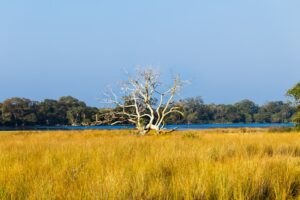
In the eastern reaches of Sri Lanka’s largest national park, drinking water now arrives by truck. Wildlife officers are running bowsers into Wilpattu and pumping water into concrete ponds so that deer, elephants and smaller animals have something to drink through the driest weeks of the year.
The Department of Wildlife Conservation confirmed the emergency operation at the end of July, when Park Warden R.D.D.D. Samaranayake told Daily Mirror that the Maradankaduwa, Parcibendiwewa and Kukulkatuwa tanks in the park’s eastern zone had run dry, and that water was being pumped into ponds as a stopgap. Lakes in other zones, he said, were holding at satisfactory levels.
Wildlife officers say the shortage is not simply the arithmetic of a dry season. Water-retaining structures in and around the park that were damaged during Cyclone Ditwah have still not been repaired, they say, which has cut the area’s capacity to hold rainwater into the months when animals need it most.
The wildlife officer D.M.D.P. Dissanayake told Climate Fact Checks that the main water sources on the eastern side of the park have run dry, leaving too little for animals to drink. According to Dissanayake, the emergency supply operation requires roughly 26,000 litres of water a day. The affected stretch includes parts of the park near Thantirimale and Wilachchiya.
A dry season landing on unfinished repairs
Cyclone Ditwah struck Sri Lanka on 28 November 2025 and produced the most extensive flooding and landslide damage the country had seen in two decades, affecting about 2.2 million people across all 25 districts. Water infrastructure took a heavy share of it. The Irrigation Department recorded 1,020 irrigation systems affected, including tanks, canals, bunds and anicuts, while the Department of Agrarian Services logged damage to 1,777 tanks, 483 dams and 1,936 canals. The government sought 4.8 billion rupees for minor tank rehabilitation alone.
Nine months on, a Post-Disaster Needs Assessment is still being run by the government with the United Nations, the European Union, the World Bank and the Asian Development Bank, according to the OCHA situation report of 20 March 2026. Agricultural analysts have already argued that tanks, canals and embankments failed during Ditwah partly because maintenance had lagged and designs had not kept pace with heavier rainfall.
The consequence inside a protected area is different in kind from the consequence on a paddy field. When a tank stays out of operation, rain that would have been banked for the dry months simply leaves the landscape. What began as an infrastructure backlog turns into a conservation problem.
Why storage matters in Wilpattu
Wilpattu covers about 1,317 square kilometres in the northwest dry zone and is dotted with roughly a hundred villus, the shallow, sand-rimmed natural basins that give the park its name and its character, alongside a network of tanks (Wilpattu National Park, overview). Rainfall averages only about 1,000 mm a year and arrives mainly with the northeast monsoon and the March inter-monsoon, which makes the storage system, natural and built, the difference between a hard dry season and a dangerous one.
Officials say the villu system is functioning satisfactorily at present and that several lakes in other sectors still hold usable water. Elephants and other large animals are moving towards those sectors, where food is also available.
The animals that cannot walk to the water
Mobility is the dividing line. Elephants can cover the distance to a wetter part of the park. Deer and smaller species cannot, and officers report them under strain in the eastern sector. Where water does remain, it tends to concentrate animals, which alters normal movement patterns and puts prey species in front of predators more often than they would otherwise be.
The daily bowser run is a genuine lifeline, but 26,000 litres is a modest volume against a park of this size, where a single adult elephant can drink well over 100 litres in a day. Emergency delivery keeps animals alive in a specific location; it does not restore the ecological function of a working tank.
Pressure at the boundary
Water scarcity inside a park rarely stays inside a park. Officials have stepped up measures against hunting of animals moving in search of food and water, and have pointed to deforestation and habitat degradation in the buffer zone. Encroachment around Sri Lanka’s protected areas, including Wilpattu, has been a documented concern ahead of this El Nino season. When vegetation and water thin out together, elephants move towards settlements and cultivation, and the crop damage that follows feeds directly into human-elephant conflict.
What is climate, and what is not
The wider weather picture is unambiguous. Sri Lanka is in a sharp dry spell, with the Meteorology Department warning that August would bring extreme heat and water shortages in the Northern, North Central, Eastern and Hambantota districts, and putting the probability of a strong El Nino developing between October and December at 81 per cent. Tanks in the east have already dried out and forced farmers off paddy land.
Officers in Wilpattu describe shifting rainfall patterns in the region. They also say, importantly, that this drought is not necessarily worse than droughts the park has been through before. That distinction is worth holding on to. The claim here is not that climate change emptied these tanks. It is that an extreme event, an incomplete recovery and a normal dry season have compounded, and that the compounding is what left animals dependent on a truck.
From disaster recovery to conservation
Repairing a tank is a line item. Repairing a tank that sits inside a landscape supporting thousands of wild animals is something else, because the consequences of leaving it broken run through water availability, animal movement, vegetation, predator and prey behaviour, and the likelihood of a herd walking into a village.
Emergency water delivery can only be a holding action. Restoring damaged water-retention structures, protecting the natural villus and keeping the surrounding habitat intact are what a durable answer looks like. The immediate task is getting water to animals in the driest corner of the park. The open question is whether the structures Ditwah damaged will be back in service before the next dry period arrives.
For Wilpattu’s wildlife, an unrepaired tank is not measured in rupees. It is measured in how far an animal has to walk for its next drink.
References
Banner Image: Photo by Senash Thenuja on Unsplash
Sections of this article may have been developed with the assistance of artificial intelligence tools to support research, drafting and language refinement. All information has been reviewed, edited and verified by the author and editor to ensure accuracy, context and editorial integrity. Responsibility for the final content, interpretations and conclusions rests solely with the publisher.