Physical Address
23,24,25 & 26, 2nd Floor, Software Technology Park India, Opp: Garware Stadium,MIDC, Chikalthana, Aurangabad, Maharashtra – 431001 India
Physical Address
23,24,25 & 26, 2nd Floor, Software Technology Park India, Opp: Garware Stadium,MIDC, Chikalthana, Aurangabad, Maharashtra – 431001 India
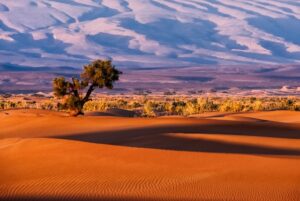
Every year, vast clouds of dust lifted from the Sahara Desert travel thousands of kilometres across the Atlantic Ocean before settling over the Amazon rainforest, delivering a vital nutrient that helps sustain one of the world’s richest ecosystems. According to satellite observations by NASA, around 27.7 million tonnes of Saharan dust reach the Amazon Basin annually, carrying roughly 22,000 tonnes of phosphorus, almost exactly the amount the rainforest loses each year through rainfall and river runoff. Scientists say this remarkable natural process links two of Earth’s most contrasting landscapes, with the world’s largest hot desert helping fertilise the world’s largest tropical rainforest.
Saharan dust replenishes nutrients lost from the Amazon
Although the Amazon is home to extraordinary biodiversity, much of its soil is surprisingly poor in nutrients. Heavy tropical rainfall continuously washes phosphorus, an essential nutrient for plant growth, out of the soil and into rivers. Without a steady supply of new phosphorus, scientists say the rainforest’s long-term productivity would gradually decline.
NASA’s Cloud-Aerosol Lidar and Infrared Pathfinder Satellite Observation (CALIPSO) mission found that about 182 million tonnes of dust are blown off the Sahara every year. While much of it falls into the Atlantic Ocean or continues towards the Caribbean, roughly 27.7 million tonnes settle over the Amazon Basin. Of this, around 22,000 tonnes consist of phosphorus, effectively replacing the nutrients the rainforest loses annually through rain and flooding.
Researchers traced much of this dust to the Bodélé Depression in northern Chad, an ancient lakebed rich in phosphorus from the remains of long-dead aquatic organisms. Strong winds regularly lift this fine sediment high into the atmosphere, allowing it to travel across the Atlantic before being deposited over South America.
A global connection between two distant ecosystems
Scientists describe the dust transport as one of the clearest examples of Earth’s interconnected natural systems. Winds carry mineral-rich particles over a journey of nearly 5,000 kilometres, linking the nutrient-poor soils of the Amazon with one of the driest places on the planet.
The phosphorus makes up only about 0.08% of the total dust reaching the Amazon, yet it plays a disproportionately important role because phosphorus is one of the nutrients most limiting to tropical forest growth. While decomposing leaves recycle most nutrients within the rainforest, phosphorus is continually lost through runoff and cannot be replenished without external inputs.
Scientists say the findings also improve understanding of how atmospheric dust influences ecosystems, ocean productivity and the global carbon cycle. Dust particles transport not only phosphorus but also iron and other minerals that support biological processes across different regions of the world.
Climate change could alter the dust cycle
Researchers are now examining how climate change could affect the long-distance transport of Saharan dust. Changes in rainfall patterns across the Sahara, vegetation cover, wind circulation and land use could alter the amount of dust reaching the Atlantic and, in turn, the Amazon rainforest. Any significant reduction in phosphorus transport could have long-term implications for the rainforest’s health and its ability to store carbon.
The Amazon plays a critical role in regulating the global climate by storing billions of tonnes of carbon and supporting unparalleled biodiversity. Scientists say understanding the invisible atmospheric connections that sustain the rainforest is becoming increasingly important as climate change reshapes weather patterns and ecosystems across continents.
References:
https://svs.gsfc.nasa.gov/4273
https://earthobservatory.nasa.gov/images/7279/bodele-depression-dust-feeds-amazon
Banner image: Photo by Sergey Pesterev on Unsplash
Sections of this article may have been developed with the assistance of artificial intelligence tools to support research, drafting and language refinement. All information has been reviewed, edited and verified by the author/editor to ensure accuracy, context and editorial integrity. The responsibility for the final content, interpretations and conclusions rests solely with the publisher.