Physical Address
23,24,25 & 26, 2nd Floor, Software Technology Park India, Opp: Garware Stadium,MIDC, Chikalthana, Aurangabad, Maharashtra – 431001 India
Physical Address
23,24,25 & 26, 2nd Floor, Software Technology Park India, Opp: Garware Stadium,MIDC, Chikalthana, Aurangabad, Maharashtra – 431001 India

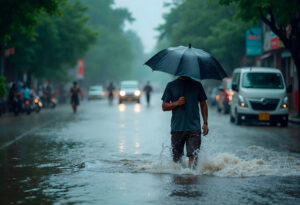
India is likely to experience a weaker-than-usual southwest monsoon in 2026, according to the first long-range forecast issued by the India Meteorological Department. The projection has raised concerns across sectors, particularly agriculture, which remains heavily dependent on seasonal rainfall. A below-normal or deficient monsoon could affect crop output, water availability, and overall economic stability in the months ahead.
The monsoon, which typically spans from June to September, plays a crucial role in sustaining nearly half of India’s farmland that lacks irrigation facilities. Early signals of a subdued rainy season come after a period of erratic weather in parts of the country, including unseasonal rains and extreme events, making the upcoming season even more critical for farmers and policymakers alike.
Weak Rainfall Outlook and Climate Drivers
The IMD has estimated that rainfall during the 2026 monsoon season could be around 92 per cent of the Long Period Average (LPA), placing it in the “below normal” category. There is also a significant probability that rainfall could dip further into the “deficient” range, indicating heightened uncertainty in seasonal performance. Historically, such forecasts often translate into uneven rainfall distribution, with some regions receiving adequate showers while others face prolonged dry spells.
One of the primary reasons behind this weak outlook is the expected development of El Niño conditions in the Pacific Ocean. El Niño events are known to disrupt normal rainfall patterns in India by weakening the monsoon circulation. Current conditions are transitioning from a fading La Niña phase toward a neutral state, with models suggesting that El Niño could strengthen during the latter half of the monsoon season.
Other climatic factors are also likely to play a role. The Indian Ocean Dipole, which influences rainfall variability, is expected to remain neutral initially and may turn positive later in the season. While a positive phase can sometimes support rainfall, experts believe it may not be strong enough to counterbalance the drying impact of El Niño. Additionally, reduced snow cover over parts of Eurasia may further weaken the monsoon system.
Climate change is adding another layer of complexity. Warmer atmospheric conditions can increase moisture levels, but this does not always translate into steady rainfall. Instead, it often results in erratic patterns, including short bursts of heavy rain followed by longer dry periods, making agricultural planning more difficult.
Impact on Agriculture and Economy
A below-normal monsoon can have far-reaching consequences for India’s agriculture sector, particularly during the Kharif cropping season. Lower rainfall can reduce soil moisture, delay sowing, and ultimately impact crop yields. Farmers may be forced to rely more heavily on irrigation, increasing costs and putting additional pressure on already stressed water resources.
The economic impact extends beyond farming. Reduced agricultural output can lead to higher food prices, contributing to inflation and affecting household budgets. Reservoir levels and groundwater recharge may also decline, impacting drinking water supply and hydropower generation in several regions.
Uneven rainfall distribution further complicates the situation. While some parts of the country may receive near-normal rainfall, others, especially central and western regions, could face significant deficits. Such imbalances make it difficult to manage water resources efficiently and can widen regional disparities.
Despite these concerns, meteorologists caution that long-range forecasts are subject to change as the season progresses. The exact timing and intensity of climate factors like El Niño will play a decisive role in shaping the final outcome of the monsoon.
For now, the 2026 monsoon outlook signals a season of uncertainty. With agriculture, water security, and economic stability at stake, close monitoring and timely planning will be essential to mitigate potential risks in the months ahead.
References:
https://internal.imd.gov.in/press_release/20260415_pr_4893.pdf
Banner Image: Photo on Freepik

Sections of this article may have been developed with the assistance of artificial intelligence tools to support research, drafting, and language refinement. All information has been reviewed, edited, and verified by the author/editor to ensure accuracy, context, and editorial integrity. The responsibility for the final content, interpretations, and conclusions rests solely with the publisher.