Physical Address
23,24,25 & 26, 2nd Floor, Software Technology Park India, Opp: Garware Stadium,MIDC, Chikalthana, Aurangabad, Maharashtra – 431001 India
Physical Address
23,24,25 & 26, 2nd Floor, Software Technology Park India, Opp: Garware Stadium,MIDC, Chikalthana, Aurangabad, Maharashtra – 431001 India

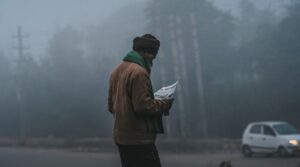
On mornings that should have felt like crisp winter, the air in many Indian cities felt unfamiliar…heavier, warmer, almost out of season. The subtle chill that once defined December and January seemed shorter-lived, less reliable.
Across regions known for their winter bite, temperatures lingered higher than expected, blurring the line between seasons. This was not just perception. It was measurable.
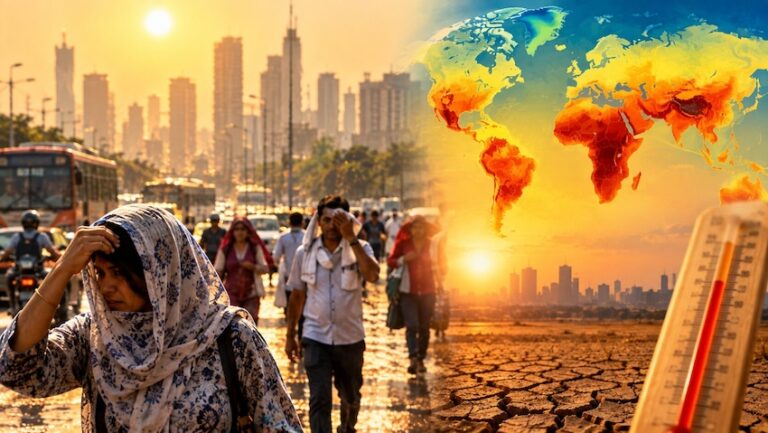
A new analysis by Climate Central found that between December 2025 and February 2026, around 1.4 billion people globally, roughly 17% of the population experienced temperatures strongly influenced by climate change on any given day. Over the same period, 2.5 billion people were exposed to at least 30 days of such climate-influenced heat.
What makes this striking is timing. These impacts unfolded during the Northern Hemisphere’s winter a season traditionally associated with relief from heat. Instead, the data shows that climate change is now shaping temperatures year-round, including months once considered safe from heat stress.
India’s cities: a shifting baseline
The report’s findings resonate strongly in India, where cities are already grappling with rising temperatures and changing climate patterns.
Among Indian urban centres, Srinagar stands out. According to reporting based on the Climate Central analysis, Srinagar experienced some of the most significant climate change-driven heat influences in the country during this winter period. For a city historically defined by cold winters, this marks a notable shift.
Further south and west, major urban centres like Delhi, Mumbai, and Ahmedabad are also showing signs of seasonal disruption. In March 2026, all three recorded temperatures exceeding 40°C an unusually early spike that experts have linked to broader warming trends. Together, these patterns suggest that cities are not only becoming hotter, but are also experiencing heat earlier in the year and for longer stretches than before.
Understanding “risky heat” in an urban context
At the core of the Climate Central analysis is the idea of “risky heat” temperatures that exceed what is typical for a given location based on historical records and that may pose risks to human health.
Globally, the report finds that climate change is responsible for a significant share of these unusually hot days. In many regions, it accounts for the majority of such days, and in some cases, for all of them during the study period. This highlights how deeply human-driven warming is now embedded in everyday weather patterns.
For urban India, this concept is especially relevant. Cities concentrate people, infrastructure, and economic activity, which means even modest shifts in temperature can have outsized impacts. Warmer-than-usual winter afternoons, nights that do not cool as much as they used to, and extended periods of thermal discomfort are becoming more common. Even when temperatures do not meet the threshold of a formal heatwave, deviations from historical norms can still strain human health and urban systems.
Why cities feel the heat more
Urban areas are particularly vulnerable to rising temperatures due to the urban heat island effect, where built environments trap and re-radiate heat.
Materials such as concrete and asphalt absorb solar energy during the day and release it slowly at night, keeping cities warmer than surrounding rural areas. This effect is intensified by limited green cover and high population density. As a result, cities often experience higher temperatures and reduced night time cooling, both of which contribute to prolonged heat exposure.
Recent observations from Indian cities highlight how this plays out on the ground. In Chennai, residents have identified extreme heat as the most widely felt climate impact, affecting daily routines and comfort. In Tiruchirappalli, studies have identified several urban wards as high-risk zones for heat exposure due to dense construction and low vegetation. These examples reflect a broader reality across urban India, where city design itself is amplifying the effects of a warming climate.
The erosion of seasonal rhythms
India’s climate has long followed a recognisable rhythm of cool winters, hot summers, and monsoon rains. Increasingly, that rhythm is becoming less predictable.
There is growing evidence that heatwaves are arriving earlier, winters are becoming warmer and shorter, and extreme temperatures are appearing outside their usual seasonal windows. The early March 2026 heat in cities like Delhi, Mumbai, and Ahmedabad is one such example. Similarly, the 2022 heatwave was notable for its unusually early onset, effectively compressing or even eliminating the spring season in parts of the country.
These changes suggest that climate change is not only intensifying extremes but is also altering the timing of seasons. The calendar itself is beginning to shift, with implications for agriculture, health, and daily life.
Everyday impacts in urban life
For people living in cities, these changes are tangible and immediate. Warmer winters and extended heat periods influence health, energy use, and productivity in ways that are becoming increasingly difficult to ignore.
Higher temperatures, even outside peak summer, raise the risk of dehydration and heat-related illnesses. At the same time, the demand for cooling through fans, air conditioners, and refrigeration continues to rise, placing additional strain on electricity systems. For those working outdoors or in informal sectors, longer periods of heat exposure can reduce productivity and increase physical stress.
The Climate Central findings make clear that climate change is no longer limited to extreme events. It is shaping everyday temperature patterns, altering how people experience even ordinary days.
A broader pattern of vulnerability
India’s exposure to climate stress extends beyond rising temperatures. Research by the Council on Energy, Environment and Water shows that more than 75% of Indian districts are now hotspots for extreme climate events, including heatwaves, floods, and cyclones.
In urban areas, these risks often overlap. Rising heat interacts with air pollution, water scarcity, and extreme rainfall, creating complex and compounded challenges. Cities must therefore contend not just with individual hazards, but with multiple, interacting stresses that can occur simultaneously or in rapid succession.
A present-tense crisis
One of the most important insights from the Climate Central analysis is its immediacy. Climate change is not a distant or abstract threat it is already shaping how seasons feel and how cities function.
The fact that significant climate-driven heat exposure is now occurring even during winter months highlights how deeply these changes are embedded. What was once considered unusual is becoming increasingly normal.
Cities as the Climate Frontline
India’s cities are becoming the clearest expression of climate change in action.
From the warming winters of Srinagar to the early heat in Delhi and Ahmedabad, urban centres are revealing a new reality one in which traditional seasonal boundaries are fading.
This has far-reaching implications for infrastructure, public health, and urban planning.
Cities will need to adapt not only to hotter summers but to the possibility of year-round thermal stress. As this transition unfolds, the experience of climate change will become less about isolated events and more about a continuous shift in baseline conditions.
If winter itself is no longer reliably cool, then climate change is no longer a disruption.
It is the environment in which urban life now unfolds.
References:
Banner Image: Photo by Rupinder Singh on Unsplash
Sections of this article may have been developed with the assistance of artificial intelligence tools to support research, drafting and language refinement. All information has been reviewed, edited and verified by the author/editor to ensure accuracy, context and editorial integrity. The responsibility for the final content, interpretations and conclusions rests solely with the publisher.