Physical Address
23,24,25 & 26, 2nd Floor, Software Technology Park India, Opp: Garware Stadium,MIDC, Chikalthana, Aurangabad, Maharashtra – 431001 India
Physical Address
23,24,25 & 26, 2nd Floor, Software Technology Park India, Opp: Garware Stadium,MIDC, Chikalthana, Aurangabad, Maharashtra – 431001 India
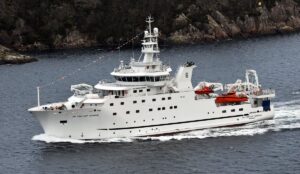
Nearly a year after bureaucratic delays forced its mission to be cancelled, the UN-flagged research vessel Dr. Fridtjof Nansen has finally arrived in Sri Lanka’s waters to begin a crucial marine survey. Operated by Norway’s Institute of Marine Research under the FAO-led EAF-Nansen Programme, the ship reached Sri Lanka on March 11, marking the revival of a mission that scientists feared had been lost. The survey will gather vital data on fish populations, ocean health, biodiversity, and climate-driven changes in the Indian Ocean—information that is critical for managing Sri Lanka’s fisheries, protecting coastal ecosystems, and supporting the livelihoods of millions who depend on the sea.
Notably, the vessel has had previous missions in Sri Lanka in 1979 and 2018. Marine scientists, alarmed by the cancellation, warned that they would lose months of stock assessments and ecosystem monitoring. Now, with revised approval protocols, the survey is moving ahead, offering Sri Lanka a vital opportunity to collect data on fish populations, ocean health, and biodiversity under changing climate conditions.
Cancellation Amid Policy Uncertainty
The 2025 postponement stemmed from a late approval process in Colombo. In December 2023, Sri Lanka had imposed a one‑year moratorium on foreign research vessels to draft new oversight procedures. Unresolved bureaucratic delays blocked Nansen’s July 2025 visit even after the moratorium expired in December 2024. Reports say, the UN Resident Coordinator’s office had requested permission in June 2025, but the Ministry of Foreign Affairs never formally replied, rendering it “too late” to deploy the vessel. Marine scientists decried this missed opportunity, noting that losing the Nansen meant foregoing critical fisheries and oceanographic data. The UN letter warned that cancelling the visit would cost Sri Lanka over USD 1 million in FAO support and jeopardize Green Climate Fund programs dependent on the data.
Renewed Mission and Local Coordination
By early 2026, the Sri Lankan government acted to resume the mission. On 11 March 2026, Sri Lanka’s foreign ministry announced Dr. Fridtjof Nansen had been invited to carry out a“comprehensive marine scientific survey” in the country’s Exclusive Economic Zone. The announcement emphasized a collaborative effort involving the Foreign Affairs Ministry, the Ministry of Fisheries, Aquatic and Ocean Resources, and the National Aquatic Resources Research and Development Agency (NARA).
Importance for Fisheries and Coastal Communities
This survey is crucial for Sri Lanka’s sustainable fisheries management. The Nansen has historically focused on assessing commercial fish stocks in the country’s EEZ—measuringspecies abundance, distribution, and seasonal patterns across the continental shelf. In past missions, every time the ship paused at a fixed sampling station, it deployed trawl nets, plankton nets,and conductivity–temperature–depth (CTD) probes to catalog fish, plankton, and ocean conditions. These surveys reveal where economically important fish like tuna, mackerel, and deep‑sea species congregate and how stock sizes have changed over time. Importantly, the Nansen uses the same standardized methods as Sri Lanka’s first comprehensive surveys in 1978–80, enabling direct comparisons that show decades of change in fish populations and ecosystem health.
The data are expected to inform critical management decisions. During the 2018 Nansen survey off Sri Lanka, for example, 20 local scientists worked alongside Norwegian researchers and produced over 15 peer-reviewed studies on stock depletion, biodiversity, and ocean productivity. FAO and Norwegian officials emphasize that up-to-date survey results give the government the “data needed for future management of the country’s fisheries resources.” Sri Lankan authorities have also highlighted that previous surveys directly influenced national fisheries policy, with fish landings rising significantly after the first Nansen baseline maps of 1978–80 helped optimize fishing efforts. In practical terms, the 2026 cruise will supply fresh population estimates to recalibrate quotas, guide seasonal closures, and identify vulnerable species and habitats in Sri Lanka’s vast 517,000 km² EEZ. More details can be read here
Coastal communities stand to benefit as well. Nearly half of Sri Lankan dietary animal protein comes from fish, and many island communities rely on fishing income. By pinpointing rich fishing grounds and monitoring resource trends, the survey can support livelihoods through better science-based management. It will also help evaluate lingering impacts of Sri Lanka’s 2021 X-Press Pearl maritime disaster: officials say the mission would assess water quality and pollutant levels (oil, chemicals, and microplastics) remaining in affected areas. In this way, the survey ties into broader coastal conservation and economic planning, ensuring that Sri Lanka’s fisheries and tourism sectors have reliable data on ocean health.
Climate Change, Biodiversity, and Ocean Health
The Dr. Fridtjof Nansen is not just a fishery survey ship-it is also a floating ocean observatory collecting climate and ecosystem data that few countries could obtain on their own. Its CTD casts measure temperature, salinity, oxygen, and acidity throughout the water column, providing a snapshot of ocean conditions that can be compared over time. In regions like Sri Lanka’s EEZ (Exclusive Economic Zone), these measurements are especially valuable for detecting climate-driven changes.
Ocean scientists note that the Indian Ocean is warming faster than the global average, altering monsoon currents and the distribution of plankton and fish. Continuous, systematic monitoring by the Nansen helps track warming trends and acidification: for example, the ship’s CTD (conductivity, temperature, and depth) sensors routinely collect data on water temperature and acidity that feed into regional climate models.In recent cruises, Nansen teams have even begun measuring microplastic concentrations in the water, adding pollution indicators to climate portfolios.
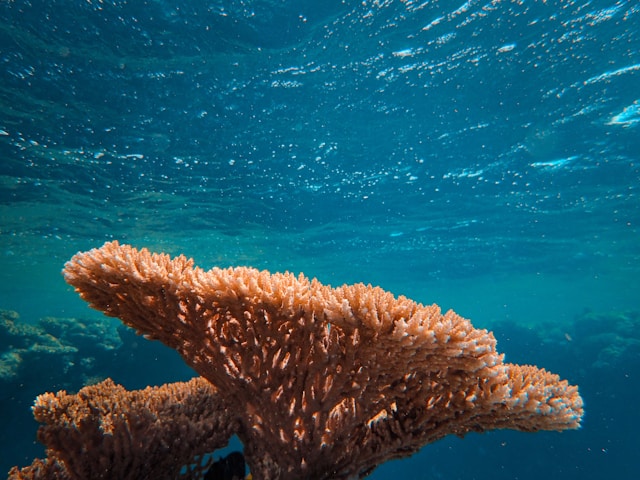
The 2026 survey will also study marine biodiversity, from surface plankton to deep-sea corals. Nansen expeditions are renowned for their biological sampling: scientists sort every species caught in trawls and plankton nets. The Nansen Program has documented over 5,000 fish species worldwide, many of them first records for the areas surveyed. In previous missions, the Nansen discovered entirely new species and mapped deep-water coral reefs. Off Sri Lanka, this cruise will look for key habitat structures like coral and sponge banks, which support biodiversity and act as climate refuges. FAO experts emphasize that knowing what lives in these waters is essential under climate stress: Biodiversity surveys help Sri Lanka identify and protect ecosystems that contribute to food security and coastal protection.
Legacy of the Nansen Program
The Nansen Program has decades of experience with exactly this kind of work. Launched in 1975 by Norway and FAO, it has become one of the world’s longest-running fisheries science initiatives. Three successive Dr. Fridtjof Nansen vessels have conducted over 422 scientific cruises in more than 60 countries.Collectively, these surveys have paused at over 74,000oceanographic stations to sample fish, plankton, nutrients, and more. The program’s scientists have hauled nets nearly 37,000 times and performed over 22,000 profiles, creating long-term time series that are often the only ecosystem data available for partner nations. These time series are invaluable for understanding trends such as stock declines or shifts in species due to warming. Indeed, Nansen data are routinely incorporated into ecosystem-based fisheries assessments and global analyses of ocean health.
For Sri Lanka in particular, Nansen’s legacy is already significant. The first surveys in 1978-80 provided Sri Lanka’s baseline ocean atlas, on which decades of fishery planning relied. The 2018 cruise under NARA’s collaboration produced maps and reports that informed the country’s SDG14 (Life Below Water) goals and led to commitments to science-based management. This new survey will build on that legacy – the first Nansen survey since 2018 – effectively extending Sri Lanka’s marine data record into the 2020s. With climate change accelerating, these multi-decadal data are critical: scientists stress that without up-to-date surveys, understanding long-term shifts in currents, biomass, and biodiversity is impossible.
Importantly, the Nansen Program also emphasizes capacity-building. Each cruise embeds local researchers on the ship as trainees. In Bangladesh and elsewhere, Nansen missions have trained hundreds of scientists from developing countries in modern survey techniques. Sri Lanka’s plan to send NARAscientists to other cruises reflects this training focus. Beyond data, the collaborative survey fosters local expertise: Sri Lankan oceanographers are actively involved in planning and executing the 2026 survey, ensuring the knowledge and protocols stay within the country. As one Sri Lankan scientist put it, international expeditions like the Nansen must involve “full participation” by local researchers to truly benefit the nation.
Looking Forward
Marine scientists are optimistic that they can recover years of lost time now that Dr. Fridtjof Nansen is back on course for Sri Lanka. The data collected will directly feed into national stock assessments, helping adjust fishing limits and seasons to current conditions. They will also guide coastal planners preparing for climate impacts: for example, shifting coral bleaching, changing pelagic fish distributions, or new invasive species. The survey represents a convergence of science and policy. By proceeding under a transparent framework with the government retaining full oversight of data as officials demand, Sri Lanka can demonstrate how to balance sovereignty with global cooperation. Observers note that this cooperation aligns with international commitments: UNCLOS and the new High Seas Treaty both call on countries to build ocean science capacity and share data for sustainability.
The results of this mission on the water will ultimately determine its success. If the Nansen survey yields new insights on Sri Lanka’s fish stocks, ocean productivity, and biodiversity, it could directly benefit the country’s food security and resilience to climate change. It will also prove the value of global partnerships. As FAO, Norway, and Sri Lanka have emphasized, such surveys help conserve the oceans and advanceSDG 14 on “Life Below Water,” which is vital for Sri Lanka’s economic growth and community wellbeing. After a year of uncertainty, Dr. Fridtjof Nansen’s imminent cruise offers Sri Lanka a “momentum” to translate scientific data into stronger marine stewardship. The lessons and data it brings home will shape fisheries policy for years to come—and stand as another chapter in the Nansen Programme’s celebrated contribution to global ocean science.
References:
Sri Lanka ban halts crucial marine data collection
https://www.themorning.lk/articles/0q0jBvgBwdwnnVszVGyI
https://oceandecade.org/news/50-years-of-the-nansen-programme
https://www.bluegreenlovers.org/2025/06/delaying-nansen-survey-contradiction-of.html
https://www.fao.org/srilanka/news/detail-events/fr/c/1178618
Banner Image: Photo by Kjartan Mæstad/HI Institute of Marine Research
Sections of this article may have been developed with the assistance of artificial intelligence tools to support research, drafting and language refinement. All information has been reviewed, edited and verified by the author/editor to ensure accuracy, context and editorial integrity. The responsibility for the final content, interpretations and conclusions rests solely with the publisher.