Physical Address
23,24,25 & 26, 2nd Floor, Software Technology Park India, Opp: Garware Stadium,MIDC, Chikalthana, Aurangabad, Maharashtra – 431001 India
Physical Address
23,24,25 & 26, 2nd Floor, Software Technology Park India, Opp: Garware Stadium,MIDC, Chikalthana, Aurangabad, Maharashtra – 431001 India

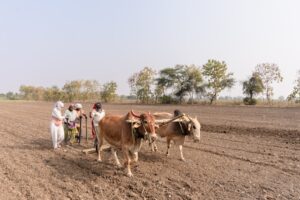
India’s agricultural soils are entering a period of deep stress. A major ICAR-coordinated study covering the years 2017 to 2023 has revealed that soil organic carbon, a core indicator of soil health, is declining across large parts of the country. The findings are based on an extensive analysis of 254,236 soil samples collected from 620 districts. For a country where farming supports millions and drives food security, the downward trend in soil carbon raises essential questions about long-term sustainability. The results also bring renewed attention to the choices that shape modern agriculture, particularly how fertilisers are used and how organic matter is managed.
The ICAR analysis confirms what many field researchers have observed for years. Soils across India are losing carbon faster than they can rebuild it. Organic matter is breaking down quickly, microbial activity is weakening, and topsoil is becoming more vulnerable to erosion. Much of this is tied to unbalanced nutrient inputs and a gradual shift away from practices that once sustained soil structure. As the country prepares for greater climate variability and rising food demand, these findings signal a need to rethink how soils are managed and protected.
Inside the ICAR Study
The ICAR study is one of the most detailed assessments of soil organic carbon undertaken in India. With samples drawn from nearly the entire agricultural landscape, it provides a clear picture of the pressures facing Indian soils. Many districts now fall into the low-to-medium carbon category, which affects fertility, moisture retention, and nutrient availability. The dataset, spanning six years, shows that the decline is widespread rather than concentrated in a few regions. States with intensive cereal production and frequent tillage recorded some of the fastest losses.
To understand the implications of the findings, CFC India reached out to soil and climate researchers at IIT Bombay. Dr Manabendra Saharia, associate professor, IIT Bombay, while interacting with CFC India, said, “Yes, the ICAR’s findings align with field observations in India. Imbalanced fertilizer use is a widespread issue, as many farmers may not have access to soil or crop-based recommendations. This imbalance negatively affects overall soil health. This practice disrupts the balance of Soil Organic Carbon (SOC), N, P, and K, all of which are necessary for long-term productivity. Soil Organic Carbon is especially important for maintaining good soil structure and holding the topsoil together. Therefore, a decline in SOC can lead to increased topsoil erosion, which reduces soil fertility and, in turn, can lower crop productivity and impact long-term food security.”
Dr Saharia emphasised that the scale of the ICAR dataset adds weight to concerns raised by agronomists and soil scientists. The patterns observed in the study also match those in long-term experimental plots that have monitored carbon losses for decades. With such large samples included, the findings cannot be dismissed as temporary shifts but instead point to a systematic issue in the way soils are managed across India.
Why Soil Carbon Matters
Soil organic carbon is central to the functioning of healthy soils. It helps store water, supports microbial populations, and improves soil structure, which in turn protects it from erosion. Fields with higher carbon levels are more resilient during dry spells and require fewer chemical inputs. When carbon declines, soils become compacted and lose their ability to hold nutrients, forcing farmers to use more fertilisers to maintain yields. This increases input costs and stress on natural systems.
The environmental dimension is equally important. Soils with healthy carbon levels act as reservoirs that store significant amounts of carbon. When this carbon is lost due to poor management or erosion, it contributes to atmospheric emissions. India’s climate goals rely in part on the ability to protect and rebuild soil carbon across cropland. The ICAR findings add urgency to ongoing discussions within the scientific community on integrating soil health into national climate planning. Dr Ravi Raj, a postdoctoral scientist at IIT Bombay, noted that soil carbon loss has cascading impacts on crop performance, water management, and long-term sustainability.
The Fertiliser Imbalance Problem
A significant factor behind carbon depletion is the imbalance in fertiliser use that has developed over decades. Many farms rely heavily on nitrogen-based fertilisers, often applied without soil testing or crop-specific guidelines. When nitrogen is used in excess and organic matter remains limited, the natural balance between nutrients starts to break down. Soil microbes lose activity, aggregates weaken, and carbon stored in the soil becomes unstable. Over time, topsoil loses strength and becomes more prone to erosion.
Dr Saharia pointed out that farmers often lack access to tailored recommendations, leading to a cycle of over-application. The NPK ratio remains skewed in many regions, particularly in areas dominated by rice-wheat systems. Without organic inputs such as compost, green manure, or crop residues, the soil is unable to rebuild lost carbon. This creates a dependence on chemical inputs that offer short-term gains but weaken long-term soil health. The ICAR study highlights that soils under diversified systems fare better, but the overall trend remains concerning.
Restoring the Balance
Scientists agree that soil carbon can be restored with consistent management. Dr Ravi Raj, postdoctoral scientist, IIT Bombay, while interacting with CFC India, said, “Based on the ICAR’s field trials and our recent research, it is evident that restoring SOC requires a dual strategy: building new carbon through improved management practices while simultaneously conserving the existing carbon stocks already present in our soils. ICAR’s long-term trials have demonstrated the effectiveness of integrated nutrient management, conservation tillage, and organic amendments as feasible pathways to enhance SOC.”
Dr Raj emphasised that global studies support these findings. He added, “Even research on carbon sequestration at the United States Department of Agriculture (USDA) highlights that diversification of cropping systems, particularly through the inclusion of cover crops, plays a crucial role in improving soil health and carbon storage. In the U.S. Midwest and Mid-Atlantic regions, species such as rye, winter wheat, barley, and hairy vetch are widely adopted as winter cover crops. These non-cash crops are typically planted during the post-harvest and pre-planting period to maintain living roots in the soil when fields would otherwise remain bare. Extensive research has shown that their inclusion can significantly increase carbon inputs, reduce erosion, and improve soil aggregation, moisture retention, and nutrient cycling.”
He further noted that erosion control is essential for long-term success. “Soil erosion, on the other hand, is a critical issue that leads to the loss of the most fertile layer of land. Our research indicates that large regions of India experience severe erosion, causing the preferential removal of topsoil, which serves as both the most fertile and the most carbon-rich layer. Unless this ongoing depletion is effectively addressed, even the most advanced carbon sequestration interventions will have limited and short-lived impacts. Therefore, a comprehensive national carbon management framework should integrate soil conservation with carbon enhancement by promoting region-specific cover crops, conservation tillage, and erosion control measures aligned with ICAR’s agronomic recommendations to ensure long-term soil health, carbon restoration, and agricultural sustainability.”
References:
https://onlinelibrary.wiley.com/doi/10.1002/ldr.70252
https://doi.org/10.1016/j.catena.2024.107996
Banner image: Photo by EqualStock on Unsplash

Comments are closed.






ge1oa4
вывод из запоя круглосуточно череповец
vivod-iz-zapoya-cherepovec018.ru
лечение запоя череповец
Подробнее [url=https://kra45cc.cc/]кра ссылка[/url]
сайт [url=https://vodkabet-vbet.site]водка бет[/url]