Physical Address
23,24,25 & 26, 2nd Floor, Software Technology Park India, Opp: Garware Stadium,MIDC, Chikalthana, Aurangabad, Maharashtra – 431001 India
Physical Address
23,24,25 & 26, 2nd Floor, Software Technology Park India, Opp: Garware Stadium,MIDC, Chikalthana, Aurangabad, Maharashtra – 431001 India

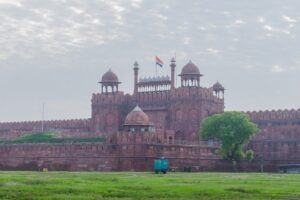
Severe air pollution in Delhi is leaving behind more than just health hazards. A new study has revealed that the city’s iconic Red Fort is now facing damage from “black crusts” forming on its red sandstone walls. Researchers say these deposits, caused by pollutants interacting with the stone, are gradually eating away at the monument’s carvings and could threaten its long-term survival if not addressed. Built in the 17th century by Mughal emperor Shah Jahan, the Red Fort has stood as both a symbol of Delhi’s rich heritage and a site of immense historical significance. But scientists warn that unchecked pollution could rob future generations of the monument’s beauty and cultural importance.
What the Study Revealed
The peer-reviewed study, published in the journal Heritage, is the first comprehensive research into how Delhi’s air pollution is affecting the fort. Conducted between 2021 and 2023 by Indian and Italian researchers, the project involved analysing air quality data and collecting crust samples from different parts of the fort.
They found that these black deposits, which range between 0.05mm and 0.5mm in thickness, are the result of pollutants, particularly fine particulate matter, settling on the sandstone. Over time, this accumulation leads to discolouration and surface damage. The researchers also observed blistering, flaking and deterioration on vaults, arches and intricate carvings, raising concerns about irreversible harm if conservation work is delayed.
Delhi’s Pollution and Heritage at Risk
Delhi has consistently ranked among the world’s most polluted cities, with its air quality often reaching hazardous levels, especially during winter. Conservationists have long warned that such conditions endanger the city’s heritage structures. The Red Fort is not the first to face damage. In 2018, India’s Supreme Court expressed alarm over the Taj Mahal turning yellow and brown due to air and water pollution and urged stronger measures to protect it.
The latest findings reinforce how pollution does not stop at affecting public health but also leaves a lasting imprint on cultural treasures. The researchers behind the study noted that particulate matter, particularly PM2.5 and PM10, is widely recognised as a major contributor to soiling and surface blackening. As these particles build up over time, monuments become vulnerable to both aesthetic loss and structural damage.
What Needs to Be Done
The study stresses the urgency of conservation interventions. It points out that in the early stages, thin black layers can still be removed, offering a chance to slow down the damage. Researchers recommend applying protective coatings or sealants on highly affected areas to prevent further crust formation and shield delicate carvings from future harm.
They also call for consistent monitoring and timely cleaning to ensure that the fort’s condition does not worsen. For a monument that has hosted every prime minister’s Independence Day address since Jawaharlal Nehru first hoisted the national flag there in 1947, preserving its integrity is seen as both a cultural and national responsibility. Protecting the Red Fort from pollution damage, experts argue, will require coordinated efforts that go beyond conservation science to include broader measures aimed at improving Delhi’s air.
References:
https://www.mdpi.com/2571-9408/8/6/236
https://www.bbc.com/news/world-asia-india-43967685
Banner image:
Photo by Pramod Tiwari on Unsplash