Physical Address
23,24,25 & 26, 2nd Floor, Software Technology Park India, Opp: Garware Stadium,MIDC, Chikalthana, Aurangabad, Maharashtra – 431001 India
Physical Address
23,24,25 & 26, 2nd Floor, Software Technology Park India, Opp: Garware Stadium,MIDC, Chikalthana, Aurangabad, Maharashtra – 431001 India

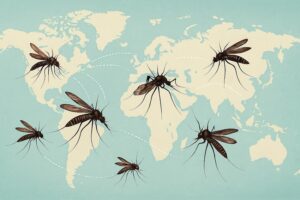
Each year, as the monsoon clouds gather, India gears up not only for rains but also for a surge in mosquito-borne illnesses. This season, the Union Health Ministry has sounded an early alarm, urging states and Union Territories to step up their response against malaria and dengue. The Union Health Minister has asked for detailed action plans within 20 days. Hospitals are advised to expand diagnostic facilities, stock up on medicines, and ensure mosquito-free wards. These moves tie into national programmes such as the National Strategic Plan for Malaria Elimination (2023–27) and the National Dengue Control Strategy, signalling India’s determination to eliminate malaria by 2030 and bring dengue under control.
Dengue: No Longer a Seasonal Visitor
For decades, dengue was largely viewed as a seasonal nuisance—its spikes coinciding with monsoon months when stagnant water offered ideal mosquito breeding grounds. But the disease has steadily outgrown this seasonal pattern. Rapid urbanisation, poor waste management, and unsafe water storage practices have allowed Aedes aegypti, the primary dengue vector, to thrive even beyond the rainy season.
The result is a pattern of recurring and intensifying outbreaks across the country. In urban and peri-urban centres, dengue cases now stretch over longer periods, overwhelming local health systems and disrupting community life. Fogging drives, larvicide spraying, and cleanliness campaigns have become routine, yet the persistence of dengue highlights that these efforts, though vital, are not enough.
Climate Change: The Invisible Catalyst
What has transformed dengue into a larger, more stubborn challenge is the changing climate. A recent study spanning 21 countries in Asia and the Americas found that rising global temperatures have already contributed to an additional 4.6 million dengue cases every year.
Warming conditions extend the breeding and biting season of Aedes aegypti mosquitoes, while erratic rainfall patterns create new pools of stagnant water. These shifts are enabling dengue to spread into areas once considered safe—cooler highlands, smaller towns, and peri-urban belts.
For India, this means dengue is no longer bound by the monsoon calendar. Outbreaks are surfacing earlier, lasting longer, and spreading farther. The fight against the mosquito is being reshaped by forces far bigger than municipal fogging schedules—it is being redrawn by the planet’s changing climate.
Why India Must Rethink Its Strategy
India’s current response focuses on strengthening hospitals, improving diagnostics, and running large-scale vector control drives. These measures are essential, but climate change demands a shift from reactive containment to proactive anticipation.
Experts argue that integrating climate data into public health planning could be a game-changer. Monitoring temperature and rainfall variations can help predict outbreak hotspots, allowing states to pre-emptively step up larvicide use, waste disposal, and awareness campaigns. Such forecasting could ensure that resources are deployed before a surge occurs, not after.
Moreover, research and innovation will play an increasingly important role—whether in developing vaccines, improving mosquito-control technologies, or using satellite imagery to map high-risk zones.
Community Action: The First Line of Defence
While governments craft strategies, community behaviour remains central to the fight against dengue. The Aedes aegypti mosquito breeds in small collections of water—rooftop tanks, discarded tyres, flowerpots, and even bottle caps. Eliminating these breeding sites requires household vigilance.
Public campaigns that link climate change with individual action can motivate people to act. If citizens understand that rising temperatures and erratic rains are fuelling dengue, they may be more inclined to clean their surroundings, cover water containers, and participate in neighbourhood clean-up drives.
Community engagement, therefore, is not just about cooperation—it is about creating a shared sense of urgency that connects the local fight against mosquitoes to the global fight against climate change.
Looking Ahead: A Dual Battle
India’s proactive measures, from malaria elimination targets to dengue control strategies, are steps in the right direction. But the path ahead is steeper than before. With climate change adding millions of new dengue cases worldwide each year, the battle against mosquitoes cannot be fought in isolation.
The coming years will test India’s ability to blend traditional public health tools with forward-looking, climate-informed planning. Hospitals must be resilient, surveillance systems must be smarter, and citizens must be more engaged than ever.
References:
https://pubmed.ncbi.nlm.nih.gov/1568273
https://pmc.ncbi.nlm.nih.gov/articles/PMC4576013
https://www.sciencedirect.com/science/article/abs/pii/S0001706X24002304
https://www.sciencedirect.com/science/article/pii/S147789392500047X?via%3Dihub
Banner Image: AI Generated