Physical Address
23,24,25 & 26, 2nd Floor, Software Technology Park India, Opp: Garware Stadium,MIDC, Chikalthana, Aurangabad, Maharashtra – 431001 India
Physical Address
23,24,25 & 26, 2nd Floor, Software Technology Park India, Opp: Garware Stadium,MIDC, Chikalthana, Aurangabad, Maharashtra – 431001 India

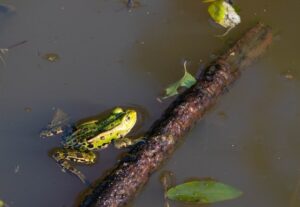
Climate Change Reshaping Animal Behavior: Sri Lanka and Beyond
Climate change is not just melting glaciers; it is already altering the rhythms of life for wildlife. In Sri Lanka, scientists and conservationists are documenting surprising shifts in animal behaviour, physiology, and ranges as temperatures rise and rainfall patterns change. Migratory birds are arriving at new times, island endemics are squeezed into shrinking habitats, and even marine life is stressed by warming seas. Together, these changes signal broad ecological imbalance and hint at an uncertain future for biodiversity. Globally, similar trends are observed: many species are moving to cooler areas, breeding earlier (or failing to do so), and in some cases, adapting in creative ways; however, others are nearing collapse. Understanding these changes can help society respond more effectively to them.
Erratic migrations. Sri Lanka lies along a central flyway, hosting some 110 migratory bird species each year. Traditionally, these birds — from Siberian songbirds to Central Asian waterfowl — arrive in September and October to overwinter. However, experts now report that climate change has made migration timing unpredictable. In recent years, the season has often started earlier (or sometimes later) than usual. In 2024, for example, conservationist Dr. Jagath Gunawardana noted that migrants appeared unusually early in August. Speaking to the Daily Mirror newspaper, he expressed those views. These timing shifts can desynchronise birds from food resources. As an Audubon Society analysis explains, warmer springs cause insect “blooms” to occur earlier, so birds that fail to advance their migration risk missing the peak food supply for their chicks. In short, the insect-feeding cycle is shifting, and migratory birds must adapt their schedules or arrive when the buffet is already gone. More details can be read here.
Changes in local bird life – Beyond timing, Sri Lanka is witnessing changes in the birds that inhabit the area. Conservationists report an increase in vagrant species (birds seen outside their normal ranges). Some species that once wintered only on the Indian subcontinent are now turning up in Sri Lankan forests. Seasonal breeders, such as the endangered white-bellied sea eagle or the Asian koel, may also alter their nesting dates in response to changing rainfall patterns. Meanwhile, climate-driven habitat changes are having a significant impact. For example, rising sea levels and extreme rainfall pose a threat to coastal wetlands, such as Bundala National Park. Ecologists warn that even slight sea-level rises are allowing saltwater to intrude into Bundala’s freshwater lagoons, altering salinity and driving away species. Bundala has already lost its flagship, the Lesser Flamingo, due to such changes in water chemistry. Birds are thus sounding an alarm: when habitats shift or disappear, the very presence of once-common species can vanish. More details can be read here.
Stress on endemic forest fauna – Sri Lanka’s rainforests are crammed with unique wildlife, from frogs and lizards to birds like the Sri Lanka Grey Hornbill. These montane and wet-zone species often have small ranges and cannot easily relocate if the climate becomes hostile. Recent modelling studies find that higher-elevation endemics are especially at risk. For instance, one survey of 233 Sri Lankan endemic vertebrates projected climate-driven habitat loss by 2100. All models showed some endemic extinctions, especially among frogs, salamanders, and reptiles. Amphibians and reptiles are projected to experience the most significant losses (up to ~22% of species under a high-warming scenario), mainly because they cannot migrate uphill past mountaintops. A recent research paper can be read here. Even the endemic hornbills face trouble: climate niche models predict that the Malabar Pied Hornbill’s suitable range will shrink drastically. At the same time, the Sri Lanka Grey Hornbill may have to shift deeper into the island’s southwestern wet zone. In short, rising heat and erratic rain are squeezing forest species into ever-smaller refuges. The related research paper about it can be read here.
Cloud forest amphibian at risk: The Knuckles Mountain cloud forests harbour species like the newly discovered frog Lankanectes pera. This frog lives only in cool, misty streams high in the hills. Conservationists warn that even slight drying of the Knuckles habitat will doom this frog. Its tiny population is “increasingly threatened by climate change,” they say, because any shift in cloud cover or moisture can push it to extinction. In other words, high-altitude specialists are frontline victims of warming climates. For more details, please visit the Earth.org website.
Marine and coastal changes. Sri Lanka’s oceans and coasts are changing too. Coral reefs off the coast have already experienced significant bleaching due to hotter sea temperatures—for example, the island’s reefs suffered mass coral die-offs during the 1998 and 2016 global bleaching events. More details can be read here. When corals bleach, reef fish lose habitat and breeding grounds. Fisher communities have noted changes in fish behaviour: some tuna and reef fish are arriving at different seasons, chasing calmer waters or new plankton blooms. (Globally, many marine fish are indeed shifting poleward or into deeper water as oceans warm .) Sea turtles may also be affected: warmer sands on nesting beaches produce far more females (as seen in Australia’s turtle rookeries ), skewing future populations. While specific Sri Lankan data on turtle sex ratios is limited, researchers worry that even our turtles may show female-biased hatchling rates over time.
Links to a few previous articles on the behaviour changes of various animals in Sri Lanka, such as elephants are below:
Analysis on Sustainable Solutions for Human Elephant Conflict
Climate Change Aggravating the Human Elephant Conflict in Sri Lanka
Can ants be used as an indicator of climate change?
Global Patterns and Adaptations
Sri Lanka’s wildlife story is part of a larger global pattern. Around the world, biologists are documenting how climate change forces animals to adapt (or fail to). Key trends include shifts in range, altered breeding and migration timing, and new foraging behaviours — often with mixed success.
Poleward and elevational shifts: A clear global signal is that many species are moving to stay in their thermal comfort zones. Fish stocks in the Atlantic and Pacific have shifted their average biomass hundreds of miles northward or into deeper waters between the 1980s and 2010s. Similarly, butterflies, songbirds, and even mammals are often found now at higher latitudes or elevations than they were historically, with “virtually certain” evidence of climate impact. In Sri Lanka’s region, some bird and bat species are likewise moving deeper into shaded forests or higher hills to escape the heat. For more information, please refer to this link.
Timing changes (phenology): In the temperate zones, migratory birds and flowering plants are famously advancing their schedules. Studies show that North American songbirds now arrive on their breeding grounds earlier than in past decades, tracking the earlier arrival of spring. Such shifts can reduce “mismatches” where chicks hatch when insects are abundant. Yet not all species keep pace. Some long-distance migrants still follow internal calendars and may miss new food peaks, leading to lower chick survival. The net effect is that populations of certain birds (like some warblers and flycatchers) are declining in parts of Europe and North America because they can’t adapt fast enough. More details can be read here.
Behavioural innovations and limits: Some animals show remarkable flexibility. A remote polar bear population in Greenland has shifted from hunting seals on sea ice to hunting seals on chunks of glacial ice, enabling them to survive despite significantly reduced pack ice. Certain fish are adjusting their migration timing to coincide with the blooms of plankton. Some desert lizards and mammals are becoming more nocturnal to avoid daytime heat. However, even these adaptations have limits. Without ice platforms, even the “creative” polar bears are projected to decline unless global warming slows. Similarly, while some sea turtle hatcheries can artificially shade nests to increase male production, most wild turtles cannot easily find more suitable beaches. More details can be read here.
Physiological stress and failures: Hotter climates are creating physiological crises. Amphibians globally are ferocious hit – studies show that climate change is now the primary threat to frogs and salamanders, driving declines in nearly 40% of monitored species since 2004. Many mountain frogs have nowhere to go as their habitats dry up. In marine systems, corals (and the fish that depend on them) face “mass bleaching and die-off” during marine heatwaves. Even widespread insects like bees and butterflies are showing reduced ranges, which in turn affects the pollination of crops. More details can be read here.
Ecosystem ripple effects: All these changes have knock-on impacts. Migratory birds, for example, are essential insect controllers and pollinators; if they fail to arrive, insects can boom or ruin crops. Small fish moving north may alter predator-prey chains in entire ocean regions. The extinction of one amphibian or insect can disrupt food webs in rainforests. In Sri Lanka, the loss of an endemic frog or hornbill is not just a loss of a unique species – it signals that the forest ecosystem is under stress, which could eventually affect water cycles and agriculture downstream.
Building Wildlife Resilience: A Call to Action
The evidence is clear: climate change is reshaping animal behaviour now, not just in the future. Sri Lanka’s migratory birds, endemic frogs, hornbills, and reef communities are already showing the effects of a warming world. Globally, numerous species — from polar bears to penguins to pollinators — face similar challenges. What does this mean for us? First, it means that monitoring is crucial. Local observations by park rangers, scientists, and citizen scientists help track these changes in real time. Second, it implies that action must follow: conserving and restoring habitats gives wildlife room to move (for example, protecting mountain corridors and wetlands). Third, it demands climate mitigation — reducing greenhouse gas emissions — so that changes are not too rapid for life to cope.
References:
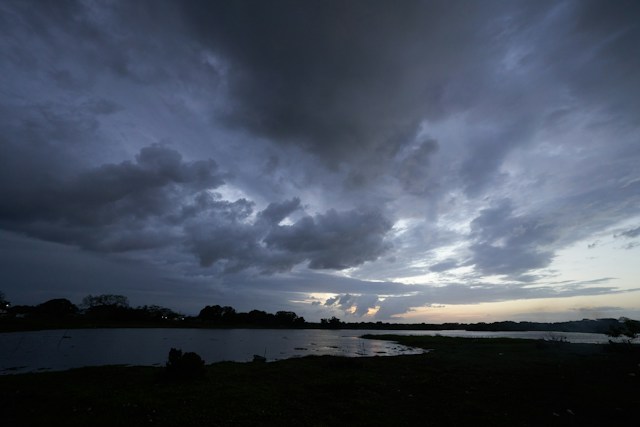
Banner Image: Photo by Jules Windey on Unsplash