Physical Address
23,24,25 & 26, 2nd Floor, Software Technology Park India, Opp: Garware Stadium,MIDC, Chikalthana, Aurangabad, Maharashtra – 431001 India
Physical Address
23,24,25 & 26, 2nd Floor, Software Technology Park India, Opp: Garware Stadium,MIDC, Chikalthana, Aurangabad, Maharashtra – 431001 India

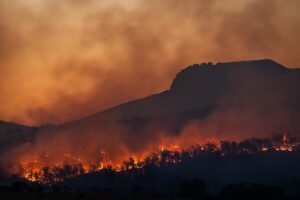
For decades, the risk of wildfires has often been measured by how much land burned. But a new international study shows the metric is getting more and more misleading. Although 2025 saw one of the lowest global burn areas since 2002, it was also the most expensive wildfire year on record, highlighting a growing trend toward fewer but much more destructive fires that are increasingly threatening communities, infrastructure and economies. Researchers say climate-driven heat, drought and expanding development in fire-prone landscapes are altering the nature of wildfire disasters across the globe.
Smaller burn area, but record economic losses
The study, published in Nature Reviews Earth & Environment and led by researchers at the University of East Anglia, found that wildfires burned around 335 million hectares globally in 2025, about 16% below the long-term average. Fire-related carbon emissions also fell to approximately 11 billion tonnes of CO2, making it the third lowest annual total since 2002. On the surface, those figures might suggest a relatively mild fire year.
However, researchers found a very different story when looking at human and economic impacts. Wildfires accounted for 38% of all insured natural hazard losses worldwide in 2025, making it the costliest wildfire year on record. The most expensive event was the devastating Los Angeles wildfire disaster, which alone generated around $40 billion in insured losses and roughly $53 billion in total losses, making it the costliest wildfire event ever recorded globally.
The study argues that traditional measures, such as burned area, no longer fully capture wildfire risk. While fewer hectares may be burning globally, fires are increasingly occurring in places where they can cause the greatest damage, including densely populated regions and areas where urban development meets forests and grasslands.
A shift from savannah fires to more destructive wildfires
Researchers say the global wildfire landscape is undergoing a significant transformation. Historically, large areas of the world’s burned land were caused by savannah fires in Africa and other grassland regions. These fires often cover vast areas but generally occur away from major population centres and cause relatively limited economic damage.
In contrast, 2025 saw another year of extreme fires in temperate and high latitude regions, including Canada, the United States, Europe and South Korea. According to the review, these fires caused more than 90 deaths and forced over 300,000 people to evacuate their homes. Canada also experienced a third consecutive year of extreme wildfire emissions, highlighting the persistence of severe fire conditions in some northern regions.
Europe’s experience illustrated this shift. While global burn area remained relatively low, the European Union recorded its most destructive wildfire season on record, with more than 1.07 million hectares burned across member states, nearly double the long-term average recorded by the European Forest Fire Information System.
Climate change is increasing wildfire risks
Scientists involved in the study put the rising losses down to a combination of climate and societal factors. Warmer temperatures are driving up evaporation and drying out vegetation, and more frequent heatwaves and longer droughts are creating conditions in which fires can catch alight more easily and spread more quickly.
Meanwhile, more people are moving into wildfire-prone areas. Researchers say that more homes, businesses and infrastructure are at risk of fire because development is expanding along the wildland-urban interface, the area where human settlements meet forests and other natural landscapes. This means that even relatively small fires can cause enormous economic losses if they happen in the vicinity of populated areas.
The findings add to a growing body of evidence showing that climate change is altering wildfire behaviour around the world. Scientists say future fire seasons may increasingly be defined not by the total area burned, but by where fires occur and the damage they leave behind. As heatwaves become more intense and fire-prone regions continue to expand, researchers warn that the economic and human costs of wildfires could continue rising even if the global burn area does not.
References:
https://www.nature.com/articles/s43017-026-00793-z
Banner image: Photo by Matt Palmer on Unsplash
Sections of this article may have been developed with the assistance of artificial intelligence tools to support research, drafting and language refinement. All information has been reviewed, edited and verified by the author/editor to ensure accuracy, context and editorial integrity. The responsibility for the final content, interpretations and conclusions rests solely with the publisher.