Physical Address
23,24,25 & 26, 2nd Floor, Software Technology Park India, Opp: Garware Stadium,MIDC, Chikalthana, Aurangabad, Maharashtra – 431001 India
Physical Address
23,24,25 & 26, 2nd Floor, Software Technology Park India, Opp: Garware Stadium,MIDC, Chikalthana, Aurangabad, Maharashtra – 431001 India

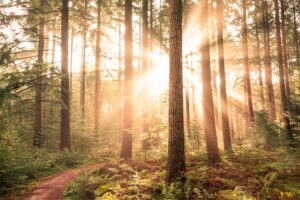
According to a new study published in Nature, even if global temperatures rise above 1.5°C only briefly, forests could suffer irreversible damage. The research warns that key ecosystems, especially the Amazon and boreal forests, might not recover fully even if temperatures return below the threshold later. This has profound implications for climate strategies that temporarily overshoot targets and use future carbon removal to reverse the damage. The study suggests nature may not follow the same recovery timeline as emissions trajectories.
Short-Term Warming, Long-Term Damage
Scientists ran Earth system model simulations to examine how ecosystems respond to scenarios where warming temporarily exceeds 1.5°C before returning below that threshold. Their findings show that brief overshoots can cause significant and lasting biomass losses in sensitive regions like tropical and boreal forests.
This challenges a core assumption in many climate policies and IPCC mitigation pathways: ecosystems will bounce back after peak warming. Unlike emissions, ecosystems regenerate slowly. Disturbances such as forest dieback or species loss may lock in for decades or centuries, even if emissions are curbed.
Amazon Rainforest Nears Irreversible Shift
The Amazon, long considered one of the planet’s most crucial carbon sinks, is already showing signs of decline. A study found that forest parts emit more carbon than they absorb. According to the new research, a brief warming overshoot could push large swaths of the Amazon into permanent degradation. These changes would not only accelerate climate change but also destabilise rainfall across South America and threaten Indigenous communities. As reported, recovery may be impossible once a tipping point is passed.
Boreal Forests Could Also Transform
The boreal forest belt, stretching across Canada, Russia, and Scandinavia, is also threatened. Rising temperatures alter species composition and trigger insect outbreaks, increasing fire risk. The study suggests a short overshoot above 1.5°C could drive permanent biome shifts in these regions.
These shifts may also change the Earth’s albedo and how much sunlight the surface reflects, which could further amplify warming. Cold-adapted species such as caribou and snowshoe hares may find their habitats shrinking rapidly, leading to cascading ecological impacts.
Rethinking Climate Policy Urgency
Many climate pathways, including those in the IEA Net Zero Roadmap, rely on temporary overshoots followed by future carbon capture to reduce atmospheric CO2. But this study clarifies that nature doesn’t follow the same playbook. Once critical ecosystems are destabilised, their ability to bounce back is severely limited. Experts have raised alarms about betting on high-tech removals without fully understanding the ecological consequences.
The message is simple: we must act now. While 1.5°C is still technically within reach, the margin is shrinking fast. For forests that have taken millennia to form, even a few years of delay could mean the difference between resilience and collapse.
References:
Risks of unavoidable impacts on forests at 1.5 °C with and without overshoot | Nature Climate Change
AR6 Synthesis Report: Climate Change 2023
Amazonia as a carbon source linked to deforestation and climate change | Nature
Amazon rainforest now emitting more CO2 than it absorbs
Photo by Maxim Hopman on Unsplash