Physical Address
23,24,25 & 26, 2nd Floor, Software Technology Park India, Opp: Garware Stadium,MIDC, Chikalthana, Aurangabad, Maharashtra – 431001 India
Physical Address
23,24,25 & 26, 2nd Floor, Software Technology Park India, Opp: Garware Stadium,MIDC, Chikalthana, Aurangabad, Maharashtra – 431001 India

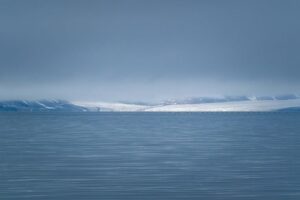
For a brief period, scientists thought the rapid decline in Arctic winter sea ice might be slowing. After decades of shrinking ice cover, observations between 2005 and 2024 suggested that winter sea ice was no longer decreasing at the same pace. Some researchers attributed this to natural climate variability, while others cautioned that it was too early to draw conclusions.
Now, two consecutive record-low winters have changed that understanding. A new study has found that the apparent slowdown was only temporary. The exceptionally low sea ice levels recorded during the winters of 2025 and 2026 have restored the long-term downward trend, reinforcing concerns that the Arctic continues to warm rapidly under the influence of climate change.
Sea ice, unlike glaciers or ice sheets, is frozen seawater that forms and melts with the seasons. Although it floats on the Arctic Ocean, it plays a vital role in regulating Earth’s climate. Its bright white surface reflects a significant portion of the Sun’s energy back into space, helping keep global temperatures in check. It also acts as an insulating layer between the ocean and the atmosphere, supports Arctic ecosystems and influences weather patterns across the Northern Hemisphere.
Scientists have monitored Arctic sea ice using satellite data since 1979. These observations have consistently shown a decline in sea ice extent, particularly during summer. Winter sea ice, which reaches its maximum extent around March, had also been shrinking for decades. However, between 2005 and 2024, researchers found that the decline in winter sea ice was no longer statistically significant. This raised the possibility that natural variations in ocean temperatures, atmospheric circulation and wind patterns were temporarily masking the effects of human-induced warming.
Record-Low Winters Confirm Long-Term Ice Loss
The latest observations have removed any doubts about the Arctic’s long-term trajectory. The winters of 2025 and 2026 recorded the lowest winter sea ice extent in the satellite era. The nearly six per cent decline between 2024 and 2025 was the largest year-to-year drop ever recorded. When these new data were added to existing records, the previously observed slowdown disappeared, restoring a statistically significant decline in winter sea ice.
The findings highlight an important principle of climate science: natural variability can influence short-term observations, but it does not override long-term warming caused by greenhouse gas emissions. Temporary slowdowns or rapid declines are expected within a changing climate, but the broader trend remains one of continuous ice loss.
The decline in winter sea ice is particularly concerning because it determines the amount and thickness of ice that survives into summer. When less ice forms during winter, the Arctic enters the warmer months with thinner and younger ice that melts more easily. This makes it increasingly difficult for the region to rebuild its ice cover each year.
The process also strengthens the “ice-albedo feedback”, one of the most powerful climate feedback mechanisms. Sea ice reflects most incoming solar radiation, whereas the darker ocean absorbs much more heat. As more ice disappears, larger areas of open water absorb additional heat, accelerating warming and delaying ice formation during the following winter. This creates a cycle that further speeds up Arctic ice loss.
Why the Arctic Matters to the Whole World
The shrinking Arctic is not just a regional concern. Changes in Arctic sea ice can influence atmospheric circulation and weather patterns far beyond the polar region. Scientists are studying how Arctic warming may affect heatwaves, cold spells, storms and rainfall patterns across North America, Europe and Asia.
The environmental consequences are equally severe. Polar bears rely on sea ice to hunt seals, while walruses use it as resting platforms between feeding trips. As sea ice becomes less extensive and less stable, these animals must travel greater distances, reducing their chances of survival. Indigenous communities that depend on sea ice for transportation, hunting and cultural practices are also facing increasing challenges.
The loss of sea ice is also opening new shipping routes and making Arctic resources more accessible. While this presents economic opportunities, it also raises concerns about environmental degradation, increased pollution and geopolitical competition in one of the planet’s most fragile ecosystems.
The latest findings serve as a reminder that brief periods of apparent stability should not be mistaken for recovery. The record-low winters of 2025 and 2026 demonstrate that the Arctic continues to lose sea ice despite temporary fluctuations. As greenhouse gas emissions continue to warm the planet, scientists warn that protecting the Arctic will require sustained global efforts to limit climate change. The future of Arctic sea ice will not only determine the fate of the polar region but will also shape climate stability for the rest of the world.
References:
https://www.southampton.ac.uk/news/2026/07/arctic-winter-sea-ice-returns-to-significant-decline.page
https://www.bbc.com/news/articles/c5yqw996q1ko
Banner Image: Photo on Pexels by Francesco
Sections of this article may have been developed with the assistance of artificial intelligence tools to support research, drafting, and language refinement. All information has been reviewed, edited, and verified by the author/editor to ensure accuracy, context, and editorial integrity. The responsibility for the final content, interpretations, and conclusions rests solely with the publisher.