Physical Address
23,24,25 & 26, 2nd Floor, Software Technology Park India, Opp: Garware Stadium,MIDC, Chikalthana, Aurangabad, Maharashtra – 431001 India
Physical Address
23,24,25 & 26, 2nd Floor, Software Technology Park India, Opp: Garware Stadium,MIDC, Chikalthana, Aurangabad, Maharashtra – 431001 India


An IMD study reveals Northeast India’s tropical climate zone is shrinking due to rising heat and erratic monsoons. Explore the data and ecological impacts.
Gangetic West Bengal and parts of northeast India have shifted out of the tropical savannah climate zone into the temperate category over the past seven decades, according to a new study by scientists from the India Meteorological Department (IMD) and the Indian Institute of Tropical Meteorology (IITM), Pune. Published in the October 2026 issue of the journal MAUSAM, the research analysed seven decades of temperature and rainfall records to examine changes in India’s climate zones. The findings also reveal a long-term decline in annual rainfall over Gangetic West Bengal and Bihar between 1981 and 2020. Researchers warn that these changes could affect agriculture, water availability and food security, highlighting the need to account for shifting climate patterns in long-term planning.
Northeast India’s tropical climate zone continues to shrink
The study examined observed rainfall and maximum and minimum temperatures between 1951 and 2020. Researchers compared successive 30-year climate periods using the Köppen-Geiger climate classification, which categorises regions according to temperature and precipitation patterns. The analysis found that the share of northeast India classified as tropical savannah declined from approximately 18% during 1951–1980 to 12% during 1991–2020. Meanwhile, the temperate climate zone expanded from around three-fourths of the region to more than four-fifths.
The transition does not mean that Bengal and the northeast are becoming cooler. Instead, it reflects changes in the combination of temperature and rainfall that determines how a region is classified. The tropical savannah climate is generally characterised by warm conditions throughout the year and a prolonged dry season, while the temperate category includes regions with hot summers and mild, dry winters. Researchers associated the expansion of the temperate zone in the northeast with rising maximum temperatures. The study also found climate-zone shifts elsewhere in India, including a transition towards a hotter, drier climate category in parts of the northwest. Overall, the changes affected nearly 7% of India’s total area.
Declining rainfall raises concerns for agriculture
Alongside the changing climate classifications, researchers identified a decline in annual rainfall over Gangetic West Bengal and Bihar between 1981 and 2020. They linked the trend to the Victoria Mode, a recurring pattern of sea-surface temperature variations in the North Pacific Ocean that influences atmospheric circulation. During its negative phase, the pattern can reduce moisture transport towards the Indo-Gangetic plains and create atmospheric conditions that suppress rainfall over Bengal and neighbouring areas. The findings indicate that rainfall trends in the region are influenced by large-scale ocean-atmosphere interactions as well as local weather conditions.
The rainfall decline has implications for agricultural planning, particularly for rice cultivation across the eastern Indo-Gangetic plains. Changes in rainfall availability can affect sowing schedules, crop growth and harvesting, while prolonged water shortages can increase pressure on irrigation supplies and rural livelihoods. IMD Director General Mrutyunjay Mohapatra, a co-author of the study, said the region’s seven decades of records showed a shift away from the tropical climate zone alongside declining rainfall over the plains of Bengal and Bihar. He emphasised that both seasonal variations and long-term changes should be considered when preparing forecasts and agricultural advisories.
Climate patterns highlight need for better long-term planning
The findings come amid concerns about rainfall variability across eastern and northeastern India. During the 2026 monsoon season, the region recorded a rainfall deficit of 25.6%, the largest among India’s four broad meteorological regions. Meghalaya received 60% less rainfall than normal, Bihar recorded a 32% deficit and Assam a 28% deficit, while West Bengal’s rainfall remained close to normal. Researchers noted that El Niño contributed to the seasonal shortfall, but the longer-term decline over Gangetic West Bengal and Bihar had already been observed over four decades.
Rajib Chattopadhyay of IITM Pune, another co-author, highlighted the importance of monitoring the Victoria Mode alongside El Niño to improve understanding of rainfall patterns, particularly for rice-growing areas. The study suggests that incorporating these ocean temperature patterns into seasonal forecasts and long-term agricultural planning could help farmers better prepare for changes in rainfall. As temperatures and precipitation patterns continue to change, understanding how these shifts affect regional climate classifications can also help policymakers assess emerging risks to water resources, food production and livelihoods. However, the study examines historical climate patterns and does not establish that human-caused global warming alone accounts for the observed changes.
References:
https://mausamjournal.imd.gov.in/index.php/MAUSAM/article/view/7636
https://mausamjournal.imd.gov.in/index.php/MAUSAM/article/view/7636/5974
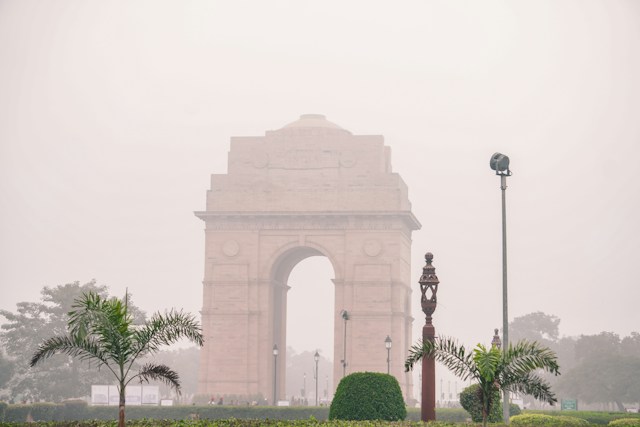
Banner image: Photo by Rohit Dey on Unsplash
Sections of this article may have been developed with the assistance of artificial intelligence tools to support research, drafting, and language refinement. All information has been reviewed, edited, and verified by the author/editor to ensure accuracy, context, and editorial integrity. The responsibility for the final content, interpretations, and conclusions rests solely with the publisher.