Physical Address
23,24,25 & 26, 2nd Floor, Software Technology Park India, Opp: Garware Stadium,MIDC, Chikalthana, Aurangabad, Maharashtra – 431001 India
Physical Address
23,24,25 & 26, 2nd Floor, Software Technology Park India, Opp: Garware Stadium,MIDC, Chikalthana, Aurangabad, Maharashtra – 431001 India
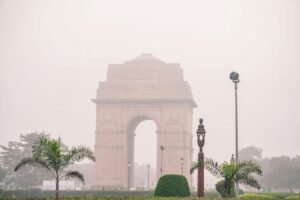
Air pollution has worsened across Delhi-NCR, prompting authorities to implement the first stage of the Graded Response Action Plan (GRAP) after the national capital’s air quality entered the ‘poor’ category on October 21. Delhi’s Air Quality Index (AQI) rose from 179 on October 20 to 244 at 2 pm the following day, triggering pollution-control measures across the National Capital Region. The Commission for Air Quality Management (CAQM) directed government agencies to implement the restrictions immediately and intensify efforts to prevent further deterioration. The move marks the beginning of the region’s winter pollution-control measures, as forecasts indicate that air quality is likely to remain poor over the coming days.
What GRAP Stage 1 means for Delhi-NCR
GRAP is a framework of emergency measures designed to control air pollution in Delhi and neighbouring areas by introducing progressively stricter restrictions as air quality deteriorates. Stage 1 applies when the AQI falls between 201 and 300, classified as ‘poor’. Stage 2 is triggered when the AQI reaches 301-400, or ‘very poor’, while Stage 3 applies at 401-450, classified as ‘severe’. Stage 4 comes into force when the AQI exceeds 450, entering the ‘severe plus’ category.
Under Stage 1, authorities have been directed to intensify dust-control measures, including mechanised road sweeping, water sprinkling and inspections of construction and demolition sites. Agencies must also ensure that construction dust is contained, waste is collected regularly, and open burning of municipal waste and biomass is prevented. Enforcement teams have been asked to check polluting vehicles and ensure compliance with existing pollution-control rules. Industrial units, power plants and brick kilns are also subject to checks to ensure they meet prescribed emission standards.
Vehicles, construction and waste burning under scrutiny
The restrictions also target transport-related pollution, which contributes to poor air quality across the region. Authorities have been instructed to enforce existing restrictions on overage vehicles, take action against visibly polluting vehicles and ensure compliance with valid Pollution Under Control certificates. Measures under the GRAP framework also include improving traffic management, encouraging public transport and restricting certain categories of inter-city and interstate buses entering Delhi, subject to applicable vehicle standards and exemptions.
Construction activities are another focus of the restrictions. Agencies must strengthen dust suppression at construction sites and roadworks, while illegal dumping of waste and open burning are to be strictly controlled. The Delhi government has also announced additional winter pollution-control measures, including plans to restrict entry of certain non-BS-VI vehicles registered outside Delhi from November 1, subject to exemptions. Further measures announced for the winter season include restrictions on outdoor construction and demolition activities during specified periods, increased monitoring and changes to office timings intended to reduce traffic congestion. These additional measures are distinct from the immediate Stage 1 restrictions.
Air quality forecasts raise concerns ahead of winter
The decision to invoke GRAP Stage 1 followed a review of air quality levels and meteorological forecasts. The India Meteorological Department and the Indian Institute of Tropical Meteorology predicted that Delhi’s AQI would remain in the ‘poor’ category over the following days. The CAQM has directed the relevant agencies across Delhi-NCR to maintain vigilance, implement the prescribed measures and continue monitoring pollution levels before deciding whether further restrictions are necessary.
Air pollution in Delhi-NCR typically becomes more difficult to manage during the colder months, when weather conditions can limit the dispersion of pollutants. Emissions from vehicles, industries and construction, along with road dust, waste burning and pollution transported from surrounding areas, contribute to the region’s air-quality challenges. Seasonal factors, including low wind speeds and temperature inversions, can allow pollutants to accumulate near the ground. The implementation of GRAP Stage 1 is intended to curb further deterioration, but its effectiveness will depend on coordinated enforcement across the region and sustained action against the sources of pollution
References:
https://ddindia.co.in/2026/10/caqm-invokes-stage-i-of-grap-across-delhi-ncr
https://www.ndtv.com/auto/delhi-to-ban-entry-of-non-bs6-vehicles-from-november-1-12218864
Banner image: Photo by Ashish Kushwaha on Unsplash
Sections of this article may have been developed with the assistance of artificial intelligence tools to support research, drafting, and language refinement. All information has been reviewed, edited, and verified by the author/editor to ensure accuracy, context, and editorial integrity. The responsibility for the final content, interpretations, and conclusions rests solely with the publisher.