Physical Address
23,24,25 & 26, 2nd Floor, Software Technology Park India, Opp: Garware Stadium,MIDC, Chikalthana, Aurangabad, Maharashtra – 431001 India
Physical Address
23,24,25 & 26, 2nd Floor, Software Technology Park India, Opp: Garware Stadium,MIDC, Chikalthana, Aurangabad, Maharashtra – 431001 India


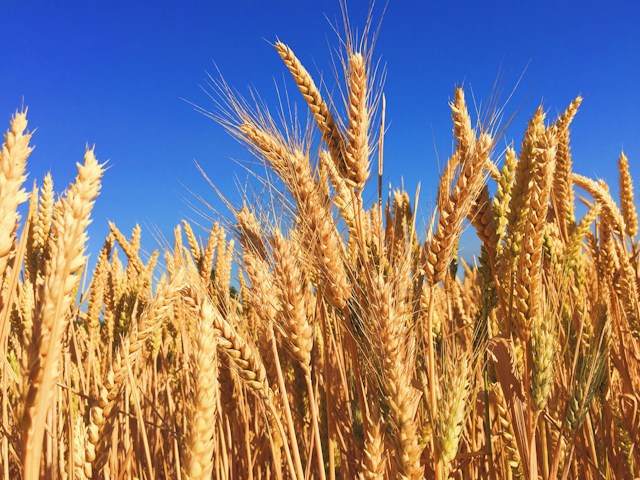
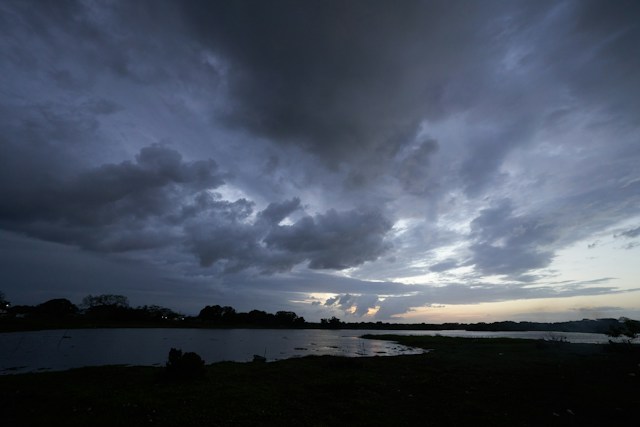
Sri Lanka’s farmers have always planted against the weather. What has changed is that the weather no longer keeps to the calendar. Rains that once arrived on cue now fail, or fall all at once. Droughts stretch longer than the seasons allow. And the losses are piling up faster than the systems built to absorb them.
Against that backdrop, the government has expanded its national crop insurance scheme to cover more crop varieties, a move aimed at giving farmers better protection against climate-induced losses. It comes as scientists and policymakers warn that Sri Lanka is growing steadily more exposed to weather extremes.
The Agricultural and Agrarian Insurance Board (AAIB) has widened crop insurance cover in response to rising climate volatility, extending the scheme to a broader range of cultivations that now includes several plantation crops and seed paddy farms. More details can be read here.
The expansion is part of a wider push to build resilience in an agricultural sector that remains highly exposed to a shifting climate.
Farmers Confront a Less Predictable Climate
Agriculture underpins Sri Lanka’s economy and provides direct and indirect employment to millions of people. But shifting rainfall and more frequent extremes are making farming riskier than it has ever been.
More frequent floods, prolonged droughts, landslides and erratic weather are already reshaping the country’s agricultural map, recent studies and climate assessments show. These impacts are projected to deepen in the years ahead, threatening food security and rural incomes. Climate resilience, once treated as an environmental concern, has become a national development priority. More details can be read here.
The country is also bracing for an emerging El Niño. At a recent meeting, the Food Policy and Security Committee directed state institutions to prepare urgent action plans over concerns about prolonged dry spells and their effect on agriculture and water supplies. The Federation for Environment, Climate and Technology (FECT) has warned that El Niño conditions are developing rapidly in the equatorial Pacific, which could disrupt rainfall patterns across the island.
What the Stress Test Revealed
The cost of inaction is no longer hypothetical. Cyclone Ditwah, which struck in late November 2025, affected close to two million people across all 25 districts and served as a brutal stress test of the country’s food system. The World Bank estimated the direct physical damage at around US$4.1 billion, about 4 percent of gross domestic product. Agriculture alone accounted for more than US$800 million of that, with over 58,000 hectares of paddy land flooded, a blow that landed hardest on the smallholders least able to recover from it.
The disaster exposed how quickly farming losses can multiply when safety nets and preparedness mechanisms are thin, and how directly a single extreme event can translate into pressure on food supply and rural incomes.
More Crops Covered
“Several new crop types have been brought under the crop insurance programme,” the Director General of the AAIB, Kalum Kaluarachchi, told Climate Fact Checks. “But the insurance procedure itself is still mostly the same.”
The expansion was driven largely by pressure from farmer organisations. “There was a strong demand from farmer organisations to include a lot of crops that previously had no protection. Those requests have now been complied with by the government,” Kaluarachchi said.
According to the Ministry of Agriculture, the revised programme offers protection against natural disasters and climate-related losses at concessionary premium rates. Priority has gone to major plantation crops such as tea, rubber, coconut, banana and cinnamon, with separate cover introduced for seed paddy. The list leans towards plantation and export-oriented crops, leaving open the question of how quickly the safety net will reach the wider base of smallholder food growers who can be ruined by a single failed season.
Why Insurance Alone Falls Short
The expansion has been broadly welcomed, but some experts and activists caution that insurance cannot, on its own, answer the deeper questions climate change is posing. Thilak Kariyawasam, President of the Lanka Organic Agricultural Movement, told us the country needs sustained strategy rather than piecemeal measures. “Climate change has become a burning issue affecting agriculture. Words alone are not enough. Properly addressing these challenges requires a comprehensive action plan,” he said, adding that it is a subject that demands far broader discussion.
The limitation is structural. Conventional crop insurance pays out after a loss has been verified, which makes it a cushion rather than a shield: it can soften the blow of a bad season but does nothing to prevent one. That gap has pushed several developing economies to experiment with index-based or parametric cover, which releases faster payouts against a weather threshold, though such models carry trade-offs of their own. Sri Lanka’s scheme, by the AAIB’s own account, remains a largely conventional one, which is why the conversation is steadily shifting from compensation towards prevention.
Building Resilience, Not Just Payouts
Several initiatives now point in that direction. In June 2026, Sri Lanka launched the National Anticipatory Action Roadmap 2026-2030, built around the principle of “Early Warning, Early Action” and developed with the support of the World Food Programme and other partners. The forthcoming National Adaptation Plan for Climate Change Impacts in Sri Lanka 2026-2035 sets adaptation priorities across thirteen vulnerable sectors, with an estimated investment requirement of about Rs. 331 billion.
Both recognise that protecting livelihoods is not simply a matter of emergency response. Investment in water management, resilient infrastructure, climate information systems and ecosystem restoration is treated as essential rather than optional.
Scientists expect extreme weather to grow more frequent and more intense, raising the stakes for food production and rural livelihoods with each passing season. Expanding crop insurance is a meaningful step. But what farmers facing an increasingly unpredictable climate ultimately need is not just compensation after the catastrophe, but a credible plan to help them adapt to, and survive in, a rapidly changing world.
References
https://news.un.org/en/story/2025/12/1166671
Banner Image: Photo by Aswathy N on Unsplash
Sections of this article may have been developed with the assistance of artificial intelligence tools to support research, drafting and language refinement. All information has been reviewed, edited and verified by the author/editor to ensure accuracy, context and editorial integrity. The responsibility for the final content, interpretations and conclusions rests solely with the publisher.