Physical Address
23,24,25 & 26, 2nd Floor, Software Technology Park India, Opp: Garware Stadium,MIDC, Chikalthana, Aurangabad, Maharashtra – 431001 India
Physical Address
23,24,25 & 26, 2nd Floor, Software Technology Park India, Opp: Garware Stadium,MIDC, Chikalthana, Aurangabad, Maharashtra – 431001 India
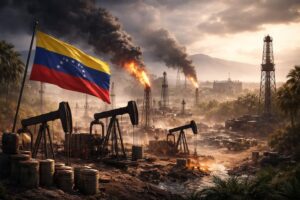
At the start of 2026, U.S. President Donald Trump ignited international controversy by moving to assert American control over Venezuela’s vast oil reserves. The move followed the capture of Venezuelan leader Nicolás Maduro in a U.S.-led operation and marked a dramatic escalation in Washington’s involvement in the country. While the administration presents the plan as a strategic and economic opportunity, critics warn it could significantly worsen the global climate crisis and destabilise regional politics.
Reviving the World’s Largest Oil Reserves
Venezuela is home to the world’s largest proven crude oil reserves, estimated at nearly 300 billion barrels. Trump has proposed reviving the country’s oil industry by bringing in major U.S. energy companies to rebuild infrastructure that has deteriorated over decades. Production has collapsed due to mismanagement, sanctions, and lack of investment, leaving refineries and pipelines in poor condition. The administration argues that American capital and technical expertise can restore output and unlock Venezuela’s economic potential.
U.S. Control and Economic Claims
The Trump administration has claimed that tens of millions of barrels of Venezuelan oil could be transferred to the United States and sold on international markets. Officials argue that revenue from these sales would benefit both countries and stabilise global energy supplies. Trump has also suggested long-term U.S. oversight of Venezuelan oil sales, a move that critics say amounts to direct control over the nation’s most valuable natural resource.
Climate Consequences Under Scrutiny
Environmental experts have reacted with alarm. Venezuelan oil is among the most carbon-intensive in the world, requiring energy-heavy extraction and processing. Scientists warn that even a partial revival of production could add hundreds of millions of tonnes of carbon dioxide to the atmosphere each year. Such an increase would severely undermine global efforts to limit temperature rise and contradict international climate goals aimed at reducing fossil fuel dependence.
Climate advocates argue that the plan signals a retreat from the global transition toward renewable energy. At a time when many countries are investing heavily in clean technologies, expanding oil production in Venezuela sends a conflicting message. Critics say the strategy prioritises short-term economic and geopolitical gains while delaying the urgent shift needed to prevent irreversible climate damage.
Global Backlash, Economic and Regional Tensions
The U.S. move has drawn condemnation from governments across Latin America and beyond. Several countries have criticised the detention of Venezuela’s leader and Washington’s expanding role in the country as a violation of sovereignty. Analysts warn that such actions could increase instability in the region, deepen political divisions, and set a troubling precedent for international intervention driven by resource interests.
Beyond political and environmental concerns, experts question the feasibility of Trump’s plan. Reviving Venezuela’s oil industry would require tens of billions of dollars in investment and years of reconstruction. Ongoing political uncertainty, legal disputes over ownership, and the risk of civil unrest make the prospects uncertain for foreign energy companies considering large-scale involvement.
A Defining Test for Climate Leadership
Supporters of the plan argue that securing access to Venezuelan oil would strengthen U.S. energy security and influence global oil markets. However, critics say the long-term costs far outweigh potential gains. As climate-driven disasters intensify worldwide, the push to expand fossil fuel extraction highlights a growing tension between geopolitical ambition and environmental responsibility. The decision could shape global climate and energy politics for years to come.
References:
https://www.theguardian.com/us-news/2026/jan/06/trump-venezuela-oil-climate-crisis
https://www.nytimes.com/2026/01/05/climate/venezuela-dirty-oil.html
https://www.eia.gov/international/analysis/country/VEN
Banner Image: AI generated