Physical Address
23,24,25 & 26, 2nd Floor, Software Technology Park India, Opp: Garware Stadium,MIDC, Chikalthana, Aurangabad, Maharashtra – 431001 India
Physical Address
23,24,25 & 26, 2nd Floor, Software Technology Park India, Opp: Garware Stadium,MIDC, Chikalthana, Aurangabad, Maharashtra – 431001 India

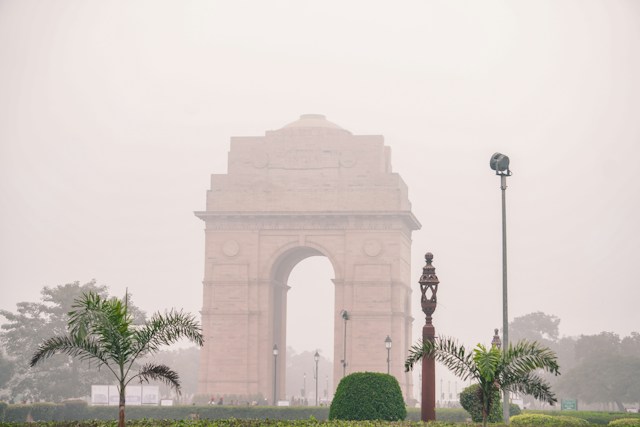
The Yamuna continues to receive wastewater and other pollutants despite years of government spending on its clean-up, prompting the Supreme Court to question the results of restoration efforts. In an order dated November 4, the court observed that pollution in the river had increased despite large sums being spent on cleaning it. It pointed to 520 drains discharging wastewater into the river and called for greater accountability among the states and local authorities along its course. Adding another dimension to these concerns, a recent study by researchers from the University of Delhi has found microplastics carrying a wide range of chemical compounds along the 48.8-kilometre stretch of the Yamuna in Delhi.
Supreme Court questions the results of Yamuna clean-up efforts
A bench of Justices Manoj Misra and Manmohan said the deteriorating condition of the Yamuna is a result of failure in civic administration of towns and cities along its banks. The court said industrial pollution and untreated sewage must be controlled at the source. Where this is not possible, wastewater should be intercepted and treated before it enters the river. It also highlighted the difficulty in bringing unauthorised colonies onto sewage networks, especially when buildings have been constructed without proper layouts or adequate space for underground pipelines.
The court found discrepancies in the Yamuna Action Plan submitted by the government. While the plan claimed that 28 of Delhi’s 37 existing sewage treatment plants (STPs) met prescribed standards, a CPCB report cited by the court found that none met all the required standards. Only five complied with the bacteriological limit. The plan proposes 125 new STPs, 12 common effluent treatment plants, 10 municipal solid waste plants and 23 biogas plants across the Yamuna basin. However, the court made it clear that building more treatment facilities alone would not be enough if existing plants fail to operate properly and untreated waste continues to enter the river.
The court has asked the Central Pollution Control Board (CPCB) to monitor water quality at the entry and exit of the river and major drains in each state, Union Territory and district to ensure accountability of the authorities. Authorities could be penalised if water quality deteriorates in their jurisdiction. Treatment plants also must install monitoring systems and upload live data on volumes and quality of wastewater they discharge. CPCB has been asked to conduct surprise inspections at least once every quarter and investigate incidents such as fish deaths, floating foam and sudden increases in pollution levels.
Study finds microplastics carrying hundreds of chemical compounds
A study, published in the Journal of Hazardous Materials Advances, examined microplastic pollution at eight locations along the Delhi stretch of the Yamuna. The researchers collected samples from agricultural, forested, residential, floodplain, industrial and recreational settings, covering a stretch of around 48.8 kilometres and 22 tributary drain inputs.
The team recovered 2,289 microplastic particles from the samples, with an average concentration of 3.18 particles per litre. The number of particles varied considerably between locations. The highest count was recorded near the recreational site at RCK7, while the lowest was found at the agricultural entry point at Palla. Polyethylene and polypropylene were the most common polymers identified, accounting for 44.1% and 27.3% of the analysed particles, respectively. The researchers also found signs of weathering, including cracks, grooves and rough surfaces on selected particles.
The more alarming finding came through chemical analysis. In extracts of the recovered microplastic fractions and water samples, researchers found 321 unique chemical compounds. There were 50 compounds that occurred in the microplastic extracts at four or more locations, and seven that occurred at all eight sites. These included 2-naphthylamine, lidocaine and monobutyl phthalate. The study also identified pharmaceutical compounds like atomoxetine, domperidone and telmisartan and agricultural chemicals such as diuron and thiamethoxam.
Of the 50 recurring compounds, 36 were related to records in the Globally Harmonised System (GHS) of chemical hazard classification. Some related to categories including cancer-related hazards, reproductive toxicity and harm to aquatic life. But the researchers highlighted that these are likely chemical identifications from laboratory screening, not confirmed measurements of exposure or health risk. The study also did not determine if the compounds had bonded to the plastic particles, were from the plastic itself or were found in other material recovered with them.
Pollution requires more than treatment plants
The study highlights the variety of pollutants getting into the Yamuna and the necessity of looking beyond the count of plastic particles or standard water-quality measurements. Chemical profiles varied by sampling location, implying the river receives inputs from multiple sources. They can include wastewater and agricultural runoff, industrial activity and plastic-related materials. The researchers said the presence of pharmaceutical compounds was consistent with possible wastewater influence, while some other compounds could be associated with agricultural or industrial uses. But the study could not trace the exact source of individual chemicals.
The findings also show why monitoring only the visible condition of the river or counting microplastics may not provide a complete picture of pollution. The researchers called for further testing to confirm the chemical identities and measure their concentrations, alongside investigations into how these compounds move through water, sediments and microplastics. Their work provides a screening-level assessment rather than a direct estimate of exposure or ecological risk.
The Supreme Court’s directions and the study both point to the need for closer monitoring of what enters the Yamuna and what leaves treatment facilities. The court has listed the matter for further hearing on January 13, 2027. Whether the latest directions lead to cleaner water will depend on how effectively authorities control sewage and industrial discharge, improve treatment plant performance and track pollution across the river’s entire course.
References:
Pollution in Yamuna increased despite huge expenditure on cleaning: Supreme Court – The Hindu
Banner image: Photo by Jyotirmoy Gupta on Unsplash
Sections of this article may have been developed with the assistance of artificial intelligence tools to support research, drafting, and language refinement. All information has been reviewed, edited, and verified by the author/editor to ensure accuracy, context, and editorial integrity. The responsibility for the final content, interpretations, and conclusions rests solely with the publisher.