Physical Address
23,24,25 & 26, 2nd Floor, Software Technology Park India, Opp: Garware Stadium,MIDC, Chikalthana, Aurangabad, Maharashtra – 431001 India
Physical Address
23,24,25 & 26, 2nd Floor, Software Technology Park India, Opp: Garware Stadium,MIDC, Chikalthana, Aurangabad, Maharashtra – 431001 India

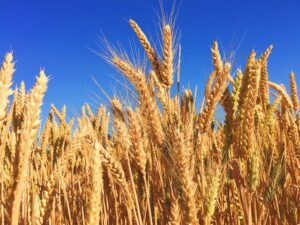
Climate change may alter wheat proteins and reduce baking quality. See what the study found and why climate-resilient wheat breeding matters.
Wheat grown under rising atmospheric carbon dioxide concentrations could develop a different protein composition, potentially affecting the quality of bread and other wheat-based foods, according to a new study. The research, led by scientists at the Leibniz Institute for Food Systems Biology at the Technical University of Munich, found that elevated CO2 levels changed several groups of proteins in wheat grains, although the effects varied depending on the variety grown. The findings raise questions about how global warming and rising greenhouse gas concentrations could influence food quality, beyond their effects on crop yields. Published in Food Chemistry, the study suggests that adapting agriculture to climate change will require researchers to consider not only how much wheat farmers produce but also its nutritional and functional properties.
Higher CO2 levels alter wheat protein composition
Atmospheric CO2 concentrations have increased considerably over recent decades, rising from around 340 parts per million (ppm) in 1980 to approximately 428 ppm in August 2026. Depending on future socioeconomic developments and emissions trajectories, concentrations could reach around 600 ppm by 2050. As wheat continues to grow under changing atmospheric conditions, researchers are examining how these changes may affect the composition and quality of the grain.
To investigate the effects, researchers cultivated 10 winter wheat varieties under realistic growing conditions. Some plants were exposed to an elevated CO2 concentration of 546 ppm, while others grew under current CO2 conditions. After harvesting the grain, the team used a high-resolution mass spectrometry method to analyse its protein composition. The researchers examined amylase/trypsin inhibitors, puroindolines, gluten proteins and certain peptides associated with coeliac disease. The study addressed a research gap, as relatively few field trials have examined how elevated CO2 affects specific wheat proteins.
Changes could affect baking quality and wheat-related health
The analysis found that elevated CO2 generally increased the content of amylase/trypsin inhibitors in wheat grains. At the same time, concentrations of puroindolines, gluten proteins and certain coeliac disease-active peptides decreased. These changes were not uniform across all varieties, with the genetic characteristics of individual wheat cultivars playing an important role in determining the response.
The reduction in gluten proteins was also associated with poorer baking quality. Gluten contributes to the structure and elasticity of dough, helping bread retain its shape and texture. Changes in its composition can therefore affect how wheat flour performs during baking. Researchers also noted that changes in amylase/trypsin inhibitors and certain coeliac disease-active peptides could have implications for wheat-related disorders. However, the study did not establish that wheat grown under elevated CO2 causes more health problems or changes the risk of developing coeliac disease. Further research is needed to determine the biological and immunological significance of these changes.
Wheat breeding needs to account for climate change
The findings suggest that crop adaptation strategies may need to move beyond increasing yields and improving plants’ tolerance to heat and water stress. Wheat varieties that produce large harvests may not necessarily maintain the same protein composition or baking characteristics under higher CO2 concentrations. Identifying varieties that preserve grain quality as atmospheric conditions change could therefore become an important part of agricultural research and breeding programmes.
The researchers emphasised the need to identify and develop wheat cultivars that maintain good baking quality under rising CO2 levels while containing lower amounts of potentially intolerable proteins. Such work could help farmers and food producers prepare for changes in growing conditions without overlooking the characteristics that make wheat suitable for different foods. The results also highlight the importance of studying how climate change affects the quality of staple crops, alongside its more widely examined effects on agricultural productivity.
References:
https://linkinghub.elsevier.com/retrieve/pii/S0308814626033212
https://science.nasa.gov/earth/explore/earth-indicators/carbon-dioxide
Banner image: Photo by Melissa Askew on Unsplash
Sections of this article may have been developed with the assistance of artificial intelligence tools to support research, drafting, and language refinement. All information has been reviewed, edited, and verified by the author/editor to ensure accuracy, context, and editorial integrity. The responsibility for the final content, interpretations, and conclusions rests solely with the publisher.