Physical Address
23,24,25 & 26, 2nd Floor, Software Technology Park India, Opp: Garware Stadium,MIDC, Chikalthana, Aurangabad, Maharashtra – 431001 India
Physical Address
23,24,25 & 26, 2nd Floor, Software Technology Park India, Opp: Garware Stadium,MIDC, Chikalthana, Aurangabad, Maharashtra – 431001 India
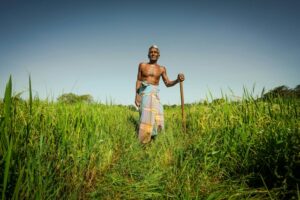
For the first time in more than a decade, census officers are going door to door across Sri Lanka to count the country’s farms, fields and livestock. What they record over the next ten weeks will shape agricultural planning, from paddy support to disaster response, for years to come.
The Department of Census and Statistics (DCS) began islandwide enumeration for the agricultural component of the Economic Census 2025/26 on October 1. Fieldwork will run until December 15, 2026, under the technical guidance of the United Nations Food and Agriculture Organization (FAO), Newswire reported.
DCS Director General K.M.D.S.D. Karunaratne, who has been formally appointed Superintendent of Census for the agricultural census, outlined the exercise at a media briefing in Colombo on October 7. Ms. J.K.B.M. Jayakody, Director of the Department’s Agriculture and Environmental Research Division, also took part, according to the live stream of the briefing.
Data down to the village level
The census covers all 14,008 Grama Niladhari (GN) divisions, the smallest administrative units in the country, according to the DCS. Karunaratne said a central aim is to produce agricultural statistics at the finest possible geographical scale, particularly at GN division level, to support planning and monitoring nationally and locally.
Agricultural households are the main census units. The count covers the 2025/26 Maha season and the 2026 Yala season, which together make up the agricultural year. The results will also serve as a benchmark for future agricultural estimates and as a sampling frame for surveys over the next decade.
What enumerators are recording
The census reaches well beyond paddy. According to Newswire, officers are gathering information on farmers and farmer groups, land and cultivated area, agricultural inputs, livestock and agricultural infrastructure, alongside other field crops and the plantation sector.
A separate questionnaire covers community-level topics, including water resources, agricultural disasters, agricultural projects, common facilities and processing centres, DCS officials said at the briefing. For a country where droughts and floods increasingly disrupt both cultivation seasons, village-level data on disasters and water access could prove especially useful for adaptation planning.
Around 15,000 officers, working on tablets
About 15,000 government officers are taking part, according to the DCS. Enumerators include Agriculture Research and Production Assistants, Development Officers, Grama Niladharis and other public servants, with technical officers assigned to support fieldwork.
Unlike earlier rounds, which relied on printed questionnaires, enumerators are recording responses directly on tablet computers using Computer-Assisted Personal Interviewing (CAPI), Newswire reported. The DCS first used tablets nationwide in the Census of Population and Housing 2024.
Results expected within a year
The Department expects to release results for different geographical areas, including individual GN divisions, roughly one year after data collection and processing are complete. Officials said the data will also help improve the accuracy of macroeconomic indicators compiled by the DCS.
A century of counting farms
Sri Lanka’s first attempt at an agricultural census was the Census of Production in 1921, followed by partial censuses in 1924 and 1929. Full agricultural censuses followed in 1946, 1952, 1962, 1973, 1982 and 2002, according to DCS records catalogued by the IHSN. The census planned for 1992 was not held because of unsettled conditions in parts of the country.
The DCS conducted its first Economic Census in 2013/14, combining agricultural and non-agricultural activities. The current exercise is the second, with a separate non-agricultural component covering industry, trade and services.
Public cooperation and confidentiality
Karunaratne urged households and institutions to cooperate with census officers and give accurate answers, noting that the quality of the results depends on it. Under the Economic Census 2025/26 (Agricultural Activities) Rules, every person is required to provide agricultural information on their housing unit or institution to the officers assigned to their GN division.
She also assured the public that personal and household-level information will be kept strictly confidential. It will not be shared with other individuals or institutions for unrelated purposes, and the DCS will not publish household-level data when releasing results.
Field data collection continues until December 15.
References
Department of Census and Statistics, media briefing live stream, October 7, 2026 (Facebook)
IHSN Survey Catalog, Census of Agriculture 2002, Sri Lanka
FAO Microdata Catalog, Economic Census: Agricultural Activities 2013/14, Sri Lanka
Department of Census and Statistics, Censuses
Daily Mirror, “Economic Census to be conducted in 2026 and 2027”
Banner Image: Photo by Indika Sriyan on Unsplash
Sections of this article may have been developed with the assistance of artificial intelligence tools to support research, drafting and language refinement. All information has been reviewed, edited and verified by the author/editor to ensure accuracy, context and editorial integrity. The responsibility for the final content, interpretations and conclusions rests solely with the publisher.