Physical Address
23,24,25 & 26, 2nd Floor, Software Technology Park India, Opp: Garware Stadium,MIDC, Chikalthana, Aurangabad, Maharashtra – 431001 India
Physical Address
23,24,25 & 26, 2nd Floor, Software Technology Park India, Opp: Garware Stadium,MIDC, Chikalthana, Aurangabad, Maharashtra – 431001 India
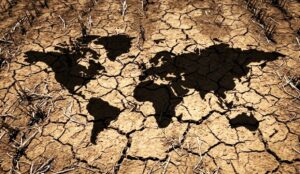
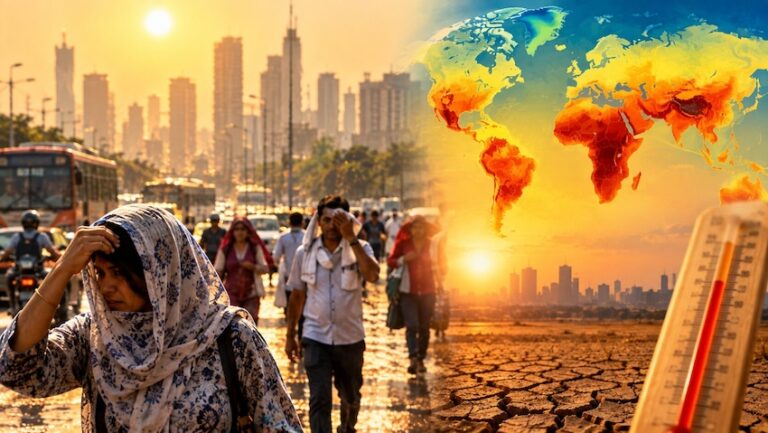
Drought’s global economic impact is growing as El Niño intensifies. Explore risks to food, trade, energy and inflation and how countries can adapt.
Drought is increasingly affecting more than farms and water supplies, with consequences spreading across energy, public health, transport, tourism and international trade. As the world braces for stronger El Niño conditions that could persist into 2027, officials from the United Nations Convention to Combat Desertification (UNCCD) are urging governments to move beyond emergency responses and treat drought as a long-term risk.
The call follows the UNCCD’s 17th COP17, held in Ulaanbaatar, Mongolia, from August 17 to 28, 2026. Governments failed to reach agreement on a global drought framework, leaving unresolved whether future cooperation should take the form of a framework, protocol or another international instrument.
Drought’s effects now reach beyond national borders
Drought can disrupt interconnected economic systems, meaning its effects are not confined to the region experiencing water shortages. Restrictions on shipping through the Panama Canal during drought conditions, for example, can affect trade routes and supply chains reaching as far as Asia. In the Nile basin, drought can also disrupt grain supplies, with consequences for food availability in other parts of Africa.
These cross-border effects make drought a concern for governments beyond those directly affected. Disruptions to agricultural production can influence food prices and trade, while reduced water availability can place pressure on energy generation, transport and other economic activities.
Governments urged to prepare before drought strikes
Daniel Tsegai, a UNCCD official, said many existing drought plans are reactive, with action beginning only after conditions have deteriorated. He called for planning that covers the full drought cycle, including measures taken before, during and after an event. “They treated drought as a crisis. For a crisis you don’t prepare, you just wait until it hits hard and then you do something,” Tsegai said, adding that “drought is now a constant risk.”
Andrea Meza Murillo, another UNCCD official, said drought response often falls between government departments. Agriculture, meteorology and environment agencies may be involved, but effective preparedness also requires finance and health ministries, among others. She called for a whole-of-government and whole-of-society approach, recognising that drought can affect livelihoods, public services and economic stability simultaneously.
Early-warning systems also need to do more than forecast the arrival of drought. According to the officials, they should assess exposure and vulnerability, identify the people and sectors likely to be affected, and help governments plan appropriate responses. Preparedness must reflect local conditions and risks rather than relying on a uniform response across different regions.
El Niño raises urgency for international cooperation
By the end of 2025, drought had affected nearly 30% of the world’s land, almost three times the roughly 10% recorded during the 1990s. The figures come from a study published in Nature Reviews Earth & Environment, which examined more than 70 years of climate data. The need for stronger planning comes as El Niño conditions are expected to intensify.
The World Meteorological Organisation said that El Niño was almost certain to persist through February 2027, with the event forecast to become “very strong” before peaking towards the end of 2026. Its effects are likely to vary by region, with some areas facing heightened drought risk and others experiencing different climate extremes.
Despite the urgency, negotiations at COP17 did not produce agreement on a global drought instrument. Governments remained divided over what form international cooperation should take. Meza Murillo acknowledged the difficulties of multilateral negotiations in the current geopolitical environment, while stressing the need to strengthen collective action.
The issue is expected to remain relevant across upcoming international environmental meetings, including the climate conference COP31 in Türkiye and the biodiversity COP17 in Armenia. UNCCD officials have also called for closer connections between international efforts on land, water, climate and biodiversity, arguing that these issues are often discussed separately despite their overlapping risks. The unresolved negotiations leave governments facing a practical challenge: building systems that anticipate drought, reduce vulnerability and coordinate action across sectors, even as agreement on a shared global approach remains out of reach.
References:
https://www.nature.com/articles/s43017-026-00785-z
https://news.un.org/en/story/2026/09/1168265
Banner image: Source: AI-generated
Sections of this article may have been developed with the assistance of artificial intelligence tools to support research, drafting, and language refinement. All information has been reviewed, edited, and verified by the author/editor to ensure accuracy, context, and editorial integrity. The responsibility for the final content, interpretations, and conclusions rests solely with the publisher.