Physical Address
23,24,25 & 26, 2nd Floor, Software Technology Park India, Opp: Garware Stadium,MIDC, Chikalthana, Aurangabad, Maharashtra – 431001 India
Physical Address
23,24,25 & 26, 2nd Floor, Software Technology Park India, Opp: Garware Stadium,MIDC, Chikalthana, Aurangabad, Maharashtra – 431001 India

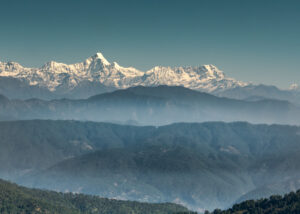
The Himalayas are changing at a pace that is becoming increasingly difficult to ignore. Glaciers across the mountain range are now losing mass about 65% faster than they were a decade ago, raising concerns over water security, disaster risks and the economic systems that depend on Himalayan rivers.
The warning comes from a new assessment by Systemiq, developed with the Integrated Mountain Initiative and with technical contributions from the International Centre for Integrated Mountain Development (ICIMOD) and the G B Pant National Institute of Himalayan Environment. The findings come soon after devastating floods in Nepal and Tibet that killed more than 1,300 people and caused widespread destruction, bringing renewed attention to the risks emerging in the high mountains.
The concern is not simply that glaciers are shrinking. Their retreat is altering the wider mountain landscape. As glaciers lose ice, they can leave behind expanding lakes held back by unstable piles of rock and debris. At the same time, rising temperatures are thawing permafrost and weakening high-altitude slopes. Together, these changes can create a chain of hazards, including landslides, floods and glacial lake outburst floods.
A water system with an enormous economic footprint
The scale of the problem becomes clearer when the Himalayas are viewed not only as a mountain ecosystem but as critical infrastructure for South Asia.
The report estimates that Himalayan water supports roughly 20% of India’s gross domestic product, with agriculture, hydropower, food production, tourism and other economic activities depending on water originating in the region. Yet the Himalayan states themselves capture only a fraction of the economic value generated downstream.
The region is also facing a significant monitoring gap. Of an estimated 40,000 glaciers across the Himalaya-Karakoram region, only about 21 are being monitored in detail and on a sustained basis, according to the assessment. That leaves a vast area where changes in ice, lakes and mountain slopes may not be tracked closely enough to provide early warnings.
India is already dealing with evidence of increasing glacial hazards. The government has classified 56 glacial lakes as being at very high risk. In 2023, a glacial lake outburst flood in Sikkim caused extensive damage and killed at least 70 people. A similar disaster in Uttarakhand in 2021 killed more than 200 people.
There is also a longer-term water concern. Most Hindu Kush Himalayan river basins are expected to reach “peak water” around the middle of this century. This refers to the point at which increased glacier melt reaches its maximum contribution to river flows, after which diminishing ice reserves can result in declining glacier-fed water availability.
That creates a difficult transition. In the near term, faster melting can increase water and flood risks; over the longer term, shrinking glaciers could reduce an important source of water for downstream communities.
Black carbon offers a regional lever
Climate change is the biggest underlying driver of glacier loss, but the research highlights another pollutant that can be tackled more directly within South Asia: black carbon. The assessment estimates that roughly one-third of Himalayan glacier melt is linked to black carbon, much of it originating from sources such as brick kilns in the plains. When soot settles on snow and ice, it darkens the surface and allows it to absorb more solar energy, accelerating melting.
Unlike global greenhouse-gas emissions, reducing black carbon is an area where countries in the region can take more immediate action. Cleaner brick production, better combustion practices and reductions in other sources of soot could therefore have benefits for both air quality and the Himalayan cryosphere.
The report proposes 10 priority transitions, including cutting black-carbon emissions, expanding glacier monitoring, strengthening early-warning systems and improving disaster preparedness. It also calls for a rethink of tourism in the Indian Himalayan region, which receives roughly 400 million visits annually. Instead of focusing primarily on increasing visitor numbers, researchers argue that tourism should generate greater economic value for mountain communities and support local resilience.
The challenge ultimately extends beyond individual countries. Rivers, glaciers and mountain hazards do not follow political boundaries. A flood or glacial lake outburst in one part of the Himalayas can affect communities and infrastructure far downstream and across borders. The latest findings therefore point to a need for stronger regional cooperation, shared monitoring, cross-border early-warning systems and investment in resilient infrastructure. Protecting the Himalayas is not only about preserving a fragile mountain ecosystem. It is increasingly about protecting the water, food, livelihoods and economic activity of hundreds of millions of people who depend on it.
References:
https://www.bbc.com/news/articles/crm9ezvwjpno
A resilient Himalaya: protecting a region at risk and securing future prosperity
Banner Image: Photo on Magnific by wirestock
Sections of this article may have been developed with the assistance of artificial intelligence tools to support research, drafting, and language refinement. All information has been reviewed, edited, and verified by the author/editor to ensure accuracy, context, and editorial integrity. The responsibility for the final content, interpretations, and conclusions rests solely with the publisher.