Physical Address
23,24,25 & 26, 2nd Floor, Software Technology Park India, Opp: Garware Stadium,MIDC, Chikalthana, Aurangabad, Maharashtra – 431001 India
Physical Address
23,24,25 & 26, 2nd Floor, Software Technology Park India, Opp: Garware Stadium,MIDC, Chikalthana, Aurangabad, Maharashtra – 431001 India

The BRICS countries have signalled a two-pronged approach to climate and trade policy: greater cooperation among developing and emerging economies on carbon markets, while mounting stronger opposition to unilateral carbon border measures such as the European Union’s Carbon Border Adjustment Mechanism (CBAM).
The position emerged from the New Delhi Declaration adopted at the BRICS Summit, where member countries supported cooperation on carbon markets and the implementation of the BRICS Carbon Markets Partnership. At the same time, the grouping criticised unilateral, punitive and protectionist measures, including carbon border adjustment mechanisms, arguing that such policies could place an additional burden on developing economies.
The development comes at an important moment for global carbon markets. Countries are increasingly using carbon pricing, emissions trading and carbon credits as tools to support climate action. At the same time, carbon-related trade measures are becoming a major concern for exporters in developing countries, particularly those selling emissions-intensive products to markets such as the European Union and, in the future, the United Kingdom.
Carbon markets move to the centre of BRICS climate cooperation
The New Delhi Declaration supports deeper cooperation among BRICS members in the field of carbon markets, with a focus on capacity building and the exchange of experiences. The proposed BRICS Carbon Markets Partnership is expected to provide a framework for countries to cooperate while developing their own domestic carbon market systems.
Rather than creating a single common BRICS carbon market, the initiative is aimed at supporting national climate strategies and helping members learn from each other’s experiences. Cooperation could include improving institutional capacity, sharing technical knowledge and exploring ways in which carbon markets can complement emission-reduction efforts and mobilise financial resources.
The declaration also highlighted the importance of linking carbon market discussions with adaptation goals. This is particularly significant for developing countries, where climate policy often has to balance the need to reduce emissions with the urgent requirement to finance adaptation and build resilience against floods, droughts, heatwaves and other climate impacts.
The BRICS position therefore reflects a broader argument that climate action cannot be viewed only through the lens of emissions reduction. Developing economies have repeatedly called for greater access to climate finance, technology and capacity-building support, arguing that their development priorities and vulnerabilities must also be taken into account. The move towards greater carbon market cooperation could become particularly relevant as countries develop different national trading systems and credit mechanisms. Better coordination may help BRICS members build expertise, improve market infrastructure and potentially strengthen their position in the evolving global carbon economy.
Strong pushback against carbon border measures
While backing cooperation on carbon markets, BRICS leaders took a clear stand against unilateral carbon border adjustment mechanisms. The declaration expressed opposition to measures considered punitive, discriminatory or protectionist and argued that they could undermine the ability of developing countries to address climate change and build resilience.
The EU’s definitive CBAM regime began on January 1, 2026. The United Kingdom is also preparing to introduce its own CBAM from January 1, 2027. Such mechanisms are designed to address concerns that carbon-intensive production could shift to countries with weaker or different climate policies. However, exporting countries have raised concerns about the cost and complexity of complying with these requirements.
For countries such as India, the issue is not simply about opposing carbon pricing. India itself is developing its Carbon Credit Trading Scheme (CCTS), and the growing recognition of domestic carbon market mechanisms could create new opportunities for Indian industries. The report notes that India’s CCTS gaining recognition under the UK’s emerging border carbon regime could improve competitiveness for some exporters.
However, this opportunity also comes with challenges. Industries will need reliable systems for measuring, reporting and verifying emissions. These requirements could be particularly demanding for micro, small and medium enterprises, which may have limited technical capacity and financial resources to establish detailed carbon accounting and verification systems. This creates an important distinction in the BRICS position. The grouping is not rejecting carbon markets themselves. Instead, it is supporting greater cooperation and capacity building while questioning trade measures imposed unilaterally by importing countries.
The debate is likely to become increasingly important as climate policy and international trade become more closely connected. Carbon markets may offer developing countries additional tools to mobilise finance and encourage emissions reductions. But carbon border measures could also reshape global trade by adding new compliance requirements and costs for exporters. For BRICS, the challenge will be to turn the broad commitment to carbon market cooperation into practical systems that benefit member countries. The New Delhi Declaration makes clear that the grouping wants climate action to remain linked with equity, national circumstances and development priorities.
As carbon pricing expands and border carbon measures become more common, BRICS is positioning itself on both sides of the debate: willing to participate in the growing carbon market economy, but unwilling to accept climate-related trade rules that it believes are being designed and imposed without adequate consideration for developing countries.
References:
https://icapcarbonaction.com/en/ets/indian-carbon-credit-trading-scheme
https://unfccc.int/topics/introduction-to-climate-finance
https://www.ncbi.nlm.nih.gov/books/NBK617053
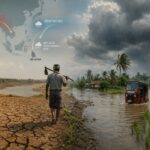
Banner Image: AI-generated
Sections of this article may have been developed with the assistance of artificial intelligence tools to support research, drafting, and language refinement. All information has been reviewed, edited, and verified by the author/editor to ensure accuracy, context, and editorial integrity. The responsibility for the final content, interpretations, and conclusions rests solely with the publisher.