Physical Address
23,24,25 & 26, 2nd Floor, Software Technology Park India, Opp: Garware Stadium,MIDC, Chikalthana, Aurangabad, Maharashtra – 431001 India
Physical Address
23,24,25 & 26, 2nd Floor, Software Technology Park India, Opp: Garware Stadium,MIDC, Chikalthana, Aurangabad, Maharashtra – 431001 India

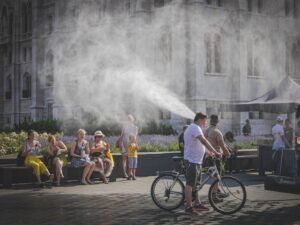
France’s record-breaking heatwave has triggered its first major power outage of the summer, leaving around 68,000 homes without electricity in the northwestern region of Finistère, as soaring temperatures put growing pressure on the country’s ageing energy infrastructure. The outage came after a transformer failed late on Tuesday, with officials linking the disruption directly to extreme heat. The incident is the latest sign of how Europe’s intensifying heatwaves are beginning to strain power systems, transport networks and public health services.
Extreme heat pushes France into record territory
France recorded its hottest June day since measurements began in 1947, with the national temperature indicator touching 30°C, breaking a record set just a day earlier. The broader heatwave has placed nearly 44 million people under the country’s highest red alert level, with temperatures crossing 40°C in several areas. Across Europe, nearly 94 million people are expected to experience temperatures above 35°C, according to forecasts.
The heat has spread far beyond France. Britain recorded its hottest June day at 36.1°C, while Spain registered an average of 28.17°C, the highest June average in its recorded history. Scientists say this early-season heat is unusually intense and is being amplified by climate change, with one recent attribution study finding that human-driven warming made current temperatures 2 to 4°C hotter than they would otherwise have been.
Meteorologists say the heatwave is being driven by an omega blocking pattern, a high-pressure system that traps hot air over western Europe for extended periods, allowing temperatures to build day after day.
Power grids and nuclear plants come under stress
The blackout in Finistère is one of the first visible signs of how extreme heat is starting to affect France’s power network. Officials said the transformer failure was linked to overheating as electricity demand rose sharply due to air conditioners and cooling systems running at full capacity.
The heat is also affecting France’s nuclear sector, which supplies around 70% of the country’s electricity. State energy company EDF has already shut down one reactor and reduced output at several others because river water used for cooling has become too warm. In total, nuclear output has dropped by around 4.1 gigawatts, equal to about 7% of France’s electricity demand.
This has also affected France’s electricity exports to neighbouring countries, adding to pressure across Europe’s interconnected power market.
Heatwave exposes growing climate risks across Europe
Beyond energy, the heatwave is disrupting daily life across the continent. Thousands of schools have shut early in France and the UK, tourist landmarks like the Eiffel Tower and Louvre have reduced hours, and hospitals are seeing a rise in heat-related admissions. In France alone, emergency hospital visits have risen by 15 to 20%, with elderly people among the most affected.
The World Health Organisation has warned that the combination of heat and worsening air pollution is increasing health risks across Europe. Climate scientists say such events are becoming more frequent, arriving earlier in the year and lasting longer.
For France, the blackout may be limited in scale, but it signals a broader challenge. As summers grow hotter and more intense, even advanced energy systems are being forced to confront a new climate reality where extreme heat is no longer an occasional event, but an increasingly regular test of resilience.
References:
https://www.theguardian.com/world/2026/jun/23/heatwave-france-spain-italy-europe
https://phys.org/news/2026-06-europe-swelters-1.html
https://www.reuters.com/business/energy/europes-heatwave-curbs-french-nuclear-plants-2026-06-24
Banner image: Photo by Evgeniy Beloshytskiy on Unsplash
Sections of this article may have been developed with the assistance of artificial intelligence tools to support research, drafting and language refinement. All information has been reviewed, edited and verified by the author/editor to ensure accuracy, context and editorial integrity. The responsibility for the final content, interpretations and conclusions rests solely with the publisher.