Physical Address
23,24,25 & 26, 2nd Floor, Software Technology Park India, Opp: Garware Stadium,MIDC, Chikalthana, Aurangabad, Maharashtra – 431001 India
Physical Address
23,24,25 & 26, 2nd Floor, Software Technology Park India, Opp: Garware Stadium,MIDC, Chikalthana, Aurangabad, Maharashtra – 431001 India
Every June, India watches the sky. This year a quieter audience is watching the forecasts, waiting for the first official sign that the monsoon will underperform so it can be repackaged into a familiar message: that the climate crisis was overblown all along. The rain has barely settled into the subcontinent, yet the narrative that will greet a bad season is already loaded and ready to fire.
So this is a prebunk, written before the harm rather than after it. The aim is simple. When the claims arrive, and in an El Niño year they will, you will have seen them coming.
What the forecast actually says
Let’s begin with the science. The India Meteorological Department has forecast a below-normal monsoon at 90 percent of the long-period average, revised down from an earlier 92 percent, and has put a 60 percent probability on a deficient season. That benchmark, the long-period average against which every shortfall is judged, is 868.6 millimetres of rain across June to September, drawn from the years 1971 to 2020.
Behind the forecast sits the Pacific. The IMD expects El Niño conditions to develop during the monsoon, with a 92 percent chance, and El Niño years tend to suppress Indian monsoon rainfall. NOAA’s numbers are starker still: an 82 percent chance of El Niño forming over May to July, and a 96 percent chance it persists into the Northern Hemisphere winter of 2026-27. Some analyses warn the event could rival the catastrophic El Niño of 1876 to 1878, which fed famines that killed millions.
The cushion that might have softened this has gone. A positive Indian Ocean Dipole can counteract El Niño’s drying influence, and earlier in the season some scientists hoped one would form. The IMD’s latest call is for neutral Dipole conditions, which means no reliable offset. The monsoon has already arrived late, reaching Kerala on 4 June, and the government has begun drawing up contingency plans for what could be the driest season in over a decade.
That is the real picture: probabilistic, uneven, and entirely consistent with a warming world. Here is how it will be bent out of shape.
Claim one: a weak monsoon disproves the climate scare
The loudest claim will be the simplest. If the planet is warming, the argument runs, why is the rain failing? This collapses two different things into one. El Niño is a natural Pacific cycle, and in India it has long been tied to weaker monsoons. A below-normal forecast in an El Niño year is not a crack in climate science. It is climate science behaving exactly as expected. The very forecast that will be waved around as proof of failure is the product of the models it claims are broken.
Claim two: drought is natural, the climate has always changed
The second claim is older and subtler. Natural variability is real, and no honest account denies it. The question is the baseline that variability now sits on. Warmer air holds more moisture and then releases it in fewer, fiercer bursts, which is why a single season can deliver both deficits and deadly flash floods. A survey of climate beliefs in India found a majority of respondents accepting at least one false statement of this type, with the line that the climate has always changed among the most common. The phrase is true and beside the point. The issue is not whether the climate varies, but how hard human activity is now pushing it.
Claim three: if India is drying, the Northeast’s floods cannot be climate-linked
A third claim will be regional, and it matters in the Northeast. When national headlines announce a failing monsoon, some will argue that the floods this region keeps suffering cannot be climate-driven, since the country is supposedly drying out. But El Niño’s effects are not uniform across India. The Northeast is the one homogeneous region the IMD expects to receive normal rainfall this year, and it can flood even while the national total falls short. History sharpens the asymmetry: in the 2023 El Niño onset year, national rainfall reached 94 percent of average while the Northeast was the deficient region at 82 percent. A dry national headline tells you very little about any single valley. Unpredictability is not the absence of a pattern. It is the pattern.
Claim four: the forecasters got it wrong
The fourth claim waits for the forecasters to be visibly wrong. A stray wet fortnight, a flood where drought was billed, and the cry goes up that the experts cannot be trusted. But a seasonal outlook of 90 percent of average with a 60 percent chance of deficiency is a statement of probability, not a calendar of guaranteed weather. Local surprises, often driven by western disturbances colliding with monsoon systems, do not overturn the seasonal picture. The honest way to read a monsoon is across the whole season and the whole map, not from the single week that suits an argument.
Why the framing matters
Underneath all four claims sits the same move: treating El Niño and climate change as rival explanations, when they are partners. El Niño sets the stage for a given year. Warming raises the floor under every year, loading the dice toward heat, toward erratic rain, toward the extremes at both ends. A weak monsoon does not let the climate crisis off the hook. It shows what the crisis looks like when a natural cycle leans the same way.
There is a final, quieter distortion worth naming. When the shortfall bites and crops fail, the damage tends to be filed under the heading of a natural disaster, a label that absorbs the blame so that no one has to ask which decisions, on water, on cropping, on warning systems, made a hard season worse than it had to be. That question does not vanish because the sky was dry.
None of this predicts that 2026 will be a catastrophe. The season may yet surprise on the upside. The point of a prebunk is not to forecast the weather but to inoculate the reading of it. When the monsoon’s verdict comes in, weak or otherwise, the claims above will be circulating within hours. Recognising them is the difference between information and its imitation.
References
https://www.aljazeera.com/news/2026/6/23/india-prepares-contingency-plans-due-to-weak-monsoon-season
What a warming Pacific could mean for India’s monsoon and farming
https://carboncopy.info/public-misinformation-on-climate-change-high-in-india-survey
https://countercurrents.org/2026/05/there-is-nothing-natural-about-indias-disasters
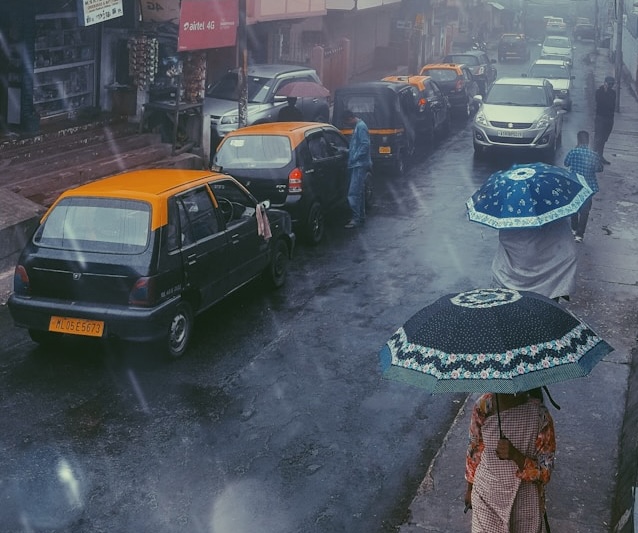
Banner Image: Photo by Sonika Agarwal on Unsplash
Sections of this article may have been developed with the assistance of artificial intelligence tools to support research, drafting and language refinement. All information has been reviewed, edited and verified by the author/editor to ensure accuracy, context and editorial integrity. The responsibility for the final content, interpretations and conclusions rests solely with the publisher.