Physical Address
23,24,25 & 26, 2nd Floor, Software Technology Park India, Opp: Garware Stadium,MIDC, Chikalthana, Aurangabad, Maharashtra – 431001 India
Physical Address
23,24,25 & 26, 2nd Floor, Software Technology Park India, Opp: Garware Stadium,MIDC, Chikalthana, Aurangabad, Maharashtra – 431001 India

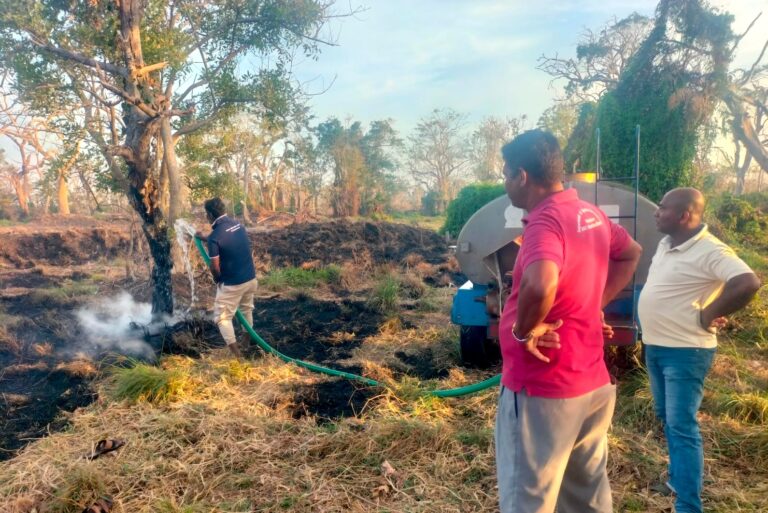
In late November 2025, Cyclone Ditwah dumped extraordinary rainfall on Sri Lanka, unleashing record floods and landslides. What meteorologists called a weak tropical storm turned into the nation’s deadliest natural disaster of the century: by early December more than 600 people were dead and hundreds missing. This calamity exposed not just an unusually intense storm, but the fragility of Sri Lanka’s landscape. Years of soil erosion, deforestation and unplanned development had left the land unable to buffer extreme rains. Ditwah’s floods were “not random failures” but the result of “underlying fragilities” in the terrain and its drainage systems. In short, the country’s beaten-down soils and slopes amplified the cyclone’s violence.
Soil’s Hidden Role in Floods and Slides
Under natural conditions, healthy soil acts like a sponge. Dark, organic-rich loam with plenty of pore space soaks up rainwater and stores it in subsurface layers . During wet periods the soil holds water, then releases it slowly – a process that delays and diminishes flood peaks. But when soil is degraded – eroded, compacted or stripped of organic matter – its water storage vanishes. Raindrops that should percolate into earth instead flow rapidly over the surface. Studies of soil–hazard links confirm this: degraded soils lose water-holding capacity and “exacerbate” flood risk by reducing infiltration and increasing runoff. More details can be read here
In practical terms, this means runaway storms. With less absorption, even moderate rain begins to sheet off fields and hills. Streams swell much faster and higher than normal, since almost all the rain is converted to runoff. Meanwhile, exposed topsoil washes into drains and rivers. Sediment clogs channels and reduces channel depth, leaving less room for water. In short, once soil structure is lost, the land’s natural flood defenses disappear. Floodwaters rise and travel more destructively, and even slopes normally stable can suddenly fail. Ditwah’s rainfall – reportedly over 400 mm in some mountain areas – was unusually high, but observers say the real disaster multiplier was degraded soil. By the time the skies poured, much of the ground could neither soak nor safely shed the deluge.
Deforestation and Vulnerable Hills
Sri Lanka’s Central Highlands illustrate this broken landscape. Where lush forests once held soil on the steep hills, large swaths are now bare or planted in rows. Colonial and post-colonial plantation projects – first coffee, then tea, rubber and cinnamon – cleared most of the old-growth forest. In fact, researchers note that Sri Lanka’s forest cover fell from roughly 90% of land area in 1900 to about 20% by 2002. In places now dominated by tea estates and farms, the stabilizing canopy of trees has vanished. Without roots to grip earth, rain simply scours the surface. When forests vanish from steep slopes, rain that should seep gently into soil instead becomes torrents of destruction.
The results on the ground are stark: slide scars, muddy gullies, uprooted trees, and flooded streams. Decades of human clearing have turned many slopes into ticking time bombs. Clearing forests, unauthorized construction, and poor drainage increase landslide risk, whereas reforestation, soil conservation, and proper land-use planning can significantly reduce them. In Sri Lanka, each new road or tea field on a slope is effectively a notch in the side of a hill. Water that used to soak into shade-cooled ground now hits bare clay and runs off instantly. Even small deforested areas act like funnels, sending rainwater straight into valleys. More details can be read here
Construction habits compound the danger. Many hillside towns and plantations now have houses and hotels built on steep, fragile land. Local researchers and agencies have warned that tens of thousands of homes lie in mapped landslide zones. Strict laws do exist to limit such construction, but enforcement has been spotty. Sri Lanka must “enforce existing regulations strictly” if it hopes to prevent repeat disasters. In short, unchecked deforestation and development on hill slopes have left countless rural pockets sitting atop hazard.
Where Ditwah Landed
When Cyclone Ditwah’s rains fell, the worst destruction came where soils and slopes were already most worn out. The country’s Central Highlands – including Kandy, Nuwara Eliya, Matale, Badulla, Kegalle and parts of Ratnapura – bore the brunt. These districts ,nearly 20% of Sri Lanka’s land, are naturally prone to landslides due to their rugged terrain. Under Ditwah, the combination of steep slopes, heavy rain and human impact proved explosive. Official counts identified over 1,200 severe landslides triggered across Sri Lanka by this storm, with 363 in Kandy District alone. In many areas that had seen years of clearing or hillside farming, even moderate rains sent entire hillsides sliding. Cropland, roads and homes were literally pulled downhill by saturated mud. Virtually every landslide-mapped zone that Ditwah’s clouds drifted over gave way. The event demonstrated starkly that degraded soils amplifying extreme weather – where a healthy watershed might have survived, a denuded one did not.
River Basins and Floodplains Under Strain
With so much runoff spilling off the hills, Sri Lanka’s rivers and floodplains were quickly overwhelmed. Reservoirs and dams that normally regulate flows were forced to spill uncontrolled. Within hours of the first deluge, dozens of reservoirs “overflowed” and embankments “collapsed,” sending torrents into towns on the plains. In particular, the Mahaweli, Kelani and other major river basins – fed by the central hills – flooded their banks and breached vulnerable defenses. Water gushed through river towns and across rice-growing lowlands. In Colombo’s outskirts, even normally moderate channels became muddy lakes – as seen above –because upstream soils no longer held a drop. Analysts note that much of this was predictable: floodplain maps had long highlighted low-lying areas and lagoon edges as high-risk zones. Yet the sheer volume of water from the uplands rendered many older defenses useless.
In short, poor soils up high meant floods down low. The country’s aging drainage networks and wetlands could not buffer the surge. Many flood schemes were based on outdated rainfall records and planning assumptions . As a consequence, built-up floodplains – including capital suburbs and coastal wetlands – were left exposed. In some places, communities were inundated practically overnight. The post-Ditwah conclusion is clear: when hills fail to absorb rain, the flatlands pay the price.
Restoring Soils to Cut Future Risks
Can this cycle be broken? The answer is “yes”: reviving soil health and vegetation can go a long way toward blunting future storms. Living soils with dense root networks naturally absorb and slow rain. Healthy soils can sustain vegetation with a root system that directly reduces erosion potential and landslide risk. In practice, restoring forest cover on eroded slopes would rebuild a natural barrier. Roots mechanically bind soil, and leafy groundcover intercepts rain. Indeed, reforestation and soil conservation as remedies for slope failures . Similarly, on farmlands terrain can be shaped and managed to hold water: terraces and no-till fields encourage infiltration, and adding compost or cover crops boosts organic matter, making soils more spongy.
Policy Gaps: Why Soil Degradation Continued
Why was Sri Lanka so exposed? On paper, policies have existed to protect hills and soil. The National Building Research Organisation (NBRO) has mapped landslide zones, and the government technically forbids construction on fragile slopes or in forests. But until recently these rules were unevenly applied. There are laws and regulations on hill-country settlements, but they have to be enforced strictly. In many communities, economic pressures – from urban sprawl to tourism lodges – outstripped oversight. Unauthorised hillside developments went unpunished.
At the same time, government investment in soil and watershed management has lagged. Flood-control plans were mainly designed decades ago and never fully updated . Urbanization ate into natural buffers like wetlands without replacement. Some specialists argue that Sri Lanka’s focus on short-term growth like plantation profits, housing space and etc came at the expense of long-term land health. In recent years Sri Lanka has produced climate resilience strategies and reforestation targets, but implementation remains slow. In sum, policy gaps – whether lax enforcement of hillside zoning or inadequate investment in erosion control– allowed decades of soil damage to accumulate even as climate threats grew.
Cyclone Ditwah was a tragic reminder that in Sri Lanka’s wet, steep landscape, healthy soil is a critical part of disaster defense. Recovering from this storm will involve not just rebuilding bridges and roofs, but repairing the land itself – letting forests and good farming hold rains as they once did.
References
https://pmc.ncbi.nlm.nih.gov/articles/PMC8349632
https://www.ft.lk/columns/Causes-of-landslides-in-Sri-Lanka-s-Central-Highlands/4-785846
https://en.wikipedia.org/wiki/Cyclone_Ditwah
https://www.researchgate.net/publication/303307528_Land_use_in_Sri_Lanka_past_present_and_the_future
https://ceylontoday.lk/2025/02/22/taking-the-reins-of-landslide-prone-areas-in-sri-lanka
1,200 landslides in Sri Lanka by Cyclone Ditwah, 20-pct of land under water: UNDP
Banner Image: Photo by Ludovico Ceroseis on Unsplash
Sections of this article may have been developed with the assistance of artificial intelligence tools to support research, drafting and language refinement. All information has been reviewed, edited and verified by the author/editor to ensure accuracy, context and editorial integrity. The responsibility for the final content, interpretations and conclusions rests solely with the publisher.