Physical Address
23,24,25 & 26, 2nd Floor, Software Technology Park India, Opp: Garware Stadium,MIDC, Chikalthana, Aurangabad, Maharashtra – 431001 India
Physical Address
23,24,25 & 26, 2nd Floor, Software Technology Park India, Opp: Garware Stadium,MIDC, Chikalthana, Aurangabad, Maharashtra – 431001 India
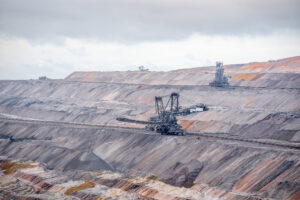
New South Wales, Australia, is facing a growing contradiction at the heart of its climate policy. While the state has enshrined ambitious emissions-reduction targets into law, a new analysis warns that ongoing and proposed coal mine expansions could derail these commitments. According to findings from the NSW Net Zero Commission, approving further coal developments would make it extremely difficult for the state to meet its legally binding climate goals, raising serious questions about the future direction of energy and resource policy.
NSW has committed to cutting greenhouse gas emissions by half by 2030 compared to 2005 levels, increasing that reduction to 70% by 2035, and achieving net-zero emissions by 2050. However, coal mining remains the state’s single largest source of emissions when the full climate impact of the industry is considered. The commission’s assessment highlights that without significant constraints on coal expansion, these targets risk becoming unattainable.
Coal’s outsized climate footprint
The climate impact of coal mining extends far beyond the mine site. In addition to emissions from extraction, processing, and transport, coal generates vast quantities of greenhouse gases when it is burned—often overseas—in power stations and industrial facilities. These downstream emissions, commonly referred to as “scope 3” emissions, account for the majority of coal’s contribution to global warming.
Although international climate accounting rules do not require Australia to formally count these overseas emissions, the NSW Net Zero Commission argues they cannot be ignored in good-faith climate planning. From a climate perspective, the atmosphere does not distinguish between emissions produced domestically and those released elsewhere. Approving new coal projects, the report notes, locks in decades of additional emissions at a time when global science demands rapid reductions.
Another major concern is methane. Coal mining releases significant amounts of this highly potent greenhouse gas, which has a far greater warming effect than carbon dioxide in the short term. The commission warns that methane emissions from coal operations may be underestimated, further masking the true climate cost of mine expansions.
Planning decisions under scrutiny
The report draws attention to nearly twenty coal mine expansion proposals currently at various stages of assessment within NSW’s planning system. If approved, these projects would add millions of tonnes of emissions over their lifetimes, putting additional pressure on an already narrow emissions budget.
Environmental organisations argue that the findings expose serious flaws in the existing planning framework. They contend that climate impacts are often treated as secondary considerations, rather than as central factors in approval decisions. Without stronger requirements to assess cumulative and long-term emissions, critics say the planning system risks approving projects that directly contradict the state’s climate laws.
Industry resistance and political balancing
Unsurprisingly, the mining industry has pushed back strongly against the report’s conclusions. Industry representatives argue that coal continues to play an important role in the economy, particularly in regional communities where mining provides jobs and revenue. They claim emissions are already declining and warn that restricting coal expansions could harm energy security and economic stability.
The NSW government has responded cautiously, acknowledging the commission’s findings while stopping short of committing to a ban on new coal developments. Officials maintain that planning decisions must balance environmental objectives with economic and social considerations, a position that reflects the political sensitivity surrounding coal in Australia.
A turning point for climate governance
The debate unfolding in NSW mirrors a broader global reckoning over fossil fuels. As countries pledge to limit global warming, pressure is mounting to align domestic policies with international climate goals. Recent legal and policy developments suggest that governments are increasingly expected to consider climate consequences when approving major projects, particularly when those consequences are foreseeable and significant.
For NSW, the Net Zero Commission’s warning represents a critical moment. The choices made now—whether to prioritise short-term economic gains or long-term climate stability—will shape the state’s emissions trajectory for decades. Managing a fair transition for workers and communities dependent on coal will be essential, but so too will decisive action to prevent further carbon lock-in.
References:
https://pmc.ncbi.nlm.nih.gov/articles/PMC8320667
https://www.nature.org.au/coal_mines_no_longer_approvable_in_nsw
Banner Image: Photo on Freepik by Wirestock https://www.freepik.com/free-photo/wide-angle-shot-excavation-machines-lookout-jackerath-garzweiler-skywalk-germany_9927047.htm#fromView=search&page=1&position=2&uuid=556e2648-00f4-4419-8726-7a44e975e571&query=coal+mines