Physical Address
23,24,25 & 26, 2nd Floor, Software Technology Park India, Opp: Garware Stadium,MIDC, Chikalthana, Aurangabad, Maharashtra – 431001 India
Physical Address
23,24,25 & 26, 2nd Floor, Software Technology Park India, Opp: Garware Stadium,MIDC, Chikalthana, Aurangabad, Maharashtra – 431001 India

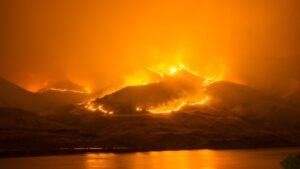
In 2025, the United Kingdom endured its worst wildfire season on record, a shock to the nation’s landscape, emergency services and climate resilience. According to the Global Wildfire Information System (GWIS), by November more than 47,026 hectares of moorland, forest and farmland had been consumed by fire across the country. This figure makes 2025 the single most devastating year for wildfires since record-keeping began in 2012, and more than twice the area scorched during the previously record-setting year of 2022.
A Surge of Blazes Amid Climate Stress
The surge in fires reflects a dramatically shifting climate landscape: prolonged dry spells, unusually warm seasons, and more frequent heat-waves have together created tinderbox conditions across large swathes of the UK. Between January and April alone, the country saw well over a hundred significant wildfires; by mid-year the tally of recorded fires had soared far beyond historical averages.
In England and Wales, fire-fighting services responded to hundreds of incidents — one report notes that by July these had reached nearly 800. Meanwhile, rural and wildland areas not accustomed to such extreme fire risk — including moorlands, heathlands and remote forests — have suffered significant damage, both to vegetation and to the biodiversity these ecosystems support.
Strain on Fire Services and Public Safety
The scale of destruction has stretched the capacities of the country’s fire and rescue services to their limits. In August, a wildfire at Holt Heath in Dorset triggered a national response: fire crews from at least 17 services across the UK were mobilised because local resources were “shockingly thin on the ground.”
In a letter to the government, the Fire Brigades Union — backed by a coalition of climate and social justice organisations — urged significant, long-term investment to bolster firefighting capacity, upgrade equipment and ensure readiness for future climate-driven disasters. According to the letter, the UK was “dangerously unprepared” for the escalating dual threats of wildfires and floods.
Echoes of Earlier Warnings
The surge was not entirely unforeseen. Over the first few months of 2025, meteorologists and environmental monitors had already flagged unusually dry weather and low rainfall, combined with warmer-than-average spring temperatures — a perfect recipe for wildfires. Some fires — especially those on moorland or heath — were likely triggered or made worse by human activities, such as careless use of barbecues or discarded cigarettes in parched countryside.
Despite these early warnings, the scale and speed of the wildfire outbreak surpassed many expectations. For much of the year, fire and rescue services struggled under increasing demand, revealing critical gaps in preparedness and resource allocation.
Beyond Blazes: Ecological, Social, and Long-term Costs
The destructive reach of 2025’s wildfires extends far beyond charred earth. Many of the affected areas are ecologically sensitive: peat bogs, ancient woodlands, native moorland and forest ecosystems that store carbon and support biodiversity. Repeated burning in such areas can destroy habitats for rare species and release stored carbon, undermining efforts to mitigate climate change.
Moreover, the broader pattern of climate-driven extreme weather — not just wildfires, but also flooding — suggests that the UK is entering an era where natural disasters may become more frequent and severe. The 2025 wildfire season is perhaps a harbinger of a new normal, and the strain on emergency resources is emblematic of a system under pressure.
A Call to Action
The record-breaking wildfires of 2025 serve as a stark alarm bell. As conditions grow hotter and drier, and as human activity continues to invade or skirt wildland areas, the risk of large-scale fire events may only grow. The existing infrastructure — the personnel, equipment, funding and strategic planning — is evidently insufficient.
To avoid repeating a year like 2025, urgent action is needed: increased funding for fire services, investment in equipment and training, and thoughtful land-management policies that recognise the new realities of climate risk. The 2025 wildfire tally must trigger not just mourning for lost forests and moorland, but a robust, forward-looking national strategy. As the Fire Brigades Union and climate groups warn, without such steps, the UK remains dangerously ill-prepared for the hazards ahead. The blistering flames of 2025 may already mark a turning point — but the nation still has a choice: respond with resolve, or risk being swallowed by the next blaze.
References:
New Report Warns: Extreme weather is UK’s new normal
Has climate change contributed to the warm and dry spring in the UK?
Banner Image: Photo by Frank Cone: https://www.pexels.com/photo/wild-fire-on-mountains-2323799/