Physical Address
23,24,25 & 26, 2nd Floor, Software Technology Park India, Opp: Garware Stadium,MIDC, Chikalthana, Aurangabad, Maharashtra – 431001 India
Physical Address
23,24,25 & 26, 2nd Floor, Software Technology Park India, Opp: Garware Stadium,MIDC, Chikalthana, Aurangabad, Maharashtra – 431001 India

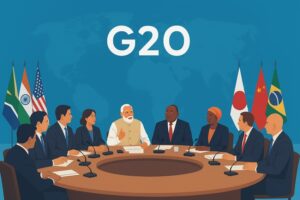
The 2025 G20 Summit in Johannesburg marked a milestone for global diplomacy, not only because South Africa hosted the forum for the first time, but also due to the shifting dynamics that played out among major world powers. Under President Cyril Ramaphosa’s leadership, the summit placed strong emphasis on the needs and aspirations of the Global South, with Africa’s developmental priorities taking centre stage. India’s Prime Minister Narendra Modi used this platform to present an ambitious six-point reform agenda, while the summit itself unfolded amid the conspicuous absence of the United States. The outcomes of the meeting reveal the contours of an evolving world order. Here are the five key takeaways:
1. India’s Six-Point Agenda Sets a Development-Focused Tone
Prime Minister Modi proposed six major initiatives aimed at enhancing global cooperation and addressing some of the world’s most pressing challenges. His proposals included a global effort to counter the nexus between narcotics and terrorism, the creation of a multinational healthcare response team, and a large-scale skills development programme targeted at Africa. He also called for a repository of traditional knowledge, an open partnership for sharing satellite data among G20 space agencies, and a circular-economy-driven framework for critical minerals.
These proposals were rooted in the philosophy of “Integral Humanism,” which Modi highlighted as a model that balances human development with the preservation of nature. He argued that conventional growth patterns had led to social inequality and environmental stress, with Africa bearing a disproportionate burden. His agenda was therefore designed to promote inclusive development, enhance disaster readiness, and support economies aspiring to scale up value-added industries.
2. G20 Declaration Adopted Despite U.S. Boycott
One of the defining features of the 2025 summit was the complete absence of the United States in the negotiating process. The White House criticised South Africa’s G20 presidency, accusing it of failing to manage certain procedural aspects, and declined to participate in the final declaration. The U.S. President did not attend the summit, and senior U.S. officials had earlier skipped key ministerial meetings as well.
Despite this, the remaining member countries managed to reach consensus on the Leaders’ Declaration. The episode raised concerns about the future cohesion of the G20, since the world’s largest economy distancing itself from the process could weaken the forum’s ability to address global challenges effectively. Nevertheless, other major powers—particularly emerging economies—used the opportunity to push for a more balanced and inclusive global agenda.
3. Critical Minerals Take Centre Stage
The summit placed strong emphasis on the growing global competition for critical minerals, which are essential for renewable energy technologies, electronics, electric mobility, and the broader digital economy. Leaders agreed on a “Critical Minerals Framework” acknowledging that nations rich in these resources have not fully benefited from their value chains due to limited infrastructure, investment shortages, and inadequate technology.
The framework’s focus on value addition, recycling, and circularity aligns closely with India’s proposals. It reflects a broader push to ensure that developing countries—which often supply these minerals—are able to leverage them for long-term industrial growth rather than exporting them in raw form. This marks a strategic shift in the global conversation around mineral security and equitable economic development.
4. Push for Scaled-Up Climate Finance and Energy Equity
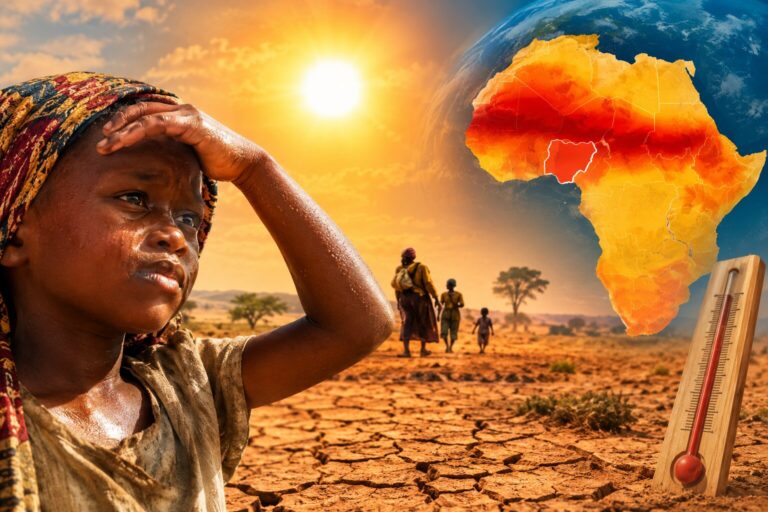
Climate change was a core part of the summit’s agenda, with leaders calling for a dramatic expansion in climate finance. The declaration emphasised that financial flows for climate mitigation and adaptation must rise from billions to trillions globally if the world is to stay on track for sustainable development. It also drew attention to the persistent energy inequality that affects many regions, especially in Africa.
Participants underscored the need for diversified investments in renewable energy systems, resilient infrastructure, and early-warning mechanisms to manage climate-related disasters. This reflects a maturing global recognition that climate action cannot be separated from questions of equity and access. Developing countries demanded fairer burdens and greater support, stressing that they face the worst impacts despite contributing the least to the crisis.
5. Global Conflicts Receive Minimal Focus in the Declaration
Unlike past G20 summits, geopolitical conflict did not dominate the negotiations. The war in Ukraine was mentioned only briefly along with conflicts in Sudan, the Democratic Republic of Congo, and the Occupied Palestinian Territory, with the declaration calling for lasting and just peace in all these regions. However, Western leaders continued discussions on Ukraine on the sidelines, partly in response to leaked reports on U.S. peace proposals.
The limited focus on geopolitical tensions indicated South Africa’s intention to steer the summit toward issues of development, climate resilience, and economic cooperation rather than military or security-driven debates. It also demonstrated the challenge of crafting a unified stance on sensitive political conflicts when not all major players are aligned.
Conclusion
The 2025 G20 Summit revealed a transitional moment in global governance. With the United States stepping back and emerging economies asserting themselves more strongly, the forum’s centre of gravity appears to be shifting. India’s six-point agenda reflected this change, foregrounding development, health, skills, and sustainable growth. Whether these ideas evolve into tangible global initiatives will depend on sustained political will, financing, and cooperation among the member states.
References:
https://g20.org/track-news/g20-leaders-summit-declaration-revolutionary-for-africa-global-south
Banner Image: AI generated