Physical Address
23,24,25 & 26, 2nd Floor, Software Technology Park India, Opp: Garware Stadium,MIDC, Chikalthana, Aurangabad, Maharashtra – 431001 India
Physical Address
23,24,25 & 26, 2nd Floor, Software Technology Park India, Opp: Garware Stadium,MIDC, Chikalthana, Aurangabad, Maharashtra – 431001 India


For the first time in recorded history, Iceland — one of the world’s last mosquito-free sanctuaries — has detected mosquitoes. The discovery of cold-resistant Culiseta annulata in northern Iceland this year marks more than a biological milestone; it’s a climate warning. Across Europe, tropical mosquito species like Aedes aegypti and Aedes albopictus — carriers of dengue, chikungunya, and Zika — are moving steadily northward, establishing themselves in regions once too cold for them to survive. Scientists say rising temperatures, prolonged summers, and milder winters are redrawing the map of mosquito habitats. From southern England to Belgium and even southern Sweden, the invaders are finding a new home — and with them comes the growing threat of diseases Europe once thought it had left behind.
Climate drivers of mosquito expansion
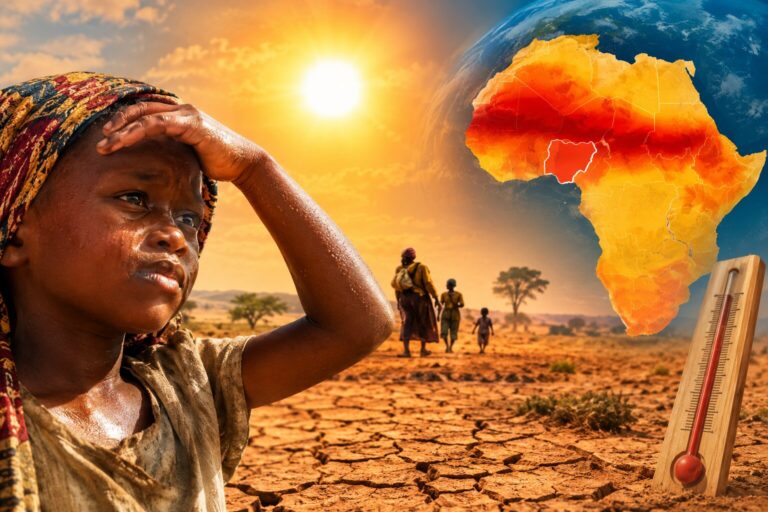
Climate change is the leading explanation for this expansion. Europe’s summers are getting hotter, longer,and deadlier, with more frequent extreme heatwaves. Satellite data show land-surface temperatures across southern Europe reaching 40–45 °C in summer. Such warming – especially in high latitudes – extends the mosquito breeding season and allows survival through milder winters. As the ECDC explains, “rising temperatures, longer summer seasons, milder winters and changes in rainfall patterns combine to create a favourable environment for mosquitoes to thrive”. Indeed, Arctic regions (including Iceland) are heating about four times faster than the global average. Climate models now find that places like southern England are becoming suitable habitat for tropical mosquito species.
Scientists note that Aedes albopictus, in particular, is “showing signs of adaptation to colder climates” . Climate projections by ECDC and others suggest it will continue spreading beyond its historical range as Europe warms.
Health consequences: tropical diseases on the rise
The public health stakes are high. Mosquitoes are vectors for many pathogens. Europe is already seeing unprecedented outbreaks of diseases once confined to the tropics. Key developments include: – Chikungunya outbreaks surging: The ECDC reports 27 chikungunya outbreaks in Europe in 2025 – a record for the continent. Aedes albopictus is established in 16 countries and nearly 370 regions (up from 114 regions a decade ago). For the first time, a locally transmitted chikungunya case was reported in northern France (Alsace) in 2025, highlighting the virus moving into previously safe latitudes. More details can be read here
– Dengue on the doorstep: Regions of southern Europe have seen unprecedented dengue transmissions. France had dozens of autochthonous dengue cases last year, and Italy recorded a 199-case dengue outbreak in 2024 – the largest ever in the EU/EEA. Over 300 locally acquired dengue cases occurred in Europe in 2024 (mostly Italy). Warmer weather means Aedes mosquitoes carrying dengue can now survive long enough in Europe to spark such outbreaks.
– West Nile virus expansion: West Nile cases have shifted steadily northward and westward. In summer 2025 Europe saw the highest WNV count in three years. For the first time, WNV infections were detected in new areas of Italy and Romania. Officials expect case numbers to continue rising with the late-season peak. (In 2022-24, southern and central Europe had record WNV seasons.)
– Potential malaria resurgence: Malaria was eradicated decades ago in Europe, but experts warn it could reappear as summers grow hotter . Anopheles mosquitoes (malaria vectors) thrive between ~15–35 °C . Recent record heatwaves in temperate countries – pushing UK summer highs above 40 °C –could allow anopheline mosquitoes to reproduce in greater numbers. Notably, Italian entomologists just rediscovered Anopheles sacharovi (a malaria vector) in Italy for the first time in 50+ years. Although no sustained malaria transmission has occurred, these are red flags.
Other diseases: The same Aedes mosquitoes can carry Zika and other viruses. With the vectors present and travel importing cases, European health agencies warn of potential dengue, Zika and chikungunya becoming endemic if trends continue. (Influenza, tick-borne illnesses and other climate-sensitive infections are also climbing – the UK has seen more tick-borne Lyme disease due to milder weather, for example.)
Europe’s changing climate future
The mosquito invasion is just one symptom of Europe’s rapidly changing climate. Scientists project that most of Europe will continue to warm significantly in coming decades, even under moderate emissions scenarios. For example, an EU analysis finds that the Mediterranean, Balkans and Western Europe are on track for far hotter summers and milder winters. Climate models suggest southern England,Germany and much of Eastern Europe will see sustained high temperatures akin to today’s Mediterranean climate. In fact, recent climate briefs note “heat now lasts up to five months a year in some southern European cities”
Consequences for mosquitoes are clear: longer hot seasons mean longer transmission seasons. The longer, more widespread and more intense transmission of mosquito-borne diseases is becoming the new normal in Europe. Northern countries will experience more average days in the mosquito friendly range. Regions like the UK – once too cool for Aedes aegypti to establish – will see many more days above the 14–15 °C threshold these mosquitoes need to complete their life cycle. Increased urban heat, less freezing, and more standing water in summer all favor mosquitos.
There is also a feedback of concern: more mosquitoes mean more disease risk, which strains health systems already battling heat-stroke, wildfires and pollution. Experts warn that failure to curb emissions or invest in adaptation (surveillance, green spaces, vector control) will lock in these trends. As the CDC and ECDC conclude, Europe is effectively “entering a new phase” where vector-borne illnesses can no longer be dismissed as tropical problems. In practical terms, countries from Iceland and Norway down to Greece must prepare for mosquito seasons – through public awareness, expanded surveillance and planning – just as they prepare for heatwaves and droughts.
Europe’s mosquito story illustrates a broader climate truth: as the planet warms, “no place is an island.” Even cold-climate countries cannot assume safety from insects or diseases they’ve long escaped. The Iceland example is striking, but it is part of a continent-wide shift. With every tenth of a degree of warming, Europe’s mosquito season stretches a little longer and its map of disease risks changes. The solution will require both global climate action and local public health measures, but the trends are already clear: warmer Europe means more mosquitoes and more mosquito-borne disease.
References
https://journals.plos.org/globalpublichealth/article?id=10.1371/journal.pgph.0004968
https://www.ecdc.europa.eu/en/disease-vectors/facts/mosquito-factsheets/aedes-albopictus
Climate crisis: Tropical disease-carrying mosquitoes found in UK
Heat waves: Europe’s new normal and the potential future rise of malaria in Europe
https://www.gov.uk/guidance/mosquito-summary-hecc-chapter-8-climate-and-vector-borne-diseases
https://www.washingtonpost.com/climate-environment/2025/10/23/iceland-mosquitoes-climate-change
Banner Image: Photo by Luke Madziwa on Unsplash