Physical Address
23,24,25 & 26, 2nd Floor, Software Technology Park India, Opp: Garware Stadium,MIDC, Chikalthana, Aurangabad, Maharashtra – 431001 India
Physical Address
23,24,25 & 26, 2nd Floor, Software Technology Park India, Opp: Garware Stadium,MIDC, Chikalthana, Aurangabad, Maharashtra – 431001 India

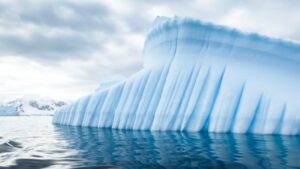
A viral tweet has been circulating online, claiming that Antarctic sea ice is recovering after earlier declines caused by the 2015 El Niño and the 2022 Tonga volcanic eruption. It further asserts that the sea ice extent in September was 0.5 million square kilometres higher than last year and 0.75 million square kilometres higher than in 2023, adding that models cannot explain this recovery. The claim has gained traction among climate sceptics as supposed evidence that Antarctica is “bouncing back.” However, credible satellite data and scientific assessments reveal that the tweet’s narrative is misleading and misrepresents the ongoing trends in Antarctic sea ice.
Claim post:
Claim: “After strong decreases from the 2015 El Niño and the 2022 Tonga eruption, Antarctic sea ice continues to recover. Its extent in September was 0.5 million km² higher than last year and 0.75 million higher than in 2023. Models cannot explain this recovery.”
Fact: False. The claim that Antarctic sea ice is undergoing a meaningful recovery is false. According to data from the National Snow and Ice Data Centre (NSIDC), Antarctic sea ice extent in September 2024 was indeed marginally higher than the record lows of 2023. However, it remained well below the long-term average. In fact, NSIDC’s analysis shows that September 2024 marked the fourth-lowest sea ice extent in satellite records dating back to 1979. This slight uptick from an exceptionally low baseline does not represent a recovery but a short-term fluctuation within an ongoing downward trend.
Scientific experts, including NSIDC senior research scientist Walt Meier, have clarified that Antarctic sea ice has shown a significant long-term decline since 2016, which has continued despite year-to-year variability. A brief rise after a record minimum is not unusual in polar climate systems and does not indicate a reversal of the broader warming trend. Complex atmospheric and oceanic conditions influence sea ice changes, but there is no credible evidence to suggest a sustained recovery.
Is El Niño or the Tonga Eruption Driving Antarctic Ice Changes?
Misleading. The tweet also attributes previous ice loss to the 2015 El Niño and the 2022 Tonga eruption, implying that recent changes are linked to those events. However, scientific analyses do not support this explanation. According to the World Meteorological Organisation (WMO) and recent studies published in Nature Climate Change, the decline in Antarctic sea ice is primarily driven by warming ocean temperatures and shifting wind patterns around the continent, both influenced by human-caused climate change.
While El Niño can temporarily affect weather patterns and regional temperatures, its impact on Antarctic sea ice is short-lived and cannot explain the sustained multi-year decline. Similarly, early research on the Hunga Tonga-Hunga Ha‘apai eruption indicates that while it injected large amounts of water vapour into the stratosphere, the resulting effect on Antarctic climate remains uncertain and likely minimal. No evidence suggests that either of these events caused the long-term sea ice loss or that their aftermath is now “reversing” it.
Antarctic Ice Melt and the Climate Crisis
Over the past decade, Antarctica has experienced dramatic environmental shifts. Satellite observations show that the continent’s sea ice extent has dropped by nearly 2 million square kilometres compared to the late 20th-century average. This decline has profound implications for global ocean circulation, weather systems, and biodiversity. A study published in Nature Climate Change reported that Antarctic sea ice has entered a new low-ice state, possibly driven by irreversible ocean warming.
These findings highlight how climate change is destabilising one of Earth’s most vital cooling systems. Less sea ice means more sunlight is absorbed by the ocean, amplifying warming and further accelerating ice loss, a feedback loop that threatens to intensify future climate impacts.
The claim that Antarctic sea ice is “recovering” lacks factual support and misinterprets short-term fluctuations as long-term recovery. Reliable datasets and peer-reviewed studies confirm that the region remains in a state of record-low sea ice extent, consistent with ongoing global warming. Neither El Niño nor the Tonga eruption explains these patterns. Instead, the evidence points squarely toward human-driven climate change as the dominant factor shaping Antarctica’s fragile ice environment.
References:
https://nsidc.org/news-analyses/news-stories/antarctic-sea-ice-near-record-low-maximum-extent-2024
https://wmo.int/media/news/rate-and-impact-of-climate-change-surges-dramatically-2011-2020
https://agupubs.onlinelibrary.wiley.com/doi/10.1029/2023GL106980
https://marine.copernicus.eu/ocean-climate-portal/antarctic-sea-ice-extent
https://www.nature.com/articles/s43247-023-00961-9
Banner image:
Photo by Derek Oyen on Unsplash