Physical Address
23,24,25 & 26, 2nd Floor, Software Technology Park India, Opp: Garware Stadium,MIDC, Chikalthana, Aurangabad, Maharashtra – 431001 India
Physical Address
23,24,25 & 26, 2nd Floor, Software Technology Park India, Opp: Garware Stadium,MIDC, Chikalthana, Aurangabad, Maharashtra – 431001 India
A video circulating on X post makes sweeping claims that climate change is a fabricated crisis and that renewable energy is a scam designed to mislead the public. The speaker dismisses global warming, rising sea levels and ecological concerns as “lies” while also alleging that wind farms devastate wildlife by clearing entire ecosystems.
However, a closer look at the evidence shows that the video mixes opinion with inaccurate and misleading claims. Scientific research and environmental assessments present a far more nuanced picture.
Claim 1: “The climate crisis, rising sea levels, and related impacts are all lies.”
Fact: False
The claim that climate change and its impacts are fabricated is not supported by scientific evidence.
According to decades of observations, Earth’s average surface temperature has risen significantly since the late 19th century, largely due to increased greenhouse gas emissions from human activities such as burning coal, oil and natural gas. The warming trend has been independently documented by multiple scientific institutions worldwide.
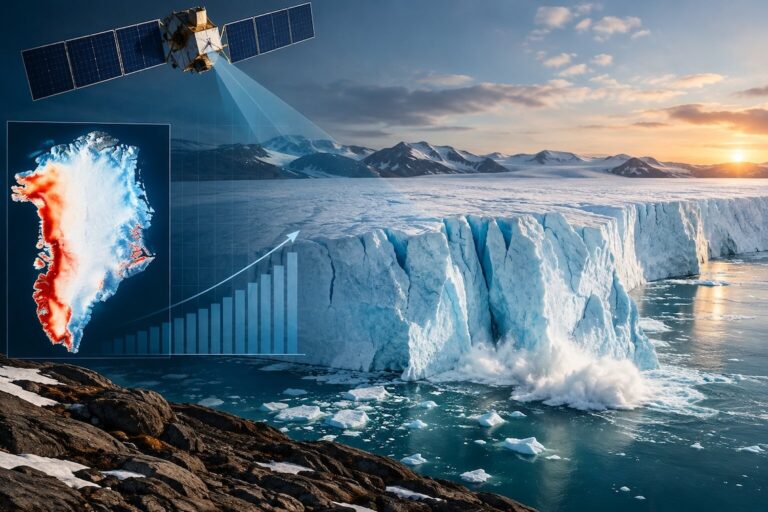
Similarly, sea levels have been rising because warmer oceans expand and melting glaciers and ice sheets add more water to the seas. Satellite measurements and tide-gauge records consistently show an upward trend in global mean sea level over the past several decades.
Beyond temperature and sea-level rise, numerous climate-related impacts include more frequent heatwaves, changing rainfall patterns, glacier retreat and ocean warming have been extensively documented in peer-reviewed scientific studies. While individual weather events cannot always be attributed solely to climate change, the overall long-term trends are supported by a large body of evidence.
Therefore, the claim that the climate crisis and rising sea levels are “all lies” is false.
Claim 2: Green energy is not kind to the planet.
Fact: Misleading
The viral video argues that renewable or “green” energy is not environmentally friendly. This statement oversimplifies a much more complex issue.
No source of energy is completely free of environmental impacts. Wind farms, solar parks, hydropower projects and even nuclear plants require land, raw materials and infrastructure. Manufacturing solar panels, wind turbines and batteries also involves mining minerals and consuming energy.
However, these impacts do not mean renewable energy offers no environmental benefits.
Multiple life-cycle assessments have found that renewable energy technologies generally produce far lower greenhouse gas emissions over their lifetime compared to fossil fuel-based electricity generation. Unlike coal or gas-fired power plants, wind and solar energy generate electricity without emitting carbon dioxide during operation.
Renewable energy projects can also affect biodiversity, land use and local ecosystems if poorly planned. Recognising these concerns, governments typically require environmental impact assessments and mitigation measures before approving major renewable energy projects.
In other words, green energy is not impact-free, but describing it as inherently harmful to the planet ignores the substantial climate benefits it provides compared to fossil fuels.
For this reason, the claim is misleading rather than entirely true or false.
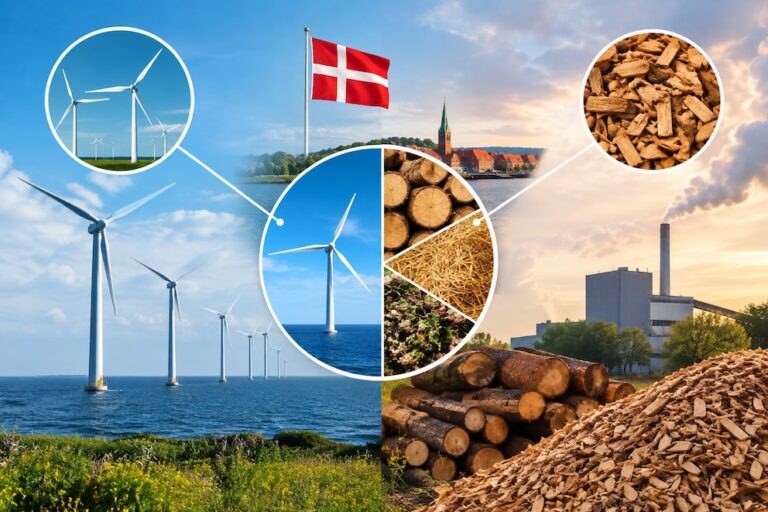
Claim 3: “Wind farms require wholesale clearance of all wildlife and create completely sterile areas.”
Fact: False
The video claims that wind farm construction begins with removing all wildlife from a site, creating a completely sterile environment before turbines are installed.
There is no evidence that this represents standard practice for wind energy projects.
It is true that wind farms can affect local habitats and wildlife. Birds and bats may collide with turbines, while construction activities can temporarily disturb ecosystems. These are recognised environmental concerns and are studied extensively by regulators and conservation organisations.
However, large-scale wind projects are generally subject to environmental impact assessments before construction begins. These studies evaluate potential effects on wildlife, vegetation and habitats, and developers are often required to adopt mitigation measures such as modifying turbine placement, avoiding ecologically sensitive areas, scheduling construction to minimise disturbance during breeding seasons, or implementing habitat restoration plans.
The claim that all wildlife is removed and that sites become completely sterile is an exaggeration unsupported by evidence. Wildlife continues to exist in and around many operational wind farms, although certain species may be affected differently depending on location and project design.
Conclusion
The viral video’s central message is built on a combination of inaccurate statements and misleading generalisations.
While it is true that renewable energy infrastructure can have environmental impacts and that careful planning is necessary to minimise effects on ecosystems, these realities do not support the video’s broader conclusion that climate change is a hoax or that renewable energy is merely a “scam.”
Scientific evidence overwhelmingly confirms that global temperatures are rising, sea levels are increasing and climate change is already affecting natural and human systems worldwide. Renewable energy is not without environmental costs, but current research shows it remains one of the most effective tools for reducing greenhouse gas emissions and limiting future climate change when responsibly developed.
References:
https://www.sciencedirect.com/science/article/pii/S2772662223000772
https://pmc.ncbi.nlm.nih.gov/articles/PMC3758961
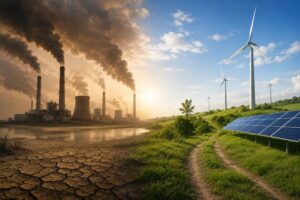
Banner Image: AI generated
Sections of this article may have been developed with the assistance of artificial intelligence tools to support research, drafting, and language refinement. All information has been reviewed, edited, and verified by the author/editor to ensure accuracy, context, and editorial integrity. The responsibility for the final content, interpretations, and conclusions rests solely with the publisher.