Physical Address
23,24,25 & 26, 2nd Floor, Software Technology Park India, Opp: Garware Stadium,MIDC, Chikalthana, Aurangabad, Maharashtra – 431001 India
Physical Address
23,24,25 & 26, 2nd Floor, Software Technology Park India, Opp: Garware Stadium,MIDC, Chikalthana, Aurangabad, Maharashtra – 431001 India


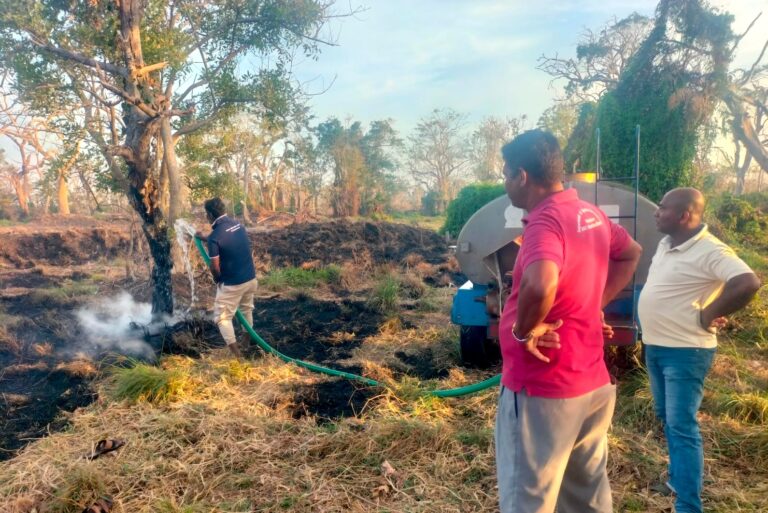
Every year, as the post-harvest season arrives in northern India, thick clouds of smoke rise from agricultural fields, darkening skies across states like Punjab, Haryana and Uttar Pradesh. The sight is familiar and often discussed in the context of worsening air pollution in Delhi and beyond. But recent research has shown that the ecological consequences of crop residue burning go far deeper than the air we breathe. A new study published in Science of the Total Environment reveals that this practice disrupts biodiversity in soils, accelerates pest outbreaks and destabilises the very systems that sustain agriculture. This finding marks a shift in how we should understand crop residue burning. It is not only an urban air quality issue but also a pressing ecological challenge with cascading impacts on farms, food systems and the climate.
From Fields to Atmosphere: Why Farmers Still Burn Residue
Crop residue burning is not new. For decades, farmers in northwestern India have set fire to leftover paddy straw as a quick and cheap method to clear fields for the next sowing cycle, particularly wheat. Mechanisation has not been fully accessible to many small and marginal farmers, and managing tonnes of straw without affordable alternatives is often unfeasible.
This widespread practice contributes significantly to seasonal smog, emitting delicate particulate matter (PM2.5) and toxic gases such as carbon monoxide and ozone precursors. According to India’s Ministry of Environment, residue burning contributes nearly 17% of Delhi’s winter air pollution on peak days. The greenhouse gases released, including carbon dioxide, methane and nitrous oxide, also add to global warming.
Government policies have attempted to curb burning by banning it outright and promoting solutions like the Happy Seeder, which allows wheat to be sown without clearing stubble. Subsidies and awareness campaigns exist, yet enforcement is weak and alternatives often remain too costly or inaccessible for small farmers. The outcome is a recurring cycle of burning that peaks every October and November.
The Hidden Cost: Soil, Microbes and Vanishing Biodiversity
While the smoke grabs headlines, the damage below the ground remains largely invisible. A study analysed 250 studies and found that almost 40% of biodiversity traits measured showed negative responses to crop residue burning. Beneficial soil organisms, including earthworms, beetles, ants and microbial communities, are particularly vulnerable.
When crop residues are burned, soil surface temperatures can rise sharply, sometimes reaching 40°C or more. This kills essential microbes and reduces the organic matter that supports soil fertility. The study has previously shown that burning results in the loss of up to 90% of nitrogen and 60% of sulphur contained in straw. These nutrients would otherwise enrich the soil if residues were incorporated.
The loss of soil biodiversity is not just a scientific concern. It translates directly into weaker soil structure, poorer water retention and declining fertility. To compensate, farmers are forced to apply more chemical fertilisers, creating a cycle of dependency that burdens both the economy and the environment.
Winners and Losers: How Burning Shifts Pest and Predator Dynamics
The impact of burning is uneven across species. Natural predators such as spiders, ladybirds, frogs and insect-eating birds suffer steep declines when their habitats are destroyed by fire. These organisms play a crucial role in controlling pests naturally. Without them, pest populations surge.
The Science of the Total Environment study highlights how pests like parasitic nematodes, rodents and certain insects actually thrive after residue burning. This shift in balance forces farmers to depend more heavily on pesticides, which further disrupts ecosystems and raises production costs.
A report noted similar trends, warning that the decline of predator species has led to increased pest infestations in many farming regions. This phenomenon is not confined to India. Studies in China and Southeast Asia have also observed higher pest outbreaks linked to residue burning. What emerges is a clear picture. Fires may clear fields quickly, but they create ecological vacuums that pests readily exploit.
Air, Water and Wildlife: The Wider Ecological Fallout
The damage does not stop at soil and pests. Air pollution from residue burning affects insects and birds through direct exposure to toxic compounds. Heavy metals and particulate matter impair insect activity, reproduction and survival rates. Birds face respiratory issues, reduced food availability due to shrinking arthropod populations and even thinner eggshells from heavy-metal contamination.
Wildlife impacts are just one dimension of the broader fallout. Residue burning also influences water bodies by contributing to nutrient runoff and eutrophication, a process where excessive nutrients lead to algal blooms and oxygen depletion. Meanwhile, the release of greenhouse gases contributes to global climate change, amplifying extreme weather patterns that agriculture itself depends on.
Yet despite these consequences, biodiversity is often overlooked in policy debates on crop residue management. Most government interventions remain narrowly focused on reducing smog or improving mechanisation. The ecological science, however, shows that the problem is much broader, touching every layer of the environment.
References:
http://sciencedirect.com/science/article/abs/pii/S0048969725016031
https://pmc.ncbi.nlm.nih.gov/articles/PMC11774808
Banner image:

Comments are closed.






Greetings! Quick question that’s totally off topic. Do you know how to make your site mobile friendly? My web site looks weird when browsing from my apple iphone. I’m trying to find a template or plugin that might be able to fix this problem. If you have any recommendations, please share. Many thanks!
Some truly tremendous work on behalf of the owner of this internet site, dead great subject matter.