Physical Address
23,24,25 & 26, 2nd Floor, Software Technology Park India, Opp: Garware Stadium,MIDC, Chikalthana, Aurangabad, Maharashtra – 431001 India
Physical Address
23,24,25 & 26, 2nd Floor, Software Technology Park India, Opp: Garware Stadium,MIDC, Chikalthana, Aurangabad, Maharashtra – 431001 India


Rainbows—those fleeting arcs of colour that often bring a sense of wonder after the rain—may become rarer over India in the coming decades. Scientists are now finding that climate change is not only altering storms, droughts, and rising seas, but also reshaping the very chances of seeing one of nature’s most beautiful spectacles.
A Study Beyond the Obvious
A recent international study took an unusual approach to studying rainbows. Instead of looking at rainfall records alone, researchers compiled a massive global database of rainbow photographs submitted by ordinary people. These images served as real-world evidence of when and where rainbows appear.
Using this archive, scientists developed a climate model capable of predicting rainbow days by factoring in rainfall, sunlight, and cloud conditions. They then tested the model against both present weather data and different future climate scenarios projected up to the end of this century.
What the Models Reveal
At present, the average number of days suitable for rainbow sightings across the world stands at about 117 per year. By the year 2100, the number is expected to increase by roughly four to five percent, depending on how greenhouse gas emissions unfold.
While this sounds promising, the reality is far more uneven. Two-thirds to nearly four-fifths of the world’s land areas may indeed witness an increase in rainbow-friendly days. But that still leaves one-fifth to one-third of land areas facing a decline.
The gains are likely to occur mainly in colder or high-altitude regions such as the Arctic or the Himalayas—places with sparse human populations. On the other hand, many of the most densely inhabited regions, including large parts of India, may see a reduction. For millions of people in the tropics and subtropics, rainbows could become rarer sights than they are today.
More Than Just Pretty Colours
Rainbows do not hold economic value, nor do they play a central role in ecosystems. But their importance cannot be dismissed. They spark curiosity, inspire stories and art, and provide people with moments of joy and reflection. In many cultures, rainbows are symbols of peace, hope, and new beginnings.
The idea that climate change could rob us of these intangible experiences is a reminder of how far-reaching its impacts can be. It is not only about survival or livelihoods—it also affects the ways in which people connect emotionally with the natural world.
What This Means for India
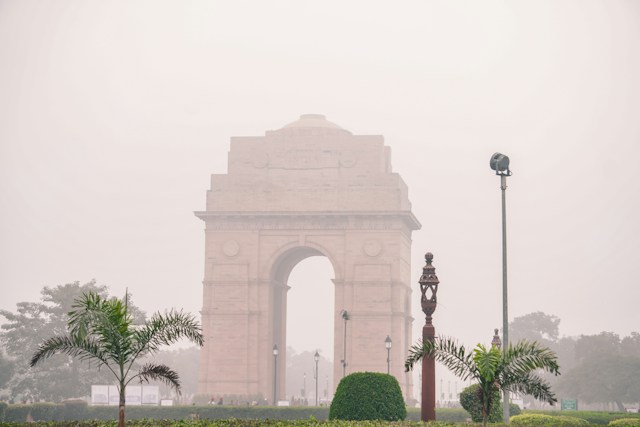
India, known for its dramatic monsoon skies and frequent rainbow appearances in rural and hilly landscapes, could be one of the regions where rainbow days decrease. Urbanisation, shifting rainfall patterns, and rising temperatures may all reduce the conditions that make rainbows possible.
For a country where festivals, songs, and poetry often draw inspiration from nature’s colours, this subtle change would be a cultural loss as much as an environmental one. Imagine a generation growing up with fewer chances to look up at the sky after a storm and find a rainbow stretching across it.
Beyond the Obvious Effects of Climate Change
Much of the conversation on global warming centres around extreme events—deadly floods, intense heatwaves, or melting glaciers. These are urgent, visible crises. Yet studies like this remind us that climate change also influences the gentler, quieter parts of nature: the fragrance of flowers, the timing of bird migrations, or the chance of seeing a rainbow after rain.
Such changes are easy to overlook because they do not cause immediate damage. But they represent a slow erosion of beauty and wonder in our everyday lives. Climate change, in this sense, is not only a scientific and political problem—it is also an emotional and cultural one.
A Subtle but Powerful Reminder
The possibility of fewer rainbows over India is not a catastrophe, but it is symbolic. It tells us that climate change is not just about numbers, emissions, and graphs. It is about what kind of world we are leaving behind—one where even the simplest pleasures might grow scarce.
As researchers emphasise, the loss of intangible joys matters too. A world with fewer rainbows would be one with less colour, less poetry, and fewer sparks of wonder. That thought alone is reason enough to take climate change personally, and to act with urgency.
References:
https://www.wcrp-climate.org/images/modelling/WGCM/publications/sap3-climate-models.pdf
https://pmc.ncbi.nlm.nih.gov/articles/PMC9013542
Banner Image: photo on Pexels by Binyamish Mellish

Comments are closed.





ast5ab