Physical Address
23,24,25 & 26, 2nd Floor, Software Technology Park India, Opp: Garware Stadium,MIDC, Chikalthana, Aurangabad, Maharashtra – 431001 India
Physical Address
23,24,25 & 26, 2nd Floor, Software Technology Park India, Opp: Garware Stadium,MIDC, Chikalthana, Aurangabad, Maharashtra – 431001 India

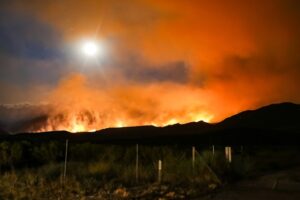
As wildfires grow fiercer and more frequent in a warming world, the damage is no longer just environmental but deeply personal. Behind the smouldering forests and evacuation orders lies an invisible aftermath that plays out in the minds of survivors long after the flames are gone. A groundbreaking new study reveals how prolonged exposure to climate-driven disasters like wildfires may leave lasting imprints on brain function and decision-making. Understanding this hidden toll could be key to protecting our landscapes and cognitive resilience in an increasingly unstable future as climate change accelerates.
The Hidden Cost of Climate Disasters
When the Camp Fire swept through Northern California in August 2018, it wasn’t just homes and towns that were lost. Entire communities were thrust into prolonged chaos—lives uprooted, futures clouded, and trauma etched into memory. While the destruction was visible in charred forests and displaced families, a quieter, more enduring impact took hold: the toll on survivors’ minds. As climate-fueled disasters increase in frequency and ferocity, scientists are beginning to uncover a less talked-about consequence. These events fundamentally alter how we think, make decisions, and emotionally process our environments.
The research frontier has shifted from emergency response to long-term mental health and cognitive resilience. Climate trauma is no longer only about post-traumatic stress or anxiety, and it’s now being linked to measurable changes in brain activity. This shift reflects growing awareness that climate adaptation must include psychological recovery. The Nature study published in Scientific Reports takes this issue head-on, offering the first evidence that exposure to a major wildfire can reshape brain function and decision-making patterns even years after the smoke has cleared.
How Climate Trauma Rewires Mental Processing
The study, conducted by researchers at the University of California, San Diego, used electroencephalography (EEG) to peer inside the brains of Camp Fire survivors and compare their neural patterns to those of those unexposed to the disaster. What they found was striking. Participants who had lived through the wildfire exhibited altered patterns of parietal alpha power—a type of brain wave linked to attention and working memory, suggesting that trauma may disrupt key cognitive systems involved in processing and evaluating conflict.
However, perhaps more telling was the altered activity in the posterior cingulate cortex, a region implicated in memory retrieval and internally focused thought. In survivors, this region appeared more engaged during complex decision-making tasks, indicating heightened cognitive load or compensatory processing. In simpler terms, the brains of those exposed to trauma may be working harder just to make routine judgments. These findings don’t merely illustrate a physiological footprint of trauma, and they redefine how we understand the durability of environmental stress on the human mind.
Decision Under Fire: How Trauma Shapes Everyday Choices
The experiment involved a modified Flanker task, a test where participants had to respond to conflicting stimuli under varying difficulty levels. While the control group and the Camp Fire survivors completed the tasks, their response times and EEG data told two different stories. The trauma-exposed individuals showed increased reaction times and altered EEG signals when faced with high-conflict decisions, a sign that their cognitive systems were processing conflict differently.
Interestingly, this wasn’t a question of ability—survivors could still complete the task accurately. Instead, the issue was efficiency and effort: the brain seemed to expend more energy resolving ambiguity. The researchers argue that this may represent a form of “adaptive vigilance”, a heightened alertness from prior exposure to danger. But in everyday life, this could lead to fatigue, decision paralysis, or difficulty handling stress, especially in environments that demand fast, complex judgments, such as jobs, parenting, or emergency responses.
Adapting Minds in a Warming World
The implications of this research ripple far beyond neuroscience. As climate disasters intensify, the populations most affected will not only need housing and aid, but they’ll also need support for long-term cognitive recovery. Governments and health systems must consider how trauma influences educational outcomes, workplace performance, and community rebuilding. Integrating mental health services into climate disaster response, especially cognitive behavioural therapy and trauma-informed care, may be as vital as rebuilding roads or restoring power.
Moreover, this study contributes to a growing argument that mental health is a climate justice issue. Communities on the frontlines, often low-income, rural, or Indigenous, face not just more frequent disasters, but fewer resources to process and recover from them. This demands urgent investment in interdisciplinary adaptation planning, including neuroscientists, psychologists, urban planners, and policymakers. If climate resilience is about bouncing back stronger, we must ensure that minds, just as much as infrastructure, are prepared for the long road ahead.
References:
2018 Fire Season Incident Archive | CAL FIRE
Climate trauma from wildfire exposure impacts cognitive decision-making | Scientific Reports
Climate-related trauma can have lasting effects on decision-making | ScienceDaily
Clinical practice guidelines on the environment and mental well-being – PMC
Banner image:
Photo by Ross Stone on Unsplash