Physical Address
23,24,25 & 26, 2nd Floor, Software Technology Park India, Opp: Garware Stadium,MIDC, Chikalthana, Aurangabad, Maharashtra – 431001 India
Physical Address
23,24,25 & 26, 2nd Floor, Software Technology Park India, Opp: Garware Stadium,MIDC, Chikalthana, Aurangabad, Maharashtra – 431001 India

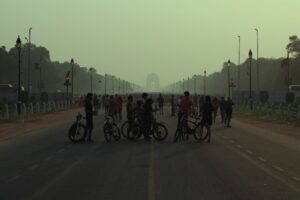
As Asia’s largest summer heatwave rolls through Delhi, an invisible threat has risen above the usual winter smog: ground‑level ozone. Data from the Centre for Science and Environment (CSE) shows that daytime ozone levels are now surpassing particulate matter (PM₂.₅) concentrations across much of the city. While particulate pollution peaks in colder months, ozone levels surge under sunlight and heat, often catching many residents unaware.
Ozone Builds Silently in Delhi’s Air
Ozone isn’t something you can see or detect like grey smog. Instead, it silently builds in the daytime atmosphere through chemical reactions involving vehicle exhaust, industrial emissions and volatile organic compounds exposed to intense sunlight. In Delhi, areas with high urban heat, such as Najafgarh and Wazirpur, are becoming ozone “hotspots,” exhibiting the most frequent exceedances of safe levels.
Since early summer, monitoring stations across Delhi-NCR have recorded multiple days where the 8-hour average ozone levels exceeded the national standard of 100 µg/m³. Unlike particulate matter, which triggers immediate health warnings such as hazy skies and a choking sensation, ozone works quietly, though its effects are just as damaging, especially with prolonged exposure.
Health threats hiding in bright sunshine
Ozone poses serious risks to respiratory health. It irritates the throat and lungs, reduces lung function, triggers asthma attacks and increases vulnerability to infections. Long-term exposure can cause inflammation of the lung tissue, leading to chronic damage. Children, older adults and outdoor workers are particularly at risk.
CSE warns that ongoing ozone exposure in Delhi could lead to a surge in respiratory ailments, even beyond the usual winter smog season. The invisible nature of this pollutant means many may shrug it off, but ozone can silently worsen asthma, emphysema and other lung conditions without warning.
Solutions beyond smog-fighting tactics
Tackling ozone requires more than traditional smog‑control methods. Since ozone forms from precursors such as NOₓ and VOCs, reducing emissions from vehicles, industry, and power plants is crucial. Authorities must also expand air-quality alerts to include ozone, particularly during heat waves, so that residents can take necessary precautions.
Urban planning must rise to the challenge: planting more trees, designing shaded streets, and using reflective surfaces can cool down the city and reduce ozone production. Meanwhile, policymakers should integrate ozone mitigation into the National Clean Air Programme, balancing efforts across multiple pollutants, including PM₂₅, ozone, and NOₓ, with a holistic approach.
As Delhi’s summer days get hotter, its air is becoming more complex. Beating winter’s smog won’t be enough. To keep the city’s air healthy year‑round, officials and citizens must recognise ozone as a stealthy danger and treat it as the serious threat it has become.
References:
https://www.cseindia.org/OZONE-NOTE.pdf
Banner image:
Photo by Ravi Sharma on Unsplash