Physical Address
23,24,25 & 26, 2nd Floor, Software Technology Park India, Opp: Garware Stadium,MIDC, Chikalthana, Aurangabad, Maharashtra – 431001 India
Physical Address
23,24,25 & 26, 2nd Floor, Software Technology Park India, Opp: Garware Stadium,MIDC, Chikalthana, Aurangabad, Maharashtra – 431001 India
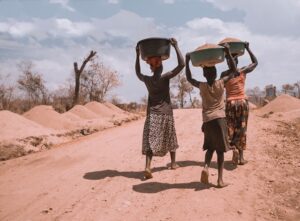
Africa’s long-standing oil and gas boom has failed to bring broad economic progress to the continent, according to a recent report by Oil Change International and Power Shift Africa. The report, titled Pipe Dreams: How Oil and Gas Fail to Deliver Economic Development in Africa, examined 13 fossil fuel-producing African countries and concluded that decades of extraction have largely benefited multinational corporations and political elites instead of ordinary citizens. Researchers argue that while African nations continue to export oil and gas, millions of people still struggle with poverty, rising living costs, weak energy access, and economic instability.
Fossil fuel wealth failed to reduce poverty across Africa
The report states that oil and gas production has not delivered the kind of economic transformation many African countries were promised. Instead of creating stable prosperity, fossil fuel dependence has left economies exposed to volatile global energy markets and geopolitical conflicts. Recent global tensions and fuel price shocks have further pushed food and energy prices upward across the continent, making life harder for millions of families. Researchers noted that oil and gas-rich countries continue to face unemployment, inflation, and widening inequality despite years of extraction.
According to the report, the structure of the fossil fuel economy allows wealth to flow outward while African communities bear the environmental and social costs. The study found that profits are often concentrated among multinational companies and a small group of powerful local actors. Communities living near extraction sites continue to face pollution, damaged livelihoods, and mounting economic pressure. Thuli Makama, Africa Director at Oil Change International, said the current system “concentrates wealth in the hands of multinational corporations and political elites” while local populations face pollution and rising living costs.
Africa’s fossil fuel expansion largely serves foreign demand
The findings add to earlier warnings from climate and energy groups that Africa’s fossil fuel expansion is being driven largely by international demand instead of domestic development needs. Previous research highlighted that many planned fossil fuel projects across the continent are designed mainly for export markets. Analysts have argued that Africa is increasingly being treated as an energy supply zone for wealthier regions, particularly Europe and North America.
Reports presented during earlier climate summits also questioned claims that expanding gas production would help African countries industrialise. Activists and researchers warned that the push for new oil and gas projects could trap countries in long-term economic dependence while offering limited local benefits. In a previous report by Oil Change International and partner organisations found that many new projects risk becoming stranded assets as the world shifts toward cleaner energy systems. The report also stated that fossil fuel industries have already damaged jobs, health, water resources, and ecosystems in several regions without solving energy poverty.
Renewable energy seen as a more stable path forward
The latest report argues that renewable energy offers a more reliable and people-focused alternative for Africa’s future development. Researchers say clean energy investments could improve electricity access, create more jobs, and build stronger local economies without exposing countries to the instability of fossil fuel markets. The study points out that renewable energy systems can support more decentralised and affordable power access, particularly in underserved communities.
Climate advocates have repeatedly argued that Africa contributes relatively little to global emissions yet remains among the regions most affected by climate impacts. Despite this, fossil fuel investment across the continent continues to rise while renewable energy financing remains comparatively low. Previous analyses have shown that Africa received only a small share of global renewable energy investment over the last two decades. Experts involved in the recent report say the continent now faces a critical choice between continuing a model that has delivered limited public benefit or accelerating a transition toward cleaner and locally controlled energy systems.
https://oilchange.org/wp-content/uploads/2026/05/pipe_dreams_report.pdf
https://oilchange.org/news/new-report-oil-and-gas-fail-to-deliver-development-in-africa
https://oilchange.org/publications/the-skys-limit-africa
Banner image: Photo by Ninno JackJr on Unsplash
Sections of this article may have been developed with the assistance of artificial intelligence tools to support research, drafting and language refinement. All information has been reviewed, edited and verified by the author/editor to ensure accuracy, context and editorial integrity. The responsibility for the final content, interpretations and conclusions rests solely with the publisher.