Physical Address
23,24,25 & 26, 2nd Floor, Software Technology Park India, Opp: Garware Stadium,MIDC, Chikalthana, Aurangabad, Maharashtra – 431001 India
Physical Address
23,24,25 & 26, 2nd Floor, Software Technology Park India, Opp: Garware Stadium,MIDC, Chikalthana, Aurangabad, Maharashtra – 431001 India

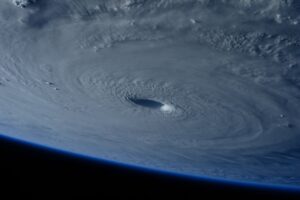
Microplastics floating in the ocean are not as confined as once believed. New research shows that when powerful typhoons move across coastal waters, they can lift tiny plastic particles out of the sea, carry them through the air, and drop them onto land as the storm pushes inland. Scientists observed this process by tracking microplastic fallout before and after a major typhoon hit an East Asian coastline. The study revealed a clear surge in plastic particles settling on land immediately after the storm, pointing to an unexpected link between ocean pollution and extreme weather. The findings suggest that tropical storms play a direct role in moving plastic pollution between the sea, the atmosphere, and human environments.
A Sudden Surge of Plastic After the Storm
Before the typhoon arrived, microplastic levels on land remained relatively low and stable. Once the storm made landfall, those levels increased rapidly. At the height of the event, scientists recorded deposition rates of more than twelve thousand microplastic particles per square metre in a single day, far above the background conditions measured earlier.
The pattern was clear. The increase happened quickly and coincided with the strongest winds and heaviest rainfall. This timing ruled out slow accumulation from everyday human activity and instead pointed to a direct link between the storm system and the sudden appearance of plastic particles on land.
Evidence That the Plastics Came From the Ocean
To confirm the source, researchers examined the physical and chemical properties of the collected particles. Many were made from polymers such as PVC, PTFE, and acrylic materials that are commonly found in marine environments but are less typical of local urban air pollution.
The size of the particles also provided clues. Most were small enough to become airborne through sea spray created when waves break, and bubbles burst at the ocean surface. During a typhoon, violent ocean mixing brings plastics from deeper layers up to the surface, making them available for this process.
How Typhoons Move Plastics Through the Air
The study describes a clear sequence of events. As a typhoon passes over the ocean, strong winds and turbulent waters stir up microplastics that were previously suspended in seawater. Breaking waves then eject these particles into the air as fine droplets. Powerful storm winds carry them inland, where rainfall eventually pulls them back down onto land.
This shows that the atmosphere plays a more active role in plastic pollution than previously understood. Microplastics are not limited to oceans or cities but can move between environments through extreme weather events, covering distances far greater than once assumed.
Why the Findings Raise Broader Concerns
The research adds another layer to concerns about climate change and pollution. Warmer ocean temperatures are linked to stronger and more frequent typhoons, which could make this transport pathway more common. As storms intensify, their ability to move plastic pollution from the sea to land may increase as well.
There are also implications for people living in coastal regions. Communities affected by typhoons may experience short bursts of higher microplastic exposure alongside flooding and wind damage. The study highlights how plastic pollution is deeply interconnected with Earth systems and shaped by the same forces that drive extreme weather.
References:
https://pubs.acs.org/doi/10.1021/acs.est.5c11101
https://phys.org/news/2025-12-typhoons-vacuum-microplastics-ocean-deposit.html