Physical Address
23,24,25 & 26, 2nd Floor, Software Technology Park India, Opp: Garware Stadium,MIDC, Chikalthana, Aurangabad, Maharashtra – 431001 India
Physical Address
23,24,25 & 26, 2nd Floor, Software Technology Park India, Opp: Garware Stadium,MIDC, Chikalthana, Aurangabad, Maharashtra – 431001 India
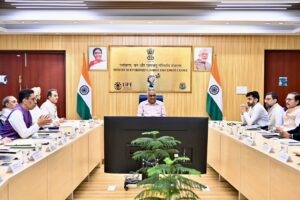
India rejects the COP31 35-by-35 Global Electrification Pledge ahead of the Antalya summit, citing grid affordability, CBAM, and a $3T climate finance gap.
A new roadmap from Brazil’s COP30 Presidency urges countries to prepare national plans to reduce dependence on coal, oil, and gas, even as India has refused to join a global electrification pledge proposed by Türkiye’s incoming COP31 Presidency. The developments highlight differences over how countries should approach the global energy transition, particularly around national responsibilities, financing and energy security. The roadmap calls for a gradual decline in fossil fuel consumption and production alongside the expansion of cleaner energy systems. Meanwhile, India has reiterated concerns about international climate commitments that it believes could affect its economic interests, while calling on developed countries to provide greater financial support to developing economies.
COP30 roadmap calls for national plans to move away from fossil fuels
The Roadmap for Transitioning Away from Fossil Fuels in Energy Systems, in a Just, Orderly and Equitable Manner was released by Brazil’s COP30 Presidency. It seeks to translate the commitment made at COP28 in Dubai to transition away from fossil fuels into practical national policies. The document identifies three priorities: reducing fossil fuel consumption, managing the decline of fossil fuel production while expanding cleaner energy, and transforming economies that depend heavily on coal, oil and gas. It draws on 267 submissions, including contributions from countries and groups representing 115 nations.
The roadmap also introduces the Belém Readiness Approach, which assesses countries’ capacity to manage the transition across energy demand, energy supply and economic dependence on fossil fuels. It encourages governments to incorporate transition measures into their national climate commitments and long-term development strategies. However, the document is voluntary and does not establish binding national targets or timelines. It also recognises that countries have different energy needs, financial resources and levels of dependence on fossil fuel industries. The roadmap notes that renewable energy expansion must be accompanied by a reduction in fossil fuel consumption, rather than simply adding more energy capacity to existing systems.
India refuses to join COP31’s global electrification pledge
India has refused to sign the 35-by-35 Global Electrification Pledge promoted by Türkiye’s incoming COP31 Presidency. Union Environment Minister Bhupender Yadav announced the decision, saying: “We are not going to sign any pledge. This is their agenda.” He added that India’s official position would be communicated at COP31. Launched in September 2026, the initiative aims to increase electricity’s share of global final energy consumption from just over 20% to 35% by 2035. It focuses on electrifying transport, buildings and industrial processes, supported by renewable energy, modern electricity grids and energy storage.
The COP30 roadmap also identifies electrification as an important part of reducing fossil fuel dependence, but warns that expanding electricity use without adequate investment in generation, transmission and storage could affect affordability and reliability. This is particularly relevant for developing economies such as India, where electricity demand continues to grow alongside industrialisation and urbanisation.
The roadmap also highlights how disruptions to fossil fuel supply routes in 2026 exposed importing countries to energy shortages and higher prices, strengthening the case for domestically produced low-emissions energy. India’s refusal to join the pledge comes amid broader concerns about how international climate initiatives account for different national development priorities.
India raises concerns over carbon border taxes and climate finance
Yadav also restated India’s opposition to the European Union’s Carbon Border Adjustment Mechanism (CBAM), which places carbon-related obligations on imports of certain emissions-intensive products. The mechanism entered its definitive phase on January 1, 2026, initially covering iron and steel, aluminium, cement, fertilisers, electricity and hydrogen. Indian exporters could face additional costs linked to emissions reporting, verification and carbon certificates. Yadav maintained that India would protect its economic interests, including in the context of the India-EU Free Trade Agreement negotiations, which concluded in January 2026. The agreement does not provide India with a blanket exemption from CBAM.
India also called for greater international climate finance, arguing that existing commitments fall short of the needs of developing countries. Yadav contrasted the earlier $100 billion annual climate finance target with what he described as a requirement of $3 trillion. The wider Baku-to-Belém roadmap seeks to mobilise at least $1.3 trillion annually for developing countries by 2035. The debate over finance remains central to negotiations, as developing countries argue that they need international support to expand clean energy, adapt to climate impacts and reduce dependence on fossil fuels without compromising economic development.
The COP30 roadmap similarly stresses that a fair transition requires financial assistance, economic diversification and protection for workers and communities dependent on fossil fuel industries. As countries prepare for COP31, the challenge will be to turn commitments on energy transition into practical plans that account for differences in national capacity and responsibility.
References:
Banner image: Source: Bhupender Yadav Post on X
Sections of this article may have been developed with the assistance of artificial intelligence tools to support research, drafting, and language refinement. All information has been reviewed, edited, and verified by the author/editor to ensure accuracy, context, and editorial integrity. The responsibility for the final content, interpretations, and conclusions rests solely with the publisher.