Physical Address
23,24,25 & 26, 2nd Floor, Software Technology Park India, Opp: Garware Stadium,MIDC, Chikalthana, Aurangabad, Maharashtra – 431001 India
Physical Address
23,24,25 & 26, 2nd Floor, Software Technology Park India, Opp: Garware Stadium,MIDC, Chikalthana, Aurangabad, Maharashtra – 431001 India


Happy Seeders, bio-decomposers, biomass fuel: farmers have options besides burning stubble. Here’s how they work and why burning continues in 2026.
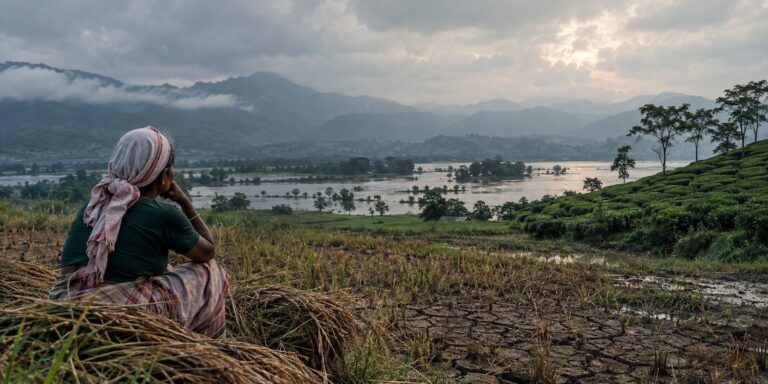
Every autumn, a farmer in north India faces the same arithmetic. The paddy has been harvested, the wheat must go in soon, and the field is covered in loose straw and stubble. Clearing it properly costs money, machinery and time. A single matchstick costs almost nothing and clears the field in an afternoon.
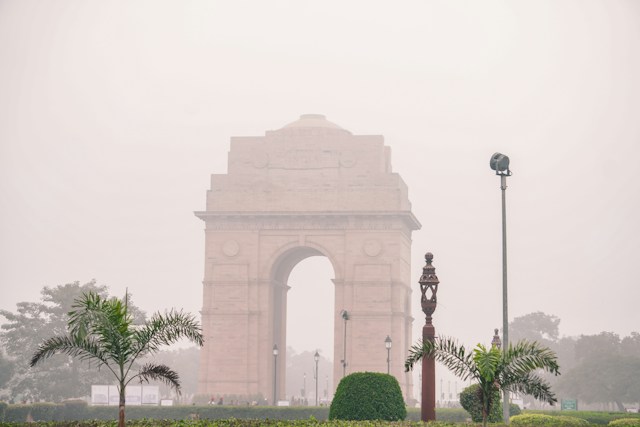
That choice, repeated across lakhs of fields, is one reason stubble burning returns to the headlines each October. This year is no different. Delhi’s air quality slipped into the “poor” category for the first time this season on October 21, and the share of farm fires in the city’s PM2.5 pollution rose to its highest level of the season so far.
Burning is often treated as a problem of awareness or enforcement. But farmers do have alternatives. The real question is why they are not used more widely. This explainer looks at what the options are, how they work, and what stands in the way.
Why farmers burn in the first place
In Punjab, Haryana and parts of Uttar Pradesh and Madhya Pradesh, paddy is harvested in October and wheat is sown soon after. Combine harvesters cut the grain high and leave tall stubble and scattered straw behind. Paddy straw is also high in silica, which makes it poor fodder and slow to break down.
With only a few weeks between the two crops, farmers need the field cleared quickly. Burning is fast, cheap and needs no equipment. The costs of the smoke are paid by everyone else, in the form of worse air downwind, and by the soil itself, which loses nutrients and organic matter when residue is burned.
The numbers this season
Punjab has recorded 510 farm fire incidents this season as of October 22, according to the Punjab Pollution Control Board. Tarn Taran and Amritsar account for most of them. Environmental compensation has been imposed in 184 cases, and 166 red entries have been made in land records, which bar farmers from selling or taking loans against that land.
That is a fraction of what Punjab once recorded. The state logged 76,590 farm fires in 2020 and 71,304 in 2021, falling to 10,909 in 2024, according to state pollution control board data.
But the problem has not disappeared; it has moved. Satellite monitoring by the Indian Agricultural Research Institute’s CREAMS lab found that between September 15 and October 6 this year, Madhya Pradesh recorded 118 farm fires, the highest for that period on record, ahead of Punjab’s 88, which was its lowest in seven years. Over the full 2025 season, Madhya Pradesh accounted for more than half of all farm fires across six monitored states.
Option 1: Leave it in the field (in-situ management)
In-situ methods keep the straw on the field, either on top as mulch or mixed into the soil.
The Happy Seeder is the best known. Developed with researchers at Punjab Agricultural University, it cuts and lifts the paddy straw, sows wheat seed directly into the soil, and spreads the straw back over the field in a single pass. The straw then acts as mulch, helping the soil hold moisture, and adds nutrients as it decomposes. Newer machines such as the Super Seeder, mulchers and reversible ploughs work on similar principles.
The Pusa bio-decomposer takes a biological route. Developed by the Indian Council of Agricultural Research, it is a fungal solution sprayed on the stubble after harvest. Its enzymes break down the tough cellulose and lignin in the straw, which can then be ploughed into the soil and turn into compost in about 20 to 25 days. It is cheap, but it needs light irrigation, the right temperatures and enough time, which farmers racing to sow wheat often do not have.
Option 2: Take it out of the field (ex-situ management)
Ex-situ methods collect the straw, bale it and move it elsewhere to be used as a resource. The Commission for Air Quality Management’s action plan lists several uses: co-firing in thermal power plants, biomass power projects, second-generation ethanol, compressed biogas, fuel for industrial boilers, waste-to-energy plants and packaging materials.
Turning straw into fuel pellets and briquettes that can be burned alongside coal in power plants has received particular attention. In principle, it turns a waste problem into a source of income for farmers. In practice, it depends on balers, storage space, transport and buyers being available in the same short window when the straw has to leave the field.
Option 3: Change what is grown
Some agronomists argue the most lasting fix lies further upstream. Paddy is a water-hungry crop grown in regions that are not naturally suited to it, encouraged by assured government procurement. Shorter-duration paddy varieties leave more time before wheat sowing, reducing the pressure to burn. Shifting some area away from paddy to crops such as maize, pulses or millets would reduce the residue load and save groundwater too.
The trend in Madhya Pradesh shows the reverse can also happen. Experts quoted by Down To Earth link the state’s rising fire count to farmers switching from soybean and pulses to paddy, which copes better with erratic weather, and then burning the residue as the easiest way to clear fields.
What the government has done
The Centre launched its Crop Residue Management scheme in 2018. It subsidises 50% of the cost of residue management machines for individual farmers and 80% for custom hiring centres run by cooperatives, farmer producer organisations and panchayats, so that small farmers can rent machines instead of buying them. By late 2021, more than Rs 2,440 crore had been released to Punjab, Haryana, Uttar Pradesh and Delhi, and more than 1.95 lakh machines and 39,000 custom hiring centres had been set up. The scheme now also supports paddy straw supply chain projects at a 65% subsidy.
Punjab says it has provided more than 1.5 lakh residue management machines at subsidised rates, alongside penalties and red entries for farmers who burn.
Why burning has not stopped
Machines are expensive even with subsidies, and many smallholders cannot afford to buy them. Rental machines from custom hiring centres are in heavy demand during the same few weeks, so availability is uneven. Running a Happy Seeder or Super Seeder also needs a powerful tractor and adds diesel and labour costs.
For ex-situ use, the supply chain is often the weak link. Collecting, baling and transporting bulky straw is costly, and if there is no nearby plant to buy it, farmers have little reason to bale it at all.
There is also the question of fairness. Union Agriculture Minister Shivraj Singh Chouhan said last month that farmers should not be held solely responsible for air pollution. Studies by the Centre for Research on Energy and Clean Air have found that stubble burning is a significant but episodic contributor to Delhi’s air, concentrated over 15 to 20 days between late October and mid-November, on top of year-round pollution from vehicles, industry and power plants.
The bottom line
There is no shortage of alternatives to burning stubble. Machines can sow through it, microbes can break it down, and power plants and biofuel units can use it. What is missing is a system that makes these options cheaper, quicker and more convenient for a farmer than a matchstick.
Punjab’s steep fall in fire counts shows that a mix of machines, incentives and enforcement can work. Madhya Pradesh’s rise shows how quickly the problem can reappear somewhere else when cropping patterns change and support systems do not follow.
References
Trends of Delhi’s air quality and stubble burning during the October-November period
https://pib.gov.in/PressReleasePage.aspx?PRID=1779712
https://www.shankariasparliament.com/current-affairs/crop-residue-management-crm-scheme
Banner Image: Photo by Shubham Dhage on Unsplash
Sections of this article may have been developed with the assistance of artificial intelligence tools to support research, drafting, and language refinement. All information has been reviewed, edited, and verified by the author/editor to ensure accuracy, context, and editorial integrity. The responsibility for the final content, interpretations, and conclusions rests solely with the publisher.