Physical Address
23,24,25 & 26, 2nd Floor, Software Technology Park India, Opp: Garware Stadium,MIDC, Chikalthana, Aurangabad, Maharashtra – 431001 India
Physical Address
23,24,25 & 26, 2nd Floor, Software Technology Park India, Opp: Garware Stadium,MIDC, Chikalthana, Aurangabad, Maharashtra – 431001 India

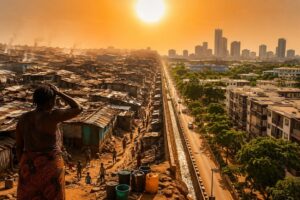
Extreme heat is often described as a climate problem, but for many people living in Africa’s informal settlements, it is becoming something much more personal: a daily health and survival challenge. A recent systematic review published in the journal Climate shows that rising heat is not affecting all urban residents equally. People living in poorer neighbourhoods are often exposed to greater heat while having fewer resources to protect themselves.
The study reviewed research published between 2010 and 2024 and examined how extreme heat affects health in African informal settlements. Researchers screened more than 96,000 records from 11 academic databases before selecting 21 studies for detailed analysis. The studies covered South Africa, Kenya, Tanzania, Cameroon, Egypt, Nigeria and Ghana.
The findings reveal a clear pattern: heat becomes more dangerous when it meets poverty, inadequate housing and weak public infrastructure.
Heat is not just about temperature
For someone living in a well-built home, an extremely hot day may mean switching on an air conditioner, using a fan or spending some time in a cooler public space. These options are not equally available to people living in informal settlements.
Many homes in such communities are overcrowded, poorly ventilated and constructed with materials that can trap heat. Limited access to reliable water makes it harder to stay hydrated or cool down. Inadequate sanitation, healthcare facilities and other public services can further increase vulnerability.
This means that the health impact of a heatwave depends not only on how high the temperature rises, but also on where people live and what resources they have. The study describes this vulnerability as multidimensional, with poverty, insecure employment, poor housing and inadequate infrastructure reducing people’s ability to adapt.
The health effects go beyond heatstroke
Extreme heat can have immediate physical effects. Research from Dar es Salaam, Tanzania, reported symptoms such as headaches, skin rashes, muscle cramps, fatigue and disturbed sleep. Studies from Nairobi found symptoms ranging from excessive sweating and fever to anxiety, stress and stroke. In South Africa, dehydration, heat exhaustion and heatstroke were among the commonly reported conditions.
But some of the most concerning impacts are indirect.
Heat can put additional stress on people already living with health problems. Studies in Accra, Ghana, associated heat exposure with cardiovascular and respiratory illnesses, depression and infectious diseases such as malaria and cholera. Research in Nairobi found that heat could aggravate conditions including diarrhoea, hypertension, pneumonia and malnutrition. In KwaZulu-Natal, South Africa, tuberculosis and diabetes were also identified among conditions that could worsen with heat exposure.
Children can be particularly vulnerable. Research also points to risks for pregnant women, while studies in Dar es Salaam have associated heat exposure with mental health and reproductive health problems.
A problem of unequal protection
The bigger message from the study is that climate adaptation cannot focus only on temperatures. Installing early-warning systems or telling people to stay hydrated is useful, but it cannot fully protect someone who has no reliable water supply, works outdoors for a living or lives in a poorly ventilated room.
This is where climate policy and social policy meet. Improving housing, expanding access to clean water, increasing healthcare capacity and creating better public infrastructure can reduce heat-related risks. Urban planning also has an important role in creating shaded areas, improving ventilation and ensuring that vulnerable neighbourhoods are not left out of climate adaptation plans.
The study also highlights that the relationship between heat and deaths is not identical everywhere. Some research in Nairobi found links between temperatures above local heat thresholds and child mortality and deaths from non-communicable diseases. However, studies in South Africa found greater excess mortality associated with cold than heat during the periods examined, partly because cold days occurred more frequently.
Building cities that protect everyone
Africa’s cities are growing rapidly, and climate change is adding another layer of pressure to this transformation. If urban development continues without addressing unequal access to housing, water, healthcare and basic services, extreme heat could deepen existing inequalities.
The lesson is straightforward: a heatwave does not affect everyone in the same way. The same temperature can be an inconvenience for one household and a serious health threat for another.
Preparing African cities for a hotter future therefore requires more than emergency responses during heatwaves. It requires investment in healthier housing, reliable water supplies, accessible healthcare, resilient infrastructure and inclusive urban planning.
Extreme heat may be driven by a changing climate, but its consequences are shaped by society. Making cities safer from heat will ultimately depend on whether adaptation reaches the people who have the least protection from it.
References
https://www.mdpi.com/2225-1154/10/11/164
https://pmc.ncbi.nlm.nih.gov/articles/PMC4240518
Banner image: AI generated
Sections of this article may have been developed with the assistance of artificial intelligence tools to support research, drafting, and language refinement. All information has been reviewed, edited, and verified by the author/editor to ensure accuracy, context, and editorial integrity. The responsibility for the final content, interpretations, and conclusions rests solely with the publisher.