Physical Address
23,24,25 & 26, 2nd Floor, Software Technology Park India, Opp: Garware Stadium,MIDC, Chikalthana, Aurangabad, Maharashtra – 431001 India
Physical Address
23,24,25 & 26, 2nd Floor, Software Technology Park India, Opp: Garware Stadium,MIDC, Chikalthana, Aurangabad, Maharashtra – 431001 India


The world’s major monsoon systems may be shifting northward in ways that climate models failed to predict, raising fresh concerns for food security across parts of India, West Africa and Southeast Asia. A new study suggests that tropical rain belts have been gradually moving north for more than four decades, altering where and when seasonal rainfall arrives. Researchers say this shift could disrupt farming calendars, intensify floods in some regions and deepen drought in others, especially in countries that depend heavily on monsoon rains for agriculture.
Scientists say tropical rain belts are moving, not just getting wetter
For years, climate scientists relied on a simple assumption known as the “wet gets wetter” theory, which suggested that warming would intensify rainfall in regions that are already wet. But the new findings challenge that idea. Instead of simply becoming heavier in the same places, rainfall zones across the tropics appear to be physically shifting northward.
The study found that warmer air alone could explain only about 10% of the rainfall changes observed over the last 40 years. That means most of the changes are driven by a broader reorganisation of atmospheric circulation rather than by an increase in moisture alone. Researchers say this movement of tropical rain belts could have serious consequences for monsoon-dependent regions.
For countries like India, where nearly half of the agricultural land still depends on seasonal rainfall, even a small shift in the monsoon can affect sowing patterns, groundwater recharge and crop yields.
Warming land may be driving the monsoon north
The researchers say one of the biggest missing pieces in current climate models is the role of land warming. While oceans have traditionally been seen as the main driver of monsoon behaviour, the study suggests rapidly warming land in the Northern Hemisphere may be pushing rain belts northward.
Land heats faster than oceans, and northern land masses have warmed significantly in recent decades. The Arctic has warmed nearly four times faster than the global average since 1979, while large desert regions across North Africa and the Middle East have also seen sharp temperature rises. Scientists believe this growing land heat imbalance is altering wind patterns and pulling monsoon systems further north.
To test this, researchers ran experiments in climate models by artificially increasing heat absorption over land. Within days, the models began showing rainfall shifts similar to what has been observed in real-world satellite records.
India and other monsoon regions could face major disruptions
The findings carry major implications for countries across Asia and Africa. In India, changing monsoon patterns are already becoming more visible. A separate study has shown that since 1999, rainfall in northwest India has increased by around 25% while parts of the Indo Gangetic Plain have seen a decline of about 4%. Scientists say these uneven shifts can mean more floods in some areas and water shortages in others.
Across West Africa and Southeast Asia, similar changes could alter growing seasons for staple crops such as rice, maize and millet. Researchers warn that if climate models continue to underestimate the role of land warming, forecasts used by governments for agriculture planning and flood management may become less reliable.
The study adds that climate change is not only intensifying weather but also reshaping long-standing rainfall systems. For billions of people whose food, water and livelihoods depend on predictable monsoons, understanding where the rain is moving may now matter as much as how much rain falls.
References:
https://www.nature.com/articles/s41467-026-71187-4
The Arctic has warmed ‘nearly four times faster’ than the global average
https://agupubs.onlinelibrary.wiley.com/doi/full/10.1029/2025AV002173
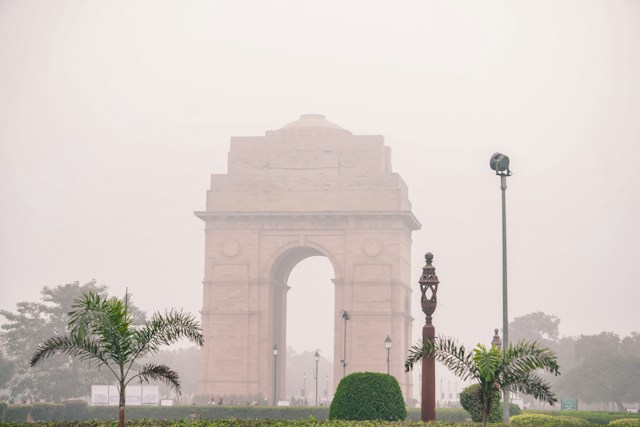
Banner image: Photo by Mike Kotsch on Unsplash
Sections of this article may have been developed with the assistance of artificial intelligence tools to support research, drafting and language refinement. All information has been reviewed, edited and verified by the author/editor to ensure accuracy, context and editorial integrity. The responsibility for the final content, interpretations and conclusions rests solely with the publisher.