Physical Address
23,24,25 & 26, 2nd Floor, Software Technology Park India, Opp: Garware Stadium,MIDC, Chikalthana, Aurangabad, Maharashtra – 431001 India
Physical Address
23,24,25 & 26, 2nd Floor, Software Technology Park India, Opp: Garware Stadium,MIDC, Chikalthana, Aurangabad, Maharashtra – 431001 India

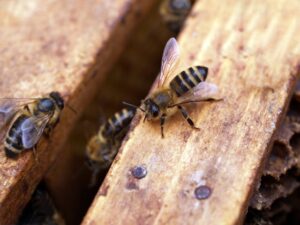
Across North America, beekeepers are witnessing an unusual phenomenon this year: honeybees are beginning their swarm season much earlier than normal. What may seem like a small seasonal shift is actually raising serious concerns among scientists and environmental experts. The change is being linked to rising global temperatures, disrupted ecosystems, and increasing pressure on pollinator populations.
Reports from several regions indicate that the 2026 swarm season started nearly two weeks earlier than last year. Warmer winters and repeated heatwaves are believed to be the primary reasons behind this sudden change. Traditionally, bees remain relatively inactive during colder months and become highly active only when spring arrives. However, milder winter temperatures are now encouraging colonies to grow and reproduce much sooner.
Swarming is a natural process in the life cycle of bees. When a hive becomes overcrowded, the queen bee leaves with thousands of worker bees to form a new colony elsewhere. This usually takes place during spring, when flowers bloom, and food sources are abundant. But changing weather patterns are altering this natural timing.
Beekeepers in warmer states have observed colonies expanding as early as December and January. As a result, bees are entering reproductive mode weeks ahead of schedule. Many beekeepers say they are struggling to adapt because hive inspections, migration schedules, and pest control methods were designed around older seasonal patterns that are no longer reliable.
The issue comes at a difficult time for the beekeeping industry. In recent years, honeybee populations have faced massive losses due to disease, pesticides, habitat destruction, and climate stress. Bees are extremely important for agriculture because they pollinate a large number of crops, including fruits, vegetables, nuts, and seeds. Without pollinators, food production and biodiversity could suffer significantly.
Climate Change and Growing Threats to Pollinators
Scientists believe climate change is intensifying several existing threats to bees. One of the most dangerous among them is the varroa mite, a tiny parasite that attacks honeybees and spreads deadly viruses throughout colonies. In the past, colder winters naturally slowed the reproduction of these mites because bee colonies temporarily stopped breeding. Today, warmer winters allow bees to remain active for longer periods, giving mites more opportunities to multiply and survive.
Experts are also worried about the impact on wild bee species. Managed honeybee colonies already compete with native pollinators for nectar and pollen. Earlier and larger swarms may increase this competition, making survival even more difficult for wild bees. Environmentalists warn that many native pollinator species are declining rapidly, which could disturb ecosystems and reduce plant reproduction.
Shift in Blooming period
Another major concern is the changing timing of flower blooms. Rising temperatures are causing many plants to flower earlier in the year. This shift affects the delicate relationship between pollinators and plants. If bees and flowering plants fail to remain synchronized, pollination cycles may become disrupted, affecting both agriculture and natural ecosystems.
Recently, public attention to bee swarms has increased following several dramatic incidents in which large groups of bees gathered in unexpected places. Although swarms often appear frightening, experts explain that swarming bees are generally less aggressive than people think. During this phase, bees are focused on protecting their queen and searching for a new home rather than attacking humans.
The unusually early swarm season is more than just an environmental curiosity. It is another visible sign of how climate change is reshaping natural systems across the world. Bees are among the most important pollinators on Earth, and their changing behavior reflects wider ecological disturbances that could have long-term consequences for food security and biodiversity.
Scientists believe urgent action is needed to protect pollinators through habitat conservation, reduced pesticide use, sustainable farming practices, and stronger climate policies. The early swarming of bees serves as a reminder that even the smallest creatures can reveal major changes taking place in the environment around us.
References:
https://www.theguardian.com/environment/2026/may/17/north-america-bees-early-swarm-season
https://pmc.ncbi.nlm.nih.gov/articles/PMC11614231
Banner Image: Photo by Johann Piber on Pexels
Sections of this article may have been developed with the assistance of artificial intelligence tools to support research, drafting, and language refinement. All information has been reviewed, edited, and verified by the author/editor to ensure accuracy, context, and editorial integrity. The responsibility for the final content, interpretations, and conclusions rests solely with the publisher.