Physical Address
23,24,25 & 26, 2nd Floor, Software Technology Park India, Opp: Garware Stadium,MIDC, Chikalthana, Aurangabad, Maharashtra – 431001 India
Physical Address
23,24,25 & 26, 2nd Floor, Software Technology Park India, Opp: Garware Stadium,MIDC, Chikalthana, Aurangabad, Maharashtra – 431001 India

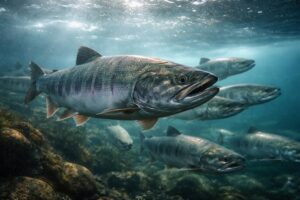
A growing body of scientific research has identified climate change as a key factor behind the sharp decline of Japanese chum salmon populations. Once thriving in large numbers across the North Pacific, this species is now struggling to survive as rising ocean temperatures and environmental changes disrupt its life cycle.
Declining Numbers Raise Concern
Chum salmon (Oncorhynchus keta) have long been an important part of Japan’s fisheries and coastal ecosystems. For many years, they contributed significantly to local economies and food systems. However, since the late 20th century, their population has been steadily decreasing. Researchers now believe that large-scale environmental shifts, particularly those linked to climate change, are largely responsible for this decline.
Changing Ocean Conditions
One of the most significant challenges facing chum salmon is the rapid warming of ocean waters. Their natural habitats in regions such as the Okhotsk Sea and the Bering Sea are becoming less suitable due to rising temperatures. These areas traditionally served as important feeding and migration zones.
As conditions change, the fish are being pushed toward colder northern waters in search of a suitable environment. This shift in distribution not only alters their migration routes but also forces them into unfamiliar ecosystems, where survival becomes more difficult.
Disruption of Food Chains
The effects of climate change extend beyond temperature increases. Warmer waters influence the availability of plankton and other microscopic organisms that form the base of the marine food web. Since young chum salmon depend heavily on these food sources, any disruption can significantly affect their growth and survival.
With reduced food availability, many salmon fail to gain enough energy during their early stages in the ocean. This leads to weaker individuals and lower overall survival rates, ultimately contributing to declining population numbers.
Role of Marine Heatwaves
In addition to gradual warming, extreme events such as marine heatwaves are becoming more common. These short-term spikes in ocean temperature can have severe consequences for marine life. For chum salmon, such events can reduce suitable habitat, interfere with feeding patterns, and increase physiological stress.
These heatwaves can also disturb the timing of migration, making it harder for salmon to align their movements with favorable environmental conditions. As a result, their chances of survival decrease even further.
Impact on Reproduction
Climate change also affects chum salmon during their return to freshwater rivers to spawn. Rising river temperatures can create unfavorable conditions for reproduction. In some cases, warmer waters may prevent salmon from successfully reaching their breeding grounds.
Even when they do manage to spawn, the quality of reproduction may be compromised. Salmon that experienced poor feeding conditions in the ocean often return in weaker condition, reducing their ability to produce healthy offspring.
Challenges for Conservation Efforts
Japan has invested heavily in hatchery programs to support chum salmon populations. While these initiatives have helped maintain numbers to some extent, they are not enough to counteract the broader environmental challenges caused by climate change.
The study suggests that without addressing the root causes—particularly global warming—such efforts may have limited long-term success. Declining habitat quality and shifting ecosystems continue to pose serious obstacles.
Looking Ahead
The decline of Japanese chum salmon is a clear example of how climate change is affecting marine species worldwide. It highlights the need for more flexible and forward-looking approaches to fisheries management.
Experts stress the importance of monitoring ocean conditions, protecting critical habitats, and developing strategies that account for changing environmental patterns. Addressing climate change at a global level will be essential to safeguard the future of not only chum salmon but many other marine species.
The ongoing decline of Japanese chum salmon underscores the far-reaching impacts of climate change on marine ecosystems. From habitat loss and food shortages to reproductive challenges, the species faces multiple threats. Without timely and effective action, the future of this once-abundant fish remains uncertain.
https://www.sciencedirect.com/science/article/abs/pii/S0883292721000354
https://pmc.ncbi.nlm.nih.gov/articles/PMC1871852/
https://www.researchgate.net/publication/377357356_More_Than_Marine_Heatwaves_A_New_Regime_of_Heat_Acidity_and_Low_Oxygen_Compound_Extreme_Events_in_the_Gulf_of_Alaska
Banner Image: AI generated
Sections of this article may have been developed with the assistance of artificial intelligence tools to support research, drafting, and language refinement. All information has been reviewed, edited, and verified by the author/editor to ensure accuracy, context, and editorial integrity. The responsibility for the final content, interpretations, and conclusions rests solely with the publisher.